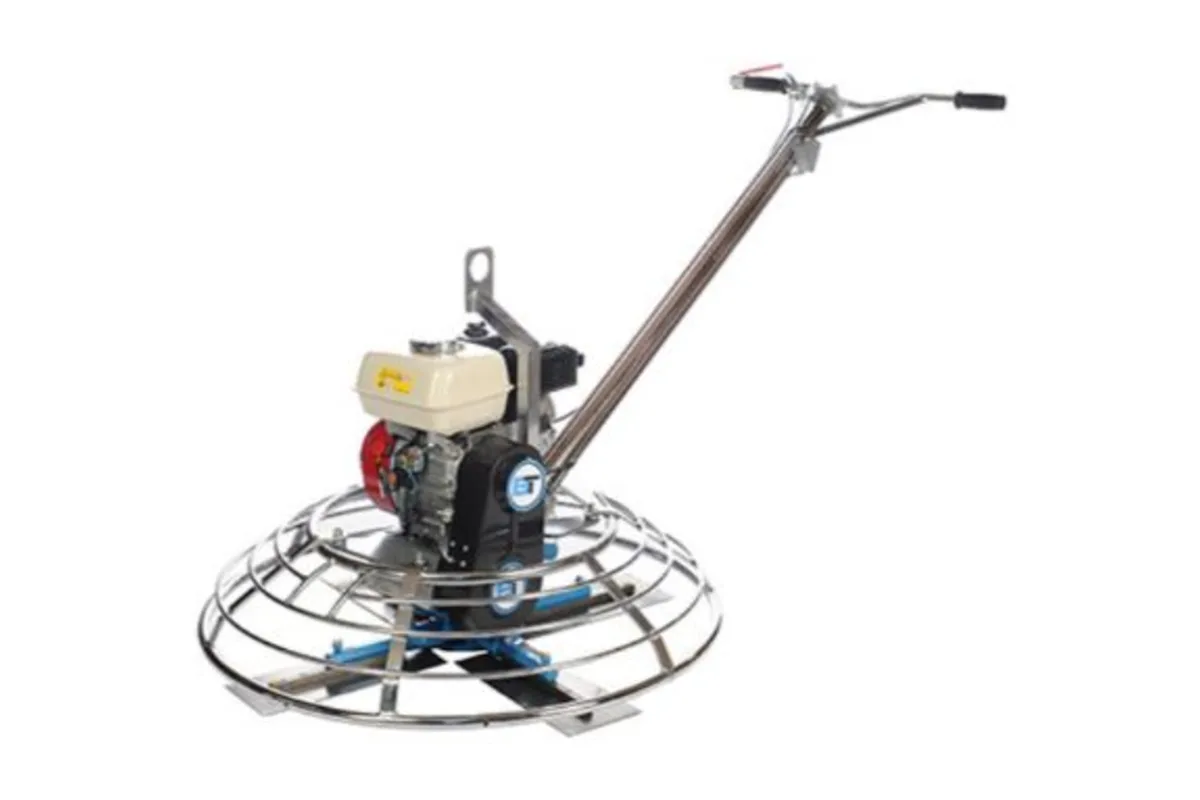
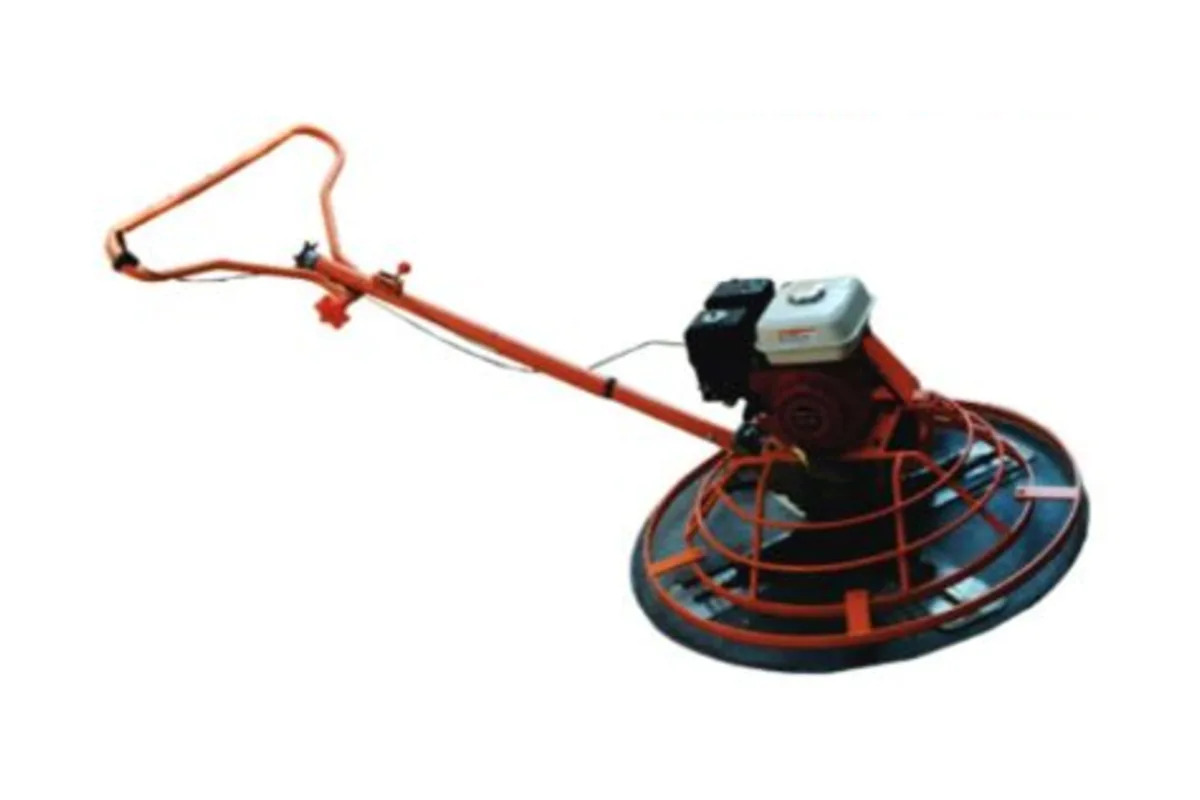
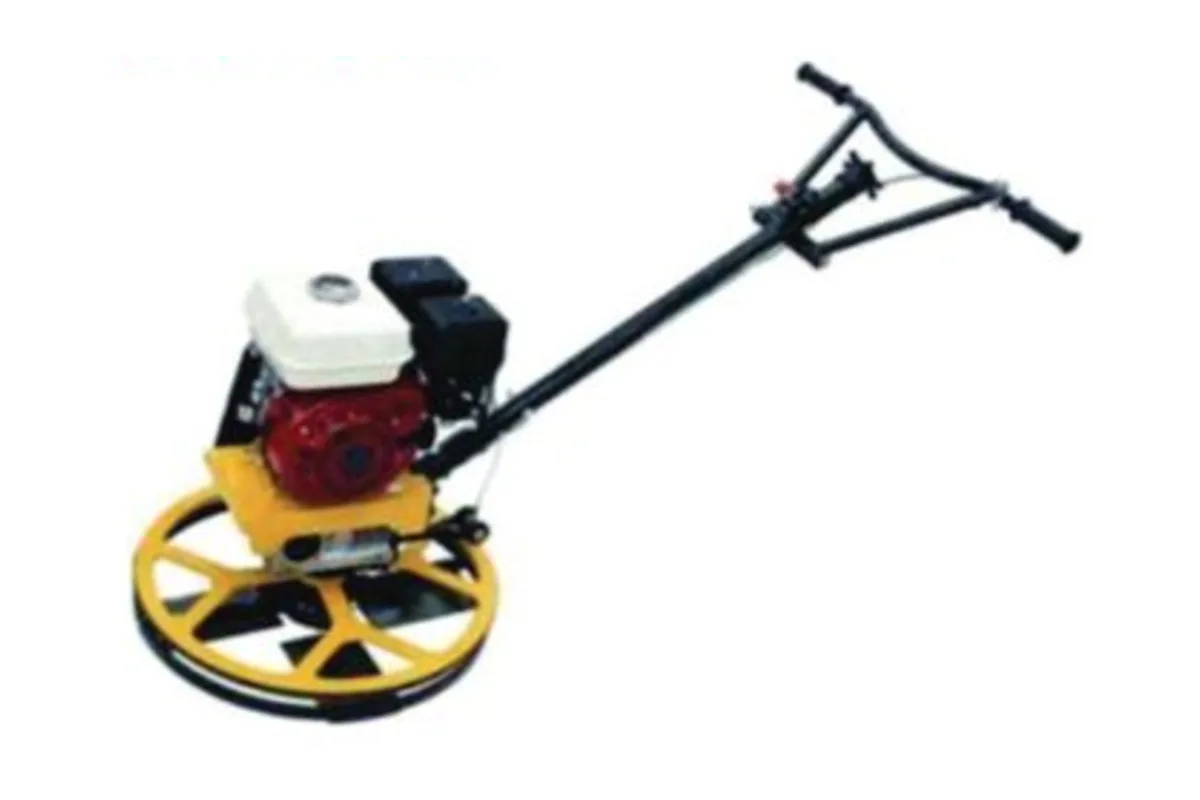
A power trowel is the concrete finishing machine that turns a levelled slab into a hard, dense, burnished floor. Pans float the surface once the concrete takes weight and blades close and polish it.
Topall Impex was the first importer to bring ride-on trowel machines into India, and we are the exclusive India partner for Dynamic and Beton Trowel. The range runs from a 53 kg walk-behind edger to a 435 kg ride-on, all supported from Delhi.
The range
- QUM-80 ride-on — Dynamic, 1900 × 915 mm, Honda GX690 24 HP, 8 blades, 2 pans, 310 kg.
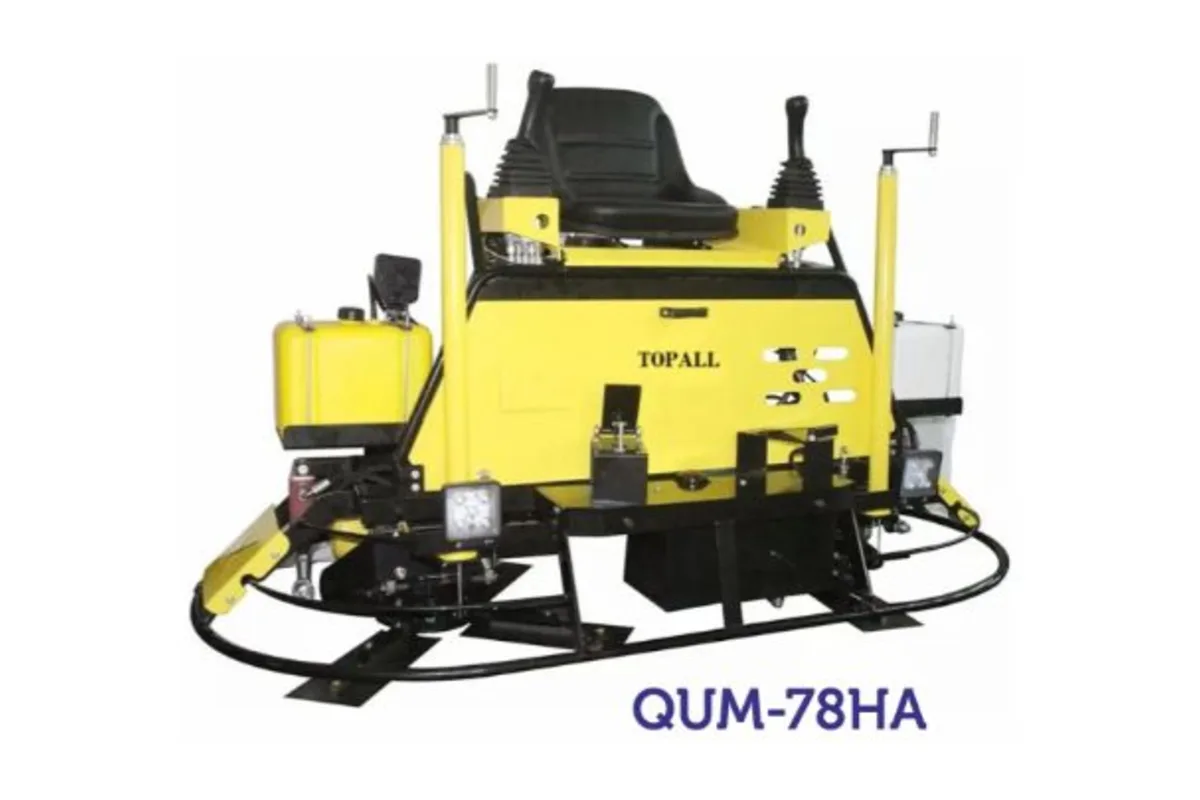
- QUM-78HA ride-on — Dynamic, 1890 × 916 mm, Honda GX690 24 hp, hydraulic angle control, 150–155 rpm, 365 kg.
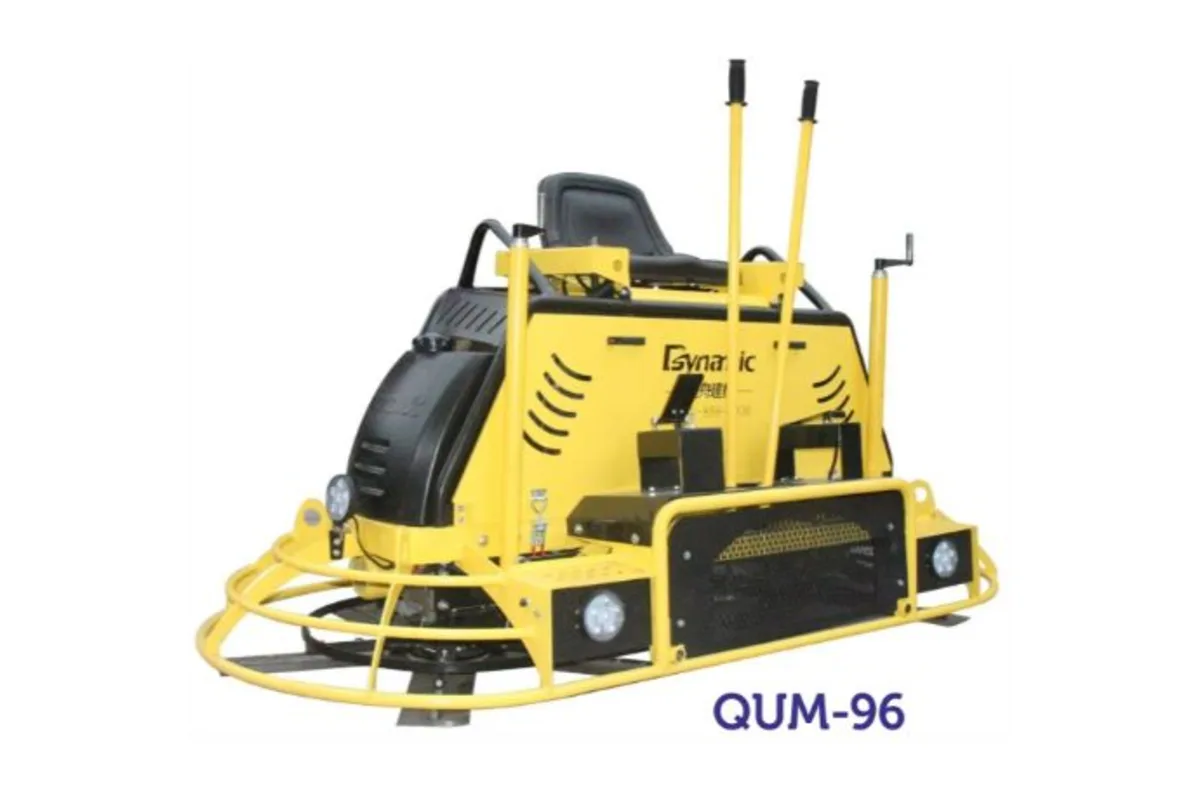
- QUM-96 ride-on — Dynamic, 2440 × 1140 mm, Dynamic R-999 36 hp, 40 litre tank, 435 kg.
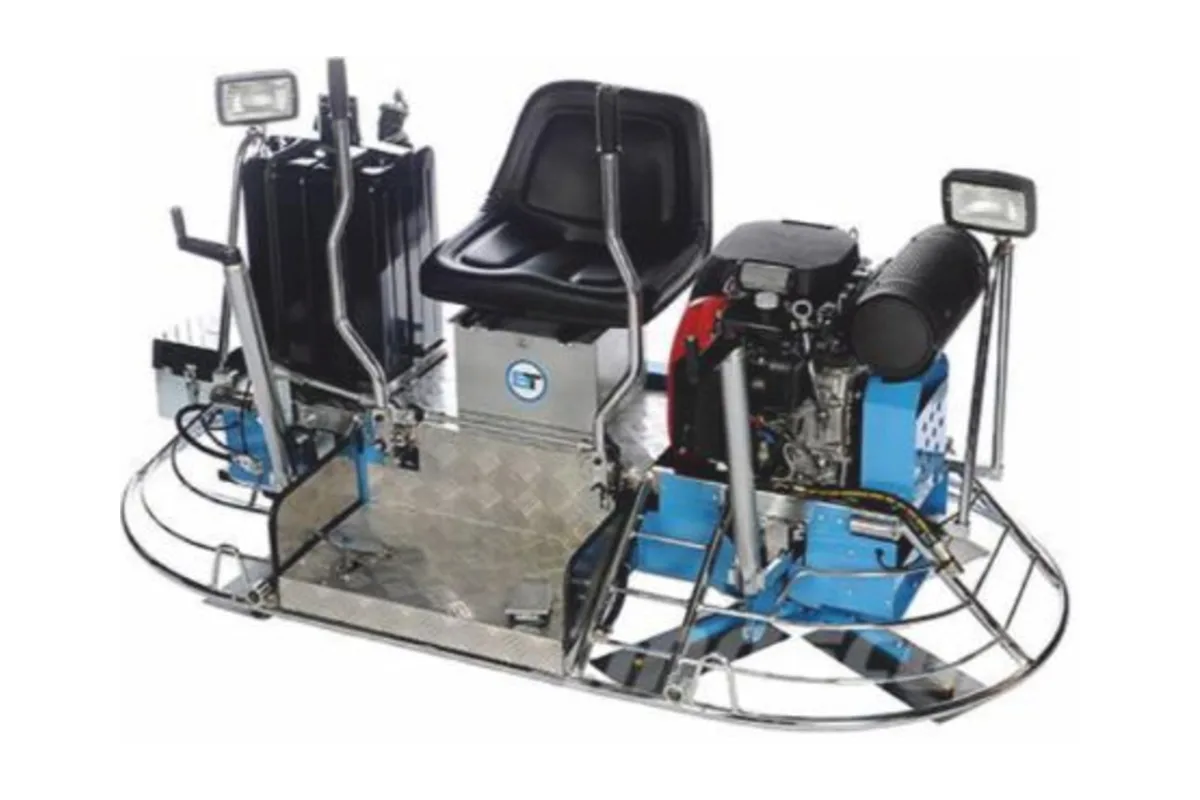
- BT-900-2PF H24 ride-on — Beton Trowel low rider, Honda GX690 24 HP, 8 blades, 0–140 rpm, 275 kg.
- BT-90H walk-behind — Beton Trowel, 900 mm, Honda GX160 5.5 hp, 120 kg.
- BT-60H edger — Beton Trowel, 600 mm, Honda GX160 5.5 hp, 53 kg.
- CWT40 walk-behind — 1000 mm, Honda GX160 5.5 hp, 85 kg.
- CWT24 walk-behind — 600 mm, Honda GX160 5.5 hp, 53 kg.
Which power trowel
Under about 500 square metres a walk behind power trowel finishes the slab in the time a ride-on takes to set up: the CWT40 at 1000 mm and the BT-90H at 900 mm do the field, and the 600 mm CWT24 and BT-60H go along walls and around columns. Above that a ride on power trowel earns its keep on every pour, and the QUM-96 with 36 hp and 2440 mm is for contractors finishing large logistics floors as their main line of work.
Trowel machine price
Price on request, usually quoted the same working day. What drives it is the class of machine — walk behind, ride-on, or the QUM-96 — then the engine and the starting set of blades and pans, which are consumables we hold in Delhi.
Power trowel or laser levelling machine
A laser guided levelling machine such as the LS-325 or LS-400 sets the level while the concrete is plastic; the trowel goes on hours later, once the slab takes weight, and produces the finish. A floor that needs a flatness certificate needs both.
Engines and timing
Every walk-behind runs the Honda GX160 and the three 24 HP ride-ons the Honda GX690, both serviced anywhere in India; the QUM-96 runs the Dynamic R-999. Every trowel comes with delivery, commissioning and operator training.

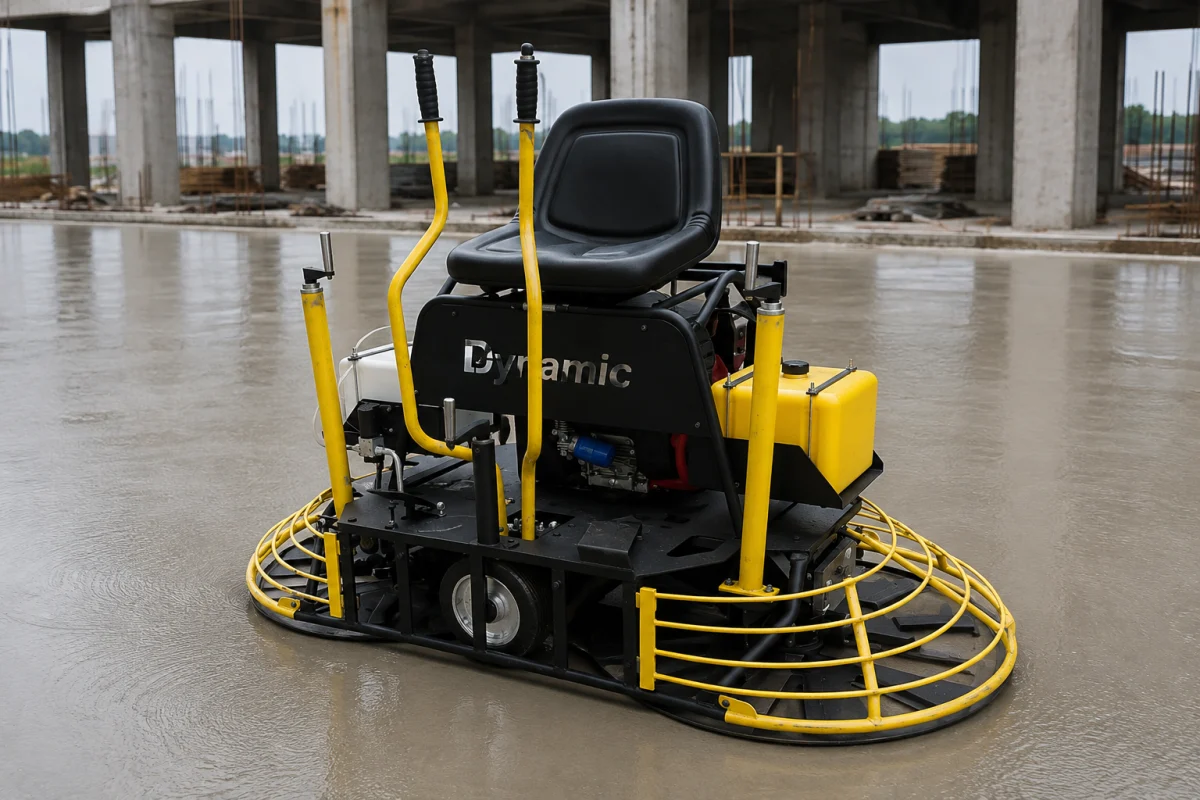 Power Trowel
QUM-80 Ride-On Power Trowel
Power Trowel
QUM-80 Ride-On Power Trowel