A concrete levelling machine strikes off, vibrates and levels a fresh slab to a plane set by a rotating laser transmitter instead of by rails and an operator's eye. A receiver on the mast reads the beam, the control system keeps correcting blade height as the machine travels, and the floor holds the same level across the whole pour. Warehouse builders, industrial flooring contractors and civil contractors laying large ground-bearing slabs buy them.
How to choose a concrete levelling machine
Five things decide which machine fits.
Floor area and pour size. Match the machine to the panel you pour in a day, not the contract total. The LS-325 covers 200 to 350 square metres an hour and 800 to 1,000 in a working day, which fits mid-size factory and godown floors. Large open panels suit the wider stand-on machine.
Flatness target. Read the flatness clause first. The LS-325 is rated to hold ground flatness within 2 mm and elevation error within 7 mm over 100 m. Where a flatness class is written into the contract, a laser guided machine is the practical way to meet it; on a yard slab with no written tolerance, hand methods may still do.
Obstructions on the slab. Columns, racking bases, doorways and service pits decide access more than area does. A walk-behind machine turns in the space a man occupies; a stand-on machine needs room to work and somewhere to step off the wet concrete; a boom machine works from the edge.
Slab thickness and fall. The LS-400 paves 30 to 200 mm thick with independent suspension and centre rotation, and both machines can work a fall rather than a level plane. Confirm the fall before buying, because slope work is a control-system function, not an attachment.
Crew and power. These are petrol engine machines, so there is no three-phase requirement on the slab. The constraints are a trained operator, a transmitter clear of vibration, and enough concrete to keep the machine moving.
The models Topall supplies
The LS-325 is the walk-behind. A Honda GX200 engine, a Topcon laser generator, an AC servo control system and computer-controlled blade adjustment give a 2.6 m working length at 230 kg, with an eccentric vibration motor at 300 Hz. Ground flatness holds within 2 mm and elevation error within 7 mm per 100 m. It goes through a doorway and around a column line, which covers most factory and warehouse work.
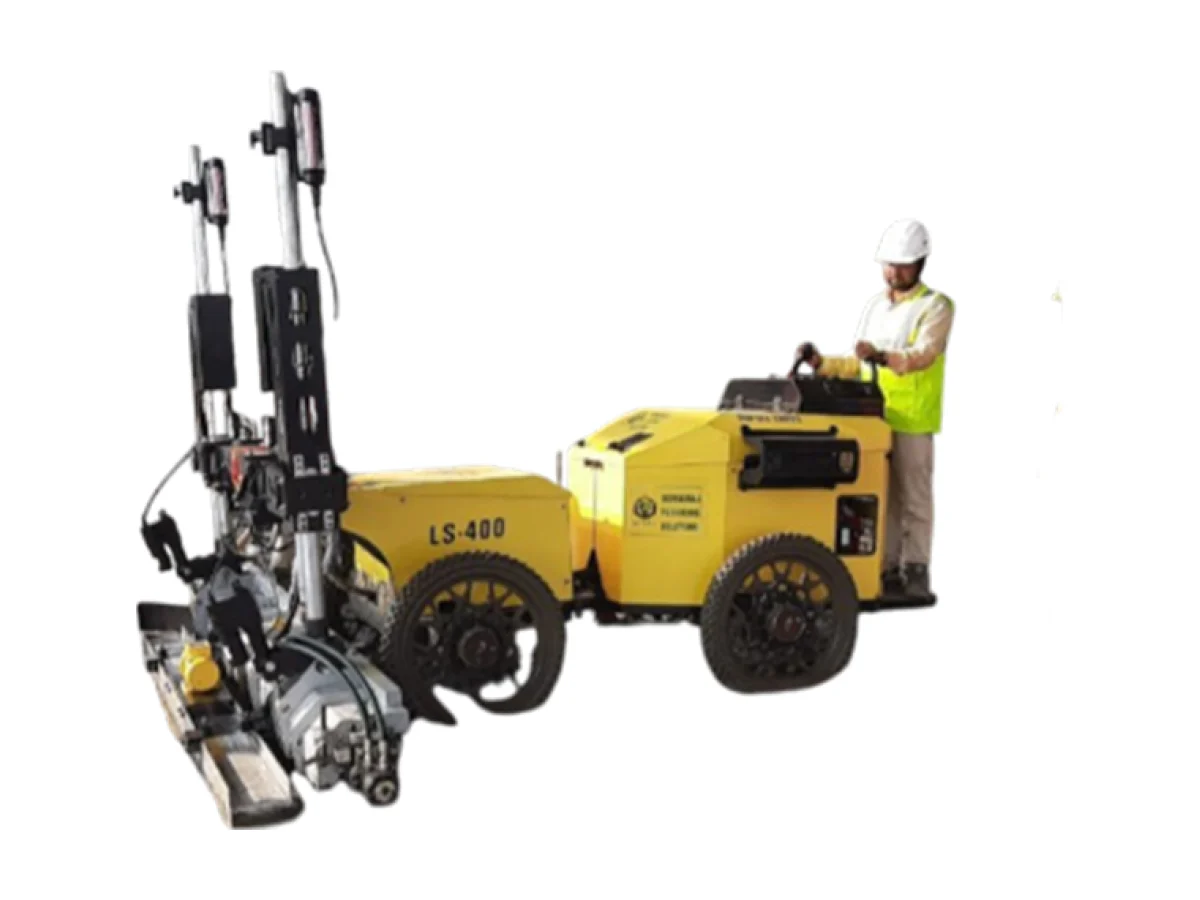
The LS-400 is the stand-on machine: a 24 HP Honda GX-690 petrol engine, hydraulic drive and boom motor, a Topcon generator, 2500 mm paving width, 30 to 200 mm paving thickness and 865 kg, with a 35 litre fuel tank for long pours. Open industrial slabs laid in big panels are its work.
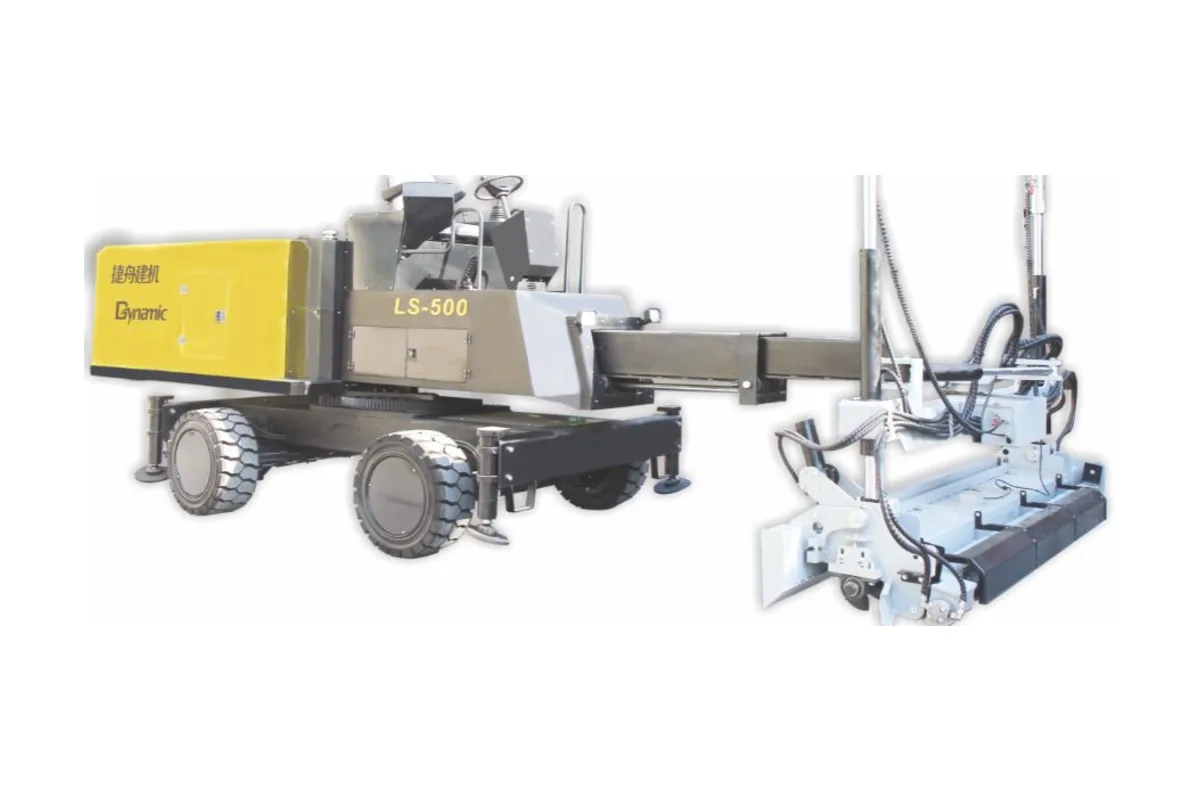
The LS-500 works from a telescopic boom. The head reaches out over the wet concrete from the edge of the pour and retreats as the panel is finished, which suits wide bays and long strip pours.
What affects the price
Concrete laser levelling machines start from ₹13,50,000, ex-works Delhi, plus GST, for the LS-325, with the stand-on LS-400 and the boom LS-500 above it. Configuration is the main driver: working width, engine size and drive type. The transmitter, tripod and receiver, spare blades and an extra vibrating plate are lines you can add or leave out. Freight and unloading matter for the heavier machines, GST is charged separately, and imported machines carry customs duty and inland transport that an India-built item would not.
Where these machines are used
Warehouse and logistics floors are the biggest application, because racking and forklift traffic make flatness a functional requirement rather than a finish. Manufacturing floors are the second: machine bases and trolley routes depend on a slab that is level before anything is bolted to it. The third is basement and podium parking decks, where large areas are poured to a fall. In each case levelling is one step in a sequence that continues with power trowel machines and, on polished floors, with concrete floor grinding machines.
Laser levelling against manual screeding
Manual screeding means setting rails or wet pads to level, striking the concrete off by hand with a straight edge, then bull floating. It costs almost nothing and it works, but it cannot hold one tolerance over thousands of square metres: every rail is set by hand and every strike-off is a man's judgement.
A laser guided machine removes the rails. The datum comes from one transmitter, so the last bay of the pour is referenced to the same plane as the first. Vibration is applied at a constant frequency rather than by whatever the crew has to hand, which helps compaction stay even. Output changes scale too: the LS-325 is rated at 800 to 1,000 square metres a day, against a hand crew working in a fraction of that.
The trade is capital and discipline. On a 300 square metre shed floor, hand methods with a bull float and check rod remain sensible. On a 20,000 square metre distribution centre written to a flatness class, they are not.

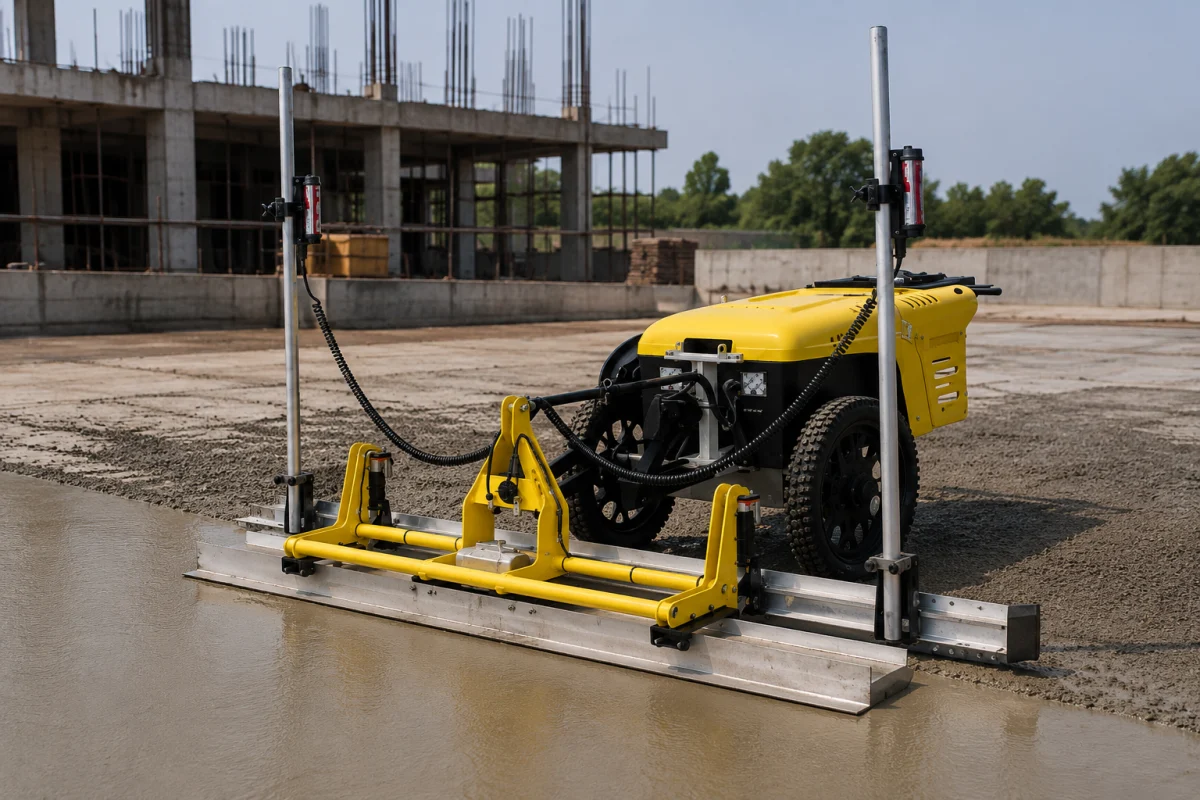 Laser Levelling
LS-325 Walk Behind Concrete Laser Levelling Machine
Laser Levelling
LS-325 Walk Behind Concrete Laser Levelling Machine