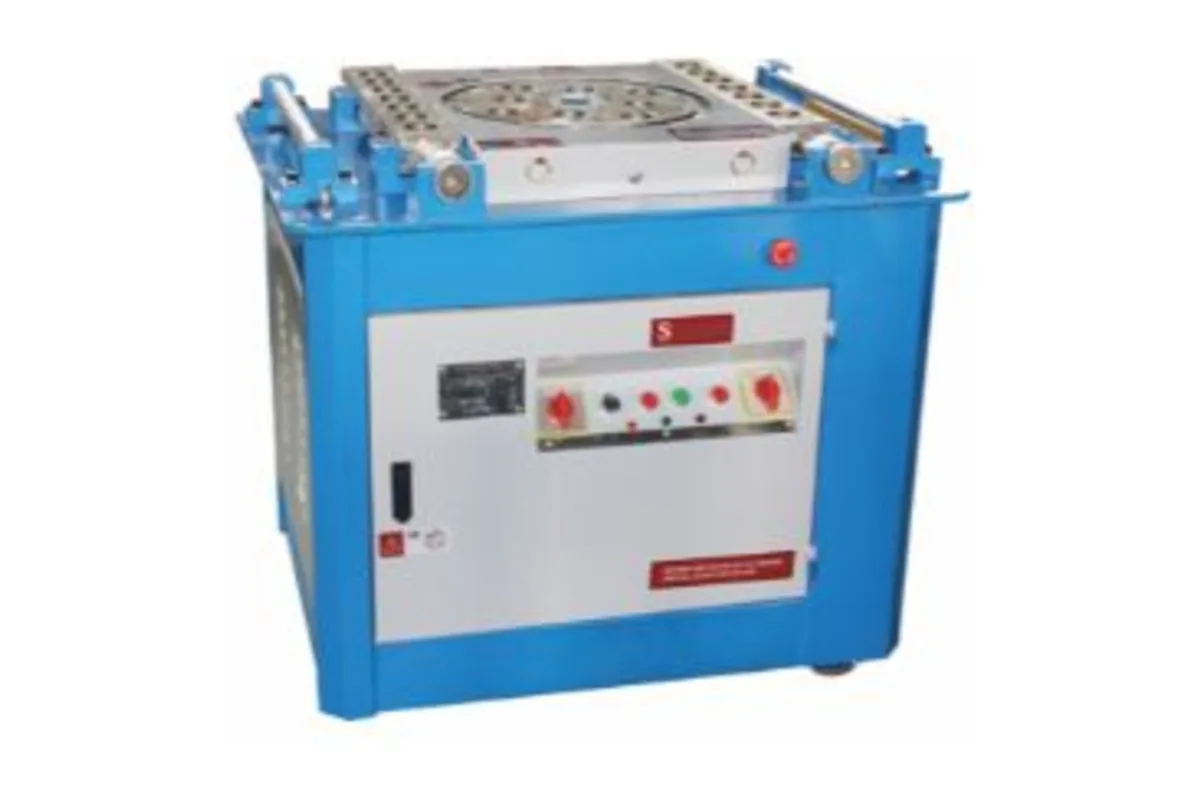
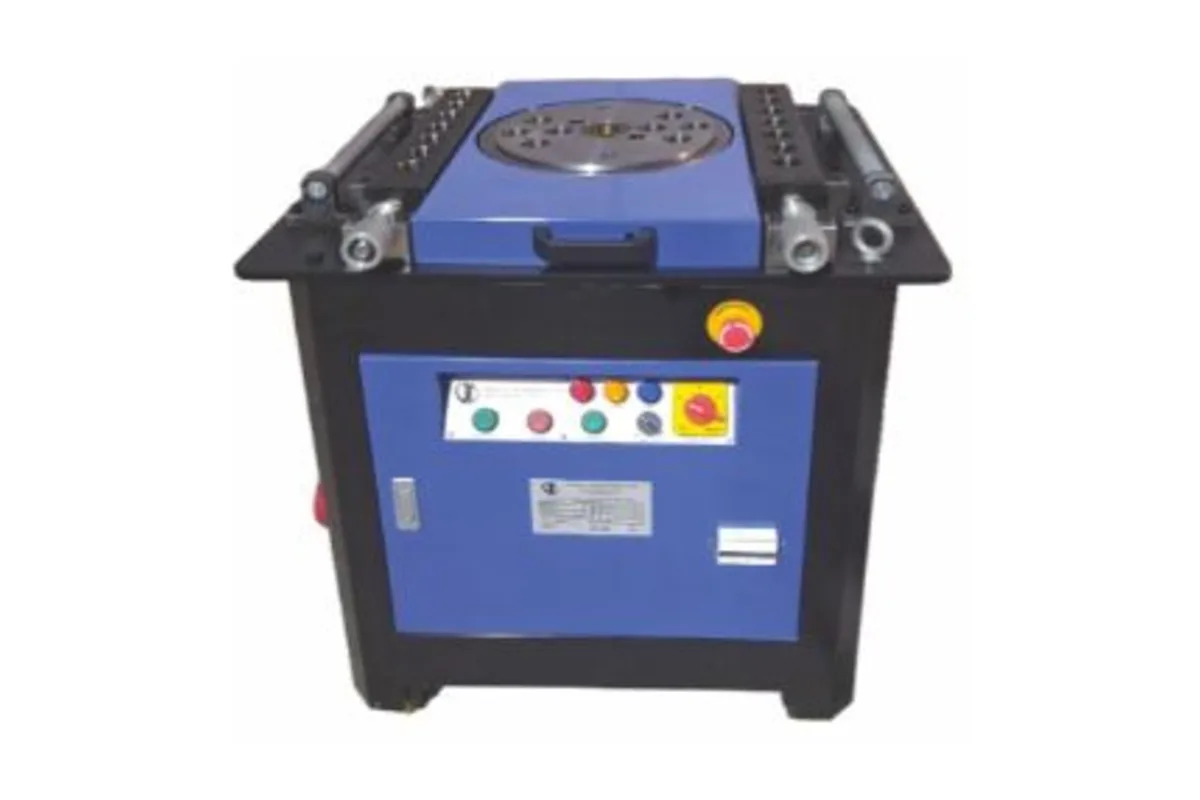
A bar bending machine turns cut lengths of TMT bar into the hooks, cranks, L-bends and U-bends that every column, beam and footing needs. The bar sits against fixed pins, the disc rotates to a set stop and the same angle repeats all day.
Topall Impex has supplied rebar processing equipment since 2008. We supply three benders: two imported machines for 32 mm and 40 mm bar, and one made in India by Topall Impex for contractors who want 32 mm capacity at a lower cost. All three are supplied, commissioned and serviced from Delhi, with pins, rollers and electrical spares held in stock.
The range
- GW42J — imported, TMT bar up to 32 mm (round bar 40 mm), 3 kW at 1440 rpm, 415 V, 370 mm disc, 320 kg. The standard building-site bender.
- GW52J — imported, TMT bar up to 40 mm (round bar 50 mm), 4 kW at 1440 rpm, 415 V, 400 mm disc, 400 kg. For piers, rafts and heavy foundations where 36 and 40 mm bar is routine.
- TBM-42 — made in India by Topall Impex, 6–32 mm bar, 5 HP Crompton, Havells or Bharat Bijli motor at 1450 rpm, 415 V, planetary reduction gearbox, 315 kg. The value option, with motor spares available anywhere.
Which one
Buy on the bar you bend every day, not the heaviest bar you have ever handled. Residential, commercial and most industrial building work stops at 32 mm, so the GW42J or the TBM-42 covers it: imported build on the GW42J, or an Indian motor and gearbox on the TBM-42 that any local electrician can service. Move to the GW52J only when 40 mm bar is a regular line on your schedules.
What a bar bending machine costs
Price on request, usually quoted the same working day. Capacity drives the price — 40 mm costs more than 32 mm — and so does whether the machine is imported or made in India. Every quote includes delivery, commissioning at site and operator handover.
Bar bending or stirrup bending
A bar bender handles straight cut lengths in the larger diameters. Rings and ties are made faster and more accurately on a stirrup bending machine, which we list as a separate category of stirrup bending machines, from the 220 V GW20S to the CNC automatic GTD4-10S and GTD5-12D.
Rod, rebar and sariya bending machines
Buyers ask for a rod bending machine, a steel bar bending machine, a rebar bending machine or a sariya bending machine and mean the same equipment. What changes the answer is bar diameter, the shapes you bend most and whether the site has a 415 V three-phase supply, which all three benders need.
Compare the bar bending machines
| Specification | GW42J | GW52J | TBM-42 |
|---|
| TMT bar range | Up to 32 mm | Up to 40 mm | 6 to 32 mm |
| Round bar | 40 mm | 50 mm | Not listed |
| Motor | 3 kW | 4 kW | 5 HP |
| Speed | 1440 rpm | 1440 rpm | 1450 rpm |
| Voltage | 415 V | 415 V | 415 V |
| Working disc | 370 mm | 400 mm | Not listed |
| Weight | 320 kg | 400 kg | 315 kg |
| Dimensions | 880 x 800 x 850 mm | 970 x 770 x 880 mm | 800 x 685 x 838 mm |
| Build | Imported | Imported | Made in India |
How to choose a bar bending machine
Four points decide the machine, and the first one settles most orders.
- Bar diameter. Read the largest bar on your schedule that you bend regularly. Up to 32 mm, the GW42J or TBM-42 fits. Move to the GW52J when 36 mm and 40 mm bar is routine.
- Bar grade. Harder TMT grades such as Fe 550 and Fe 600 load the machine more than Fe 415 at the same diameter, so do not buy at the very edge of the rating if you bend them all day.
- Power supply. All three machines need a 415 V three-phase supply. Plan the connection before the machine arrives.
- Service. The TBM-42 uses a Crompton, Havells or Bharat Bijli motor that a local electrician can service. On the imported machines, pins, rollers and electrical spares are held in Delhi.
Bending machine, steel bending machine or TMT bar bending machine
A buyer asking for a bending machine, a steel bending machine or a TMT bar bending machine on a construction site means this same machine. It is different from a sheet bending machine or a pipe bending machine, which are built for other work. When you compare quotations, look at the rated bar diameter, the motor and the weight of the frame rather than the name on the listing.
Where a bar bending machine is used
The usual place is the site bar yard, where the machine turns cut lengths into the hooks, cranks and L-bends on the schedule for columns, beams and footings. Larger jobs such as piers, rafts and heavy foundations use it for 36 mm and 40 mm bar. It normally stands next to a bar cutting machine, and a stirrup machine joins the line once the ring count justifies one. See the full line on our rebar processing machines page.
Hand bar bender or electric machine
A hand bar bender suits small sites and thin bar. Once volumes grow, or bar sizes go up, an electric machine bends to the same angle all day. Our bar bender guide explains where the hand tool stops making sense.

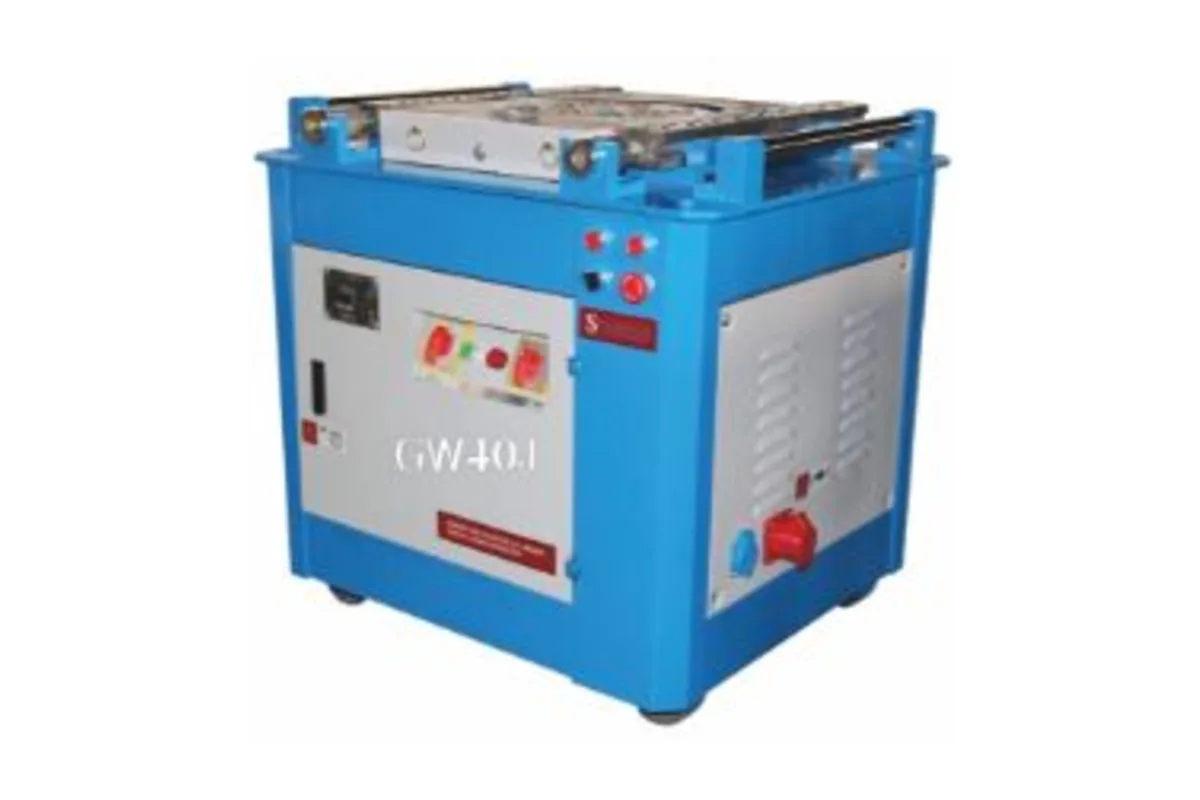 Bar Bending
GW42J Bar Bending Machine