A vibratory roller compacts by rolling a vibrating steel drum over a placed layer, so machine weight and exciter force work together across the full drum width. It is what you reach for once the work stops being a patch and becomes a run: approach and estate roads, footpaths, factory yards, embankment shoulders, asphalt overlays. Road contractors, municipal agencies and plant hire firms are the buyers, and a mini road roller is often the first self-propelled machine a small contractor owns. Vibratory compactor and vibrating roller are the same machine under other names.
How to choose a vibratory roller
Centrifugal force with operating weight is the pair that matters, not either alone. Static weight presses the layer; vibration rearranges it. The range runs from 15 kN at 280 kg to 50 kN at 1200 kg — the difference between finishing a footpath and bringing a road base to specification.
Drum width and configuration. A single drum is lighter and more manoeuvrable; a double drum compacts on both drums and leaves an even finish, the normal choice on asphalt. Wider drums cover more per pass but need room to turn — a 1070 mm machine works inside a bay a 2100 mm ride-on cannot enter.
Soil type. On granular material — gravel, crusher run, graded aggregate — vibration does most of the work and lifts can be thicker. On cohesive clay subgrade a smooth drum kneads the surface but reaches shallower, so lifts must be thinner and passes more numerous. In a confined trench neither applies: that is tamping rammer work.
Lift thickness. Set it from the machine and the material, not from habit — a heavier drum with higher force carries density deeper. Use a trial strip: place a lift, roll a fixed pass count, test, and adopt whatever reaches the required density.
Start and drive. Manual start keeps the machine simple and cheap; electric start saves a rope pull every time the roller moves. All five are hydraulic drive vibrating at 70 Hz, and all carry a water tank — not optional on asphalt, since a dry drum picks up bitumen and tears the mat.
The rollers Topall supplies
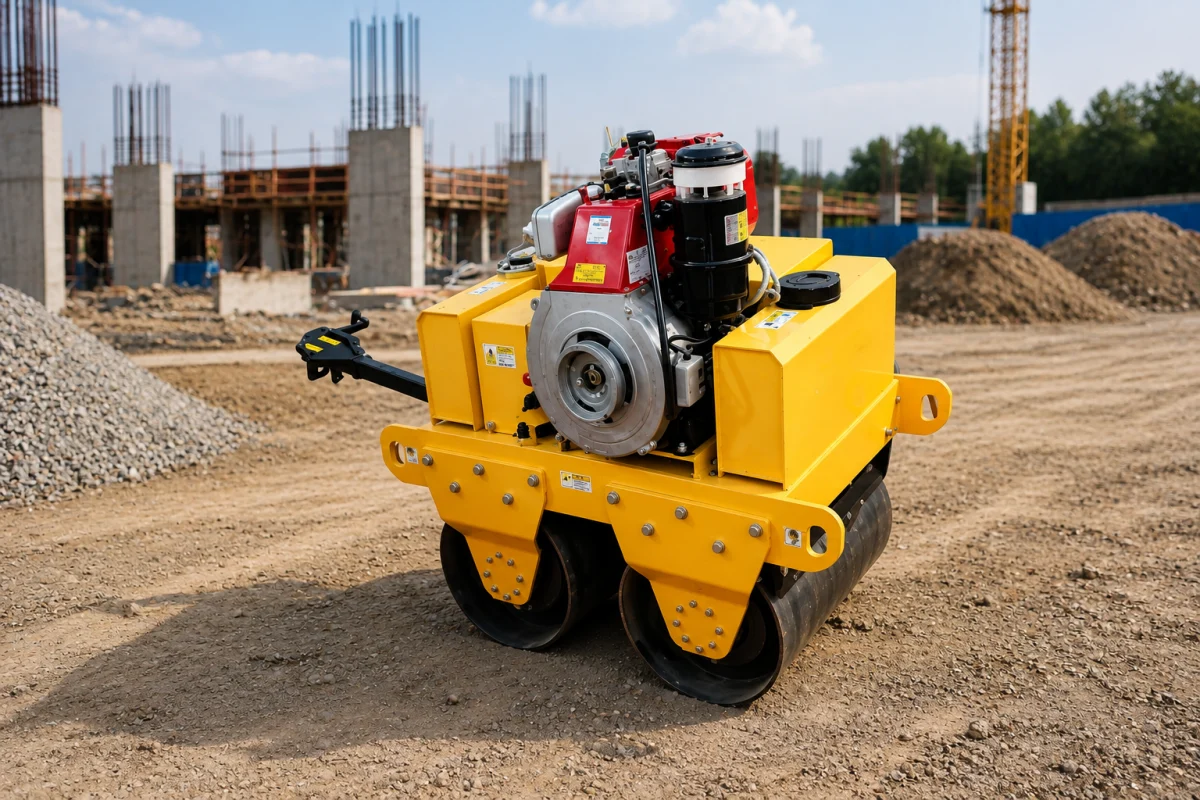
Five machines in two formats. The FVR 600S is the entry walk behind roller: single 430 × 600 mm drum, 15 kN, 5 HP, manual start, 30 litre tank, 280 kg, 25% grade ability. At that weight it moves on a pickup, which suits footpaths and small repair gangs.
The FVR 600 steps up to double 430 × 600 mm drums, 30 kN, 10 HP, electric start and 550 kg at 0 to 4 km/hr — the approach-road machine, where doubling the force halves the passes. The FVR 650D sits alongside it rather than above it: 25 kN, 6 HP, 530 kg, double 426 × 650 mm drums, and a package length of 1070 mm against the FVR 600's 1370 mm — wider drums in a shorter machine.
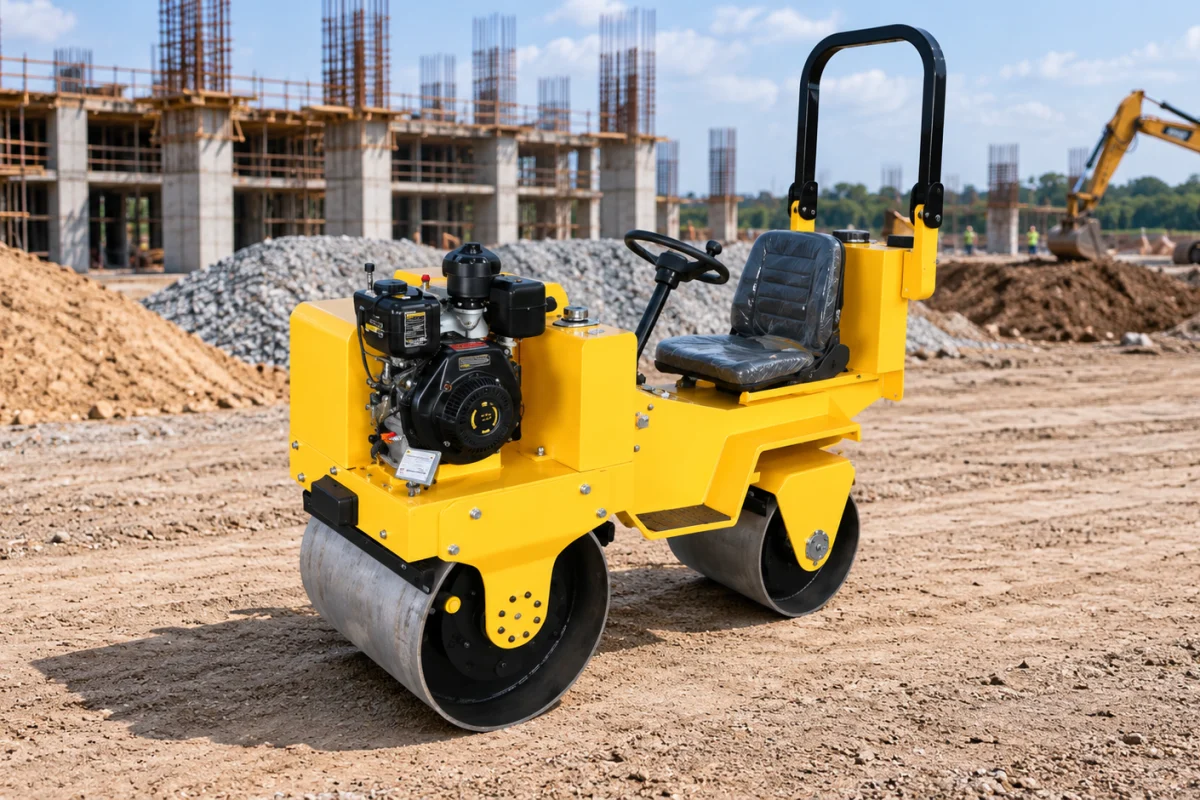
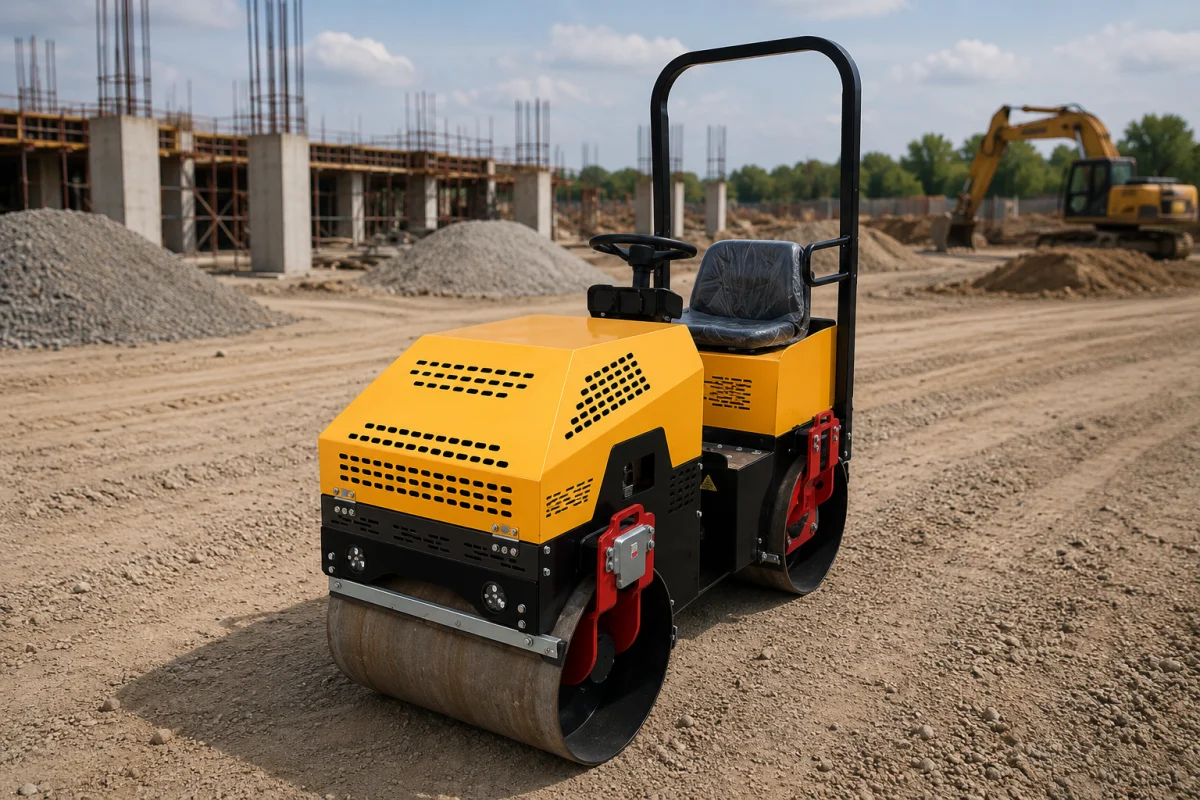
Above them are two ride-ons. The FVR 850 carries 30 kN on double 580 × 700 mm drums at 750 kg and 0 to 5 km/hr: the same force as the FVR 600 over a wider drum, with the operator seated. The FVR 1200 is the largest at 50 kN, 11 HP, 1200 kg, double 540 × 800 mm drums, 0 to 8 km/hr and a 60 litre tank. Complete figures are in the table on this page.
What affects the price
Starting from ₹1,10,000 for the FVR 600S, ₹1,60,000 for the FVR 650D, ₹1,75,000 for the FVR 600, ₹2,40,000 for the FVR 850 and ₹4,40,000 for the FVR 1200, all ex-works Delhi, plus GST. What moves a road roller price in India within a model is configuration, chiefly drum size and start type; engine brand, since a branded engine is quoted above a generic one and repays it in spares; accessories such as a scraper set or a ride-on canopy; freight, which on a 1200 kg machine needs proper transport; and GST.
Where it is used
Approach and estate roads. Sub-base and base layers on internal and colony roads, where a walk-behind covers the width in two or three runs and the finish has to take loaded tippers.
Asphalt overlay and patch repair. Double-drum machines with the water tank running, so the drums stay wet and the mat closes rather than lifts — parking bays, bus stops and carriageway reinstatements.
Yards and embankment shoulders. Large open areas of granular fill, where the ride-on FVR 850 or FVR 1200 turns compaction into a measurable rate per shift.
When a roller is the wrong machine
Judge it by area, access and edges. A roller earns its cost where there is continuous surface to cover, because compaction becomes square metres per hour instead of patches per day. It loses on all three counts inside a trench, against a wall or around a manhole collar, where a plate compactor or rammer finishes what no drum can start. The dividing line: below roughly a lane width of continuous work a plate is faster once you count loading and turning; above it the roller wins.

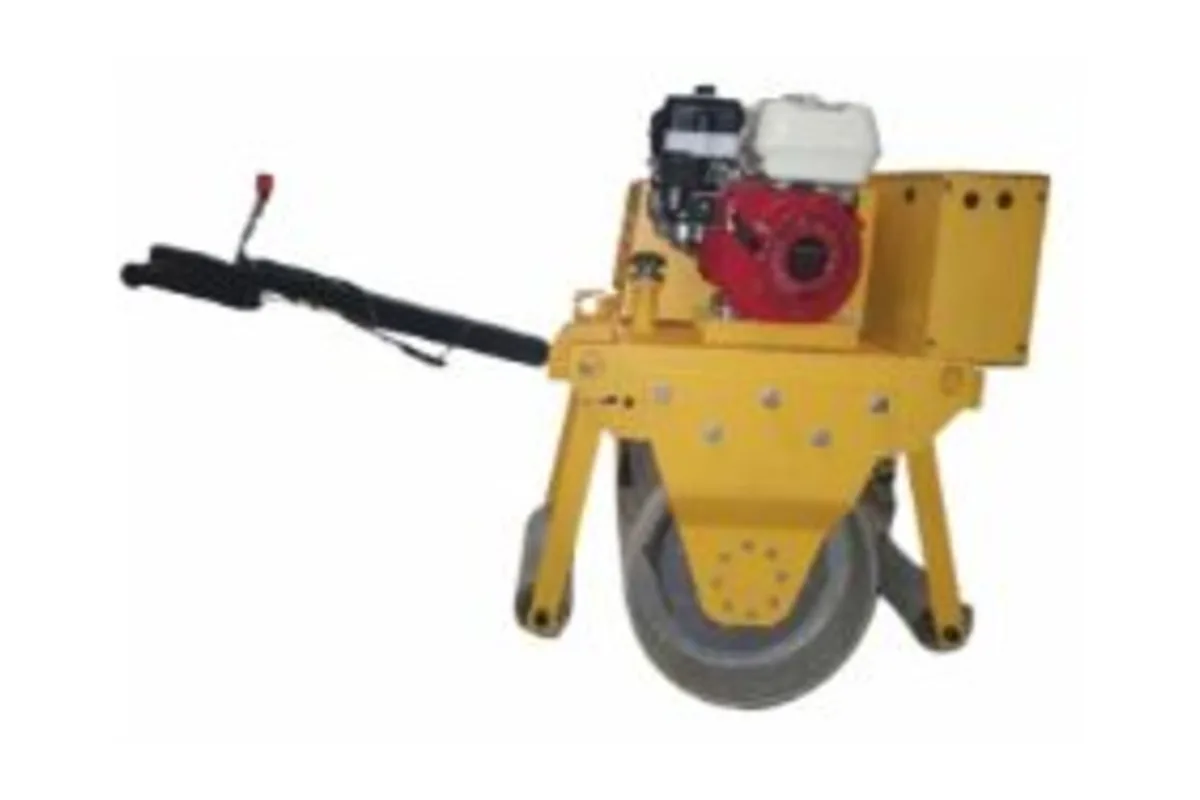 Vibratory Roller
FVR 600S Vibrating Roller
Vibratory Roller
FVR 600S Vibrating Roller