A warehouse floor is a specification, not a slab. Racking suppliers publish flatness limits, forklift and VNA truck manufacturers publish their own, and if the finished floor misses them the fix is grinding or relaying, both of which cost far more than getting the pour right. The machines on this page are what deliver a floor that meets the number and can be certified against it.
Levelling and finishing, in that order
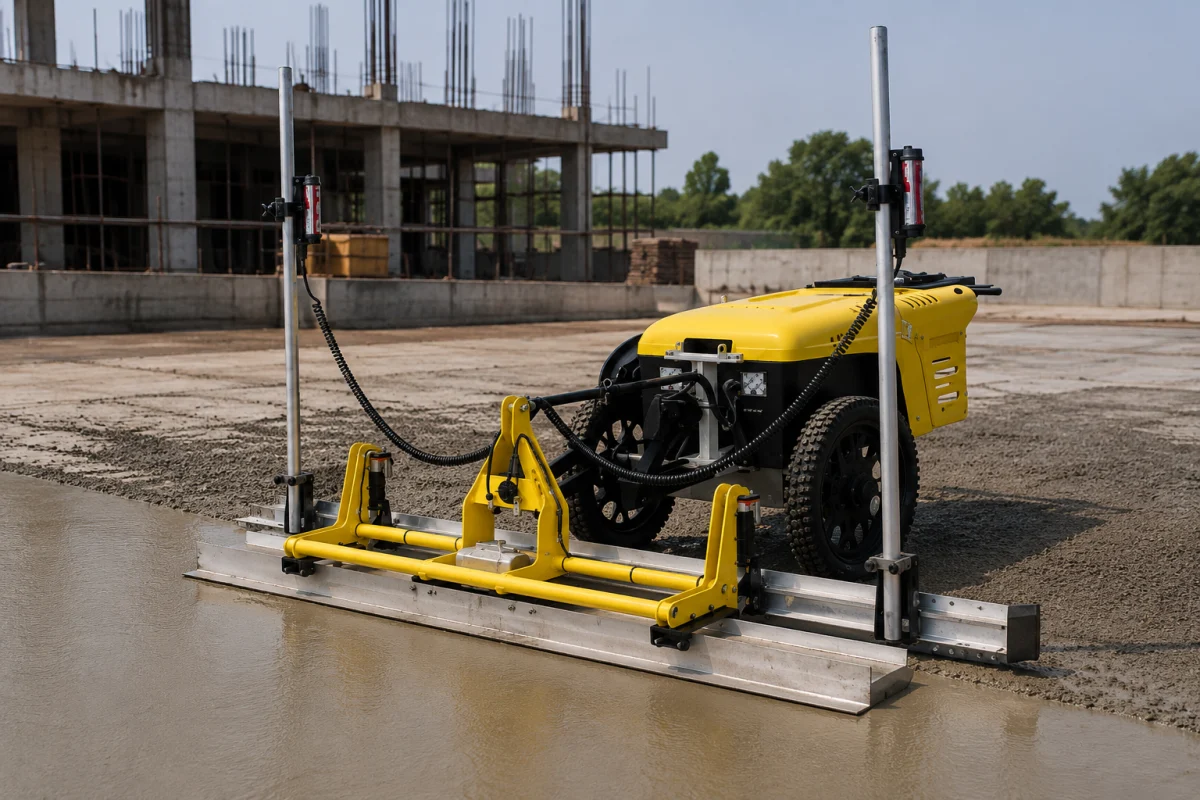
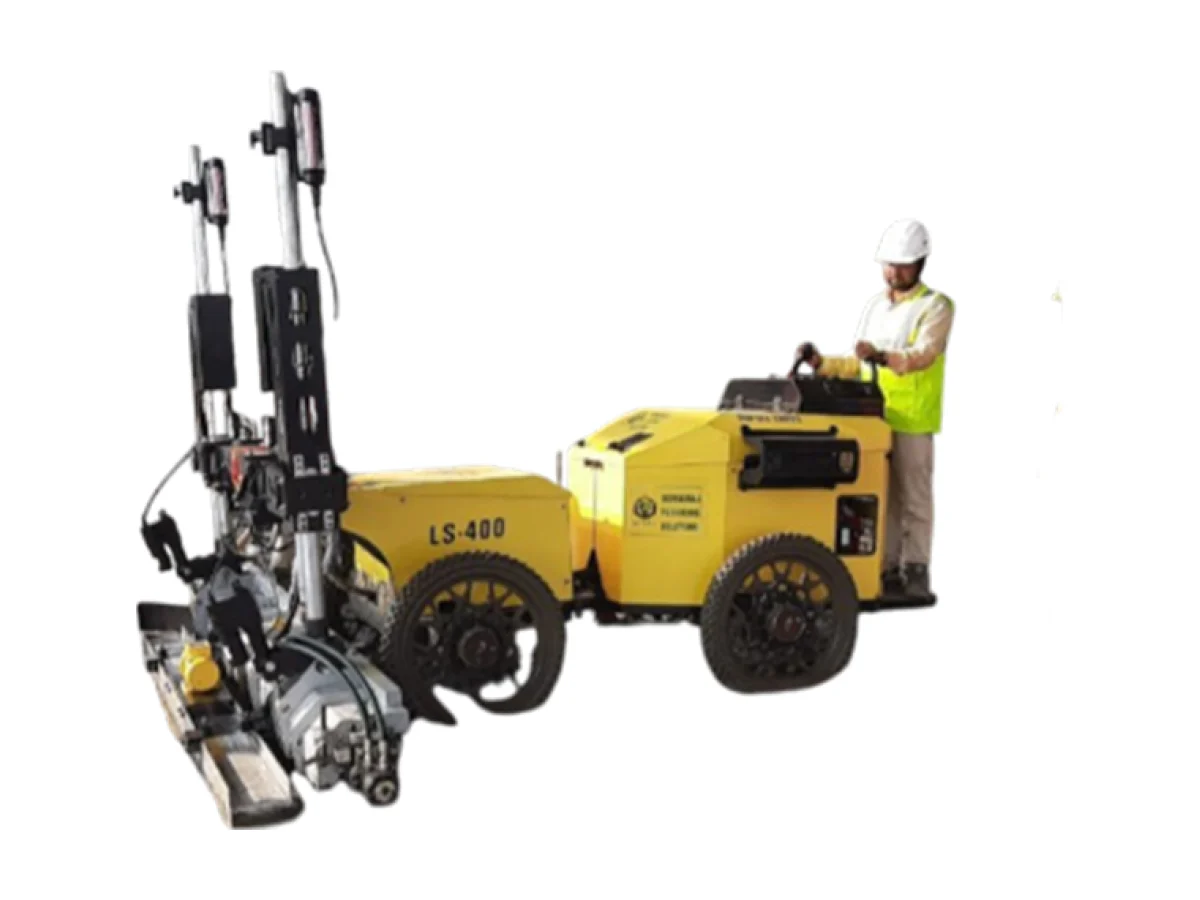
Laser guided levelling machines set the level. Our LS-325 is walk behind, holding ground flatness within 2 mm and elevation error within 7 mm over 100 m across a 2.6 m width, at 200 to 350 square metres an hour. It reaches bays, column surrounds and shed corners that a large boom machine cannot. The LS-400 is the stand-on machine, paving 2500 mm wide at 30 to 200 mm thickness, for open areas where the operator would otherwise be walking all day.
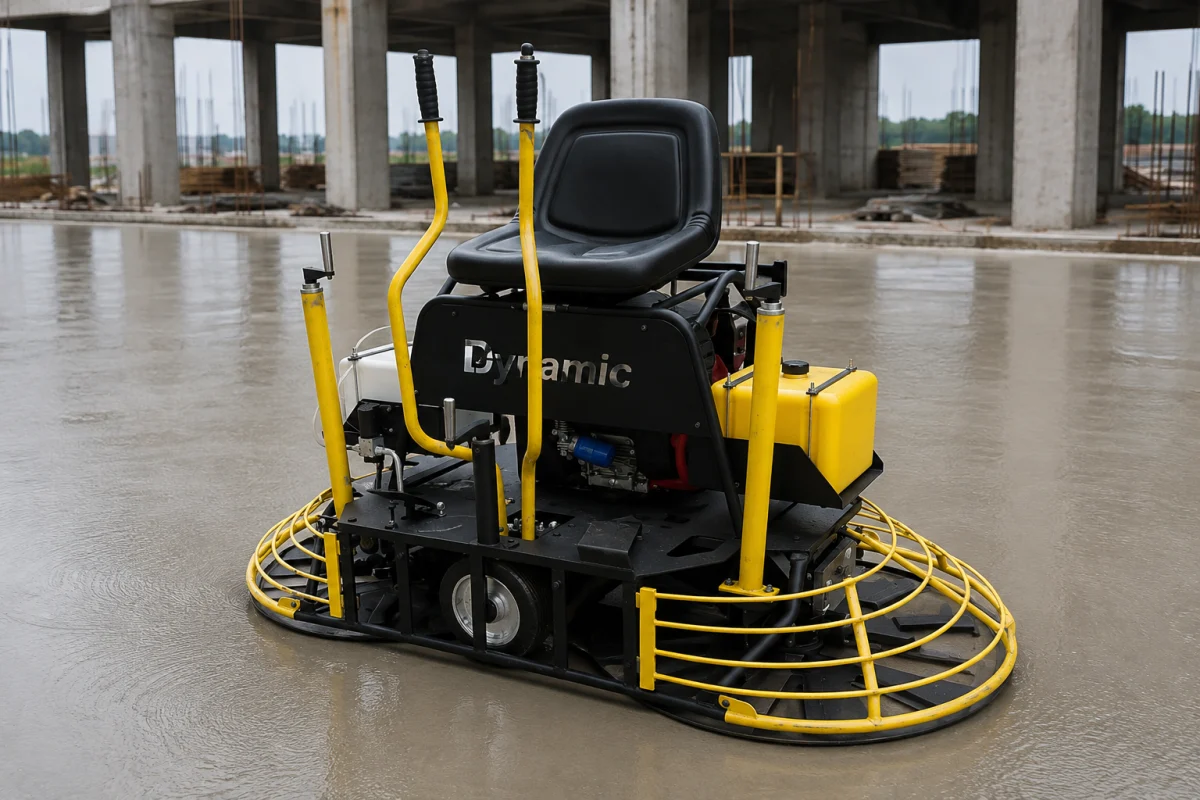
Once the slab is levelled and has set enough to take the machine, a ride-on power trowel brings the finish. The QUM-80 works a 1900 x 915 mm width with two pans and eight blades, producing the hard, dense, burnished surface that resists tyre wear and dusting.
Where this matters most
- Logistics parks and distribution centre floors
- Factory and industrial shed floors
- Cold storage, where flatness affects both racking and door seals
- Pharmaceutical and food facility floors
- Basement parking decks and podium slabs
- Any slab with a published flatness tolerance in the contract
Support that matters on a pour
Topall Impex was the first to introduce laser guided levelling machines as stock and sale in the Indian market among importers, and we are the exclusive India partner for Dynamic. A concrete pour cannot be paused while a part is sourced, so we commission the machine, train the operator, and keep spares in Delhi.
Equipment for This Work