
On Indian sites soil compactor machine means one of two things. For road layers, sub-grade and open fill it means a walk-behind vibratory roller, priced from about Rs 1.75 lakh. For trench backfill and confined areas it means a plate compactor. Both compact soil; they reach very different depths.
Two machines, one name
When a specification says "soil compactor", read the rest of the clause. If it refers to layers, lifts and density testing, it means a vibratory roller. If it refers to backfill around structures, service trenches or bedding, it means a plate compactor.
Buying the wrong one is expensive in a specific way: the work looks compacted, passes a visual inspection, and fails the density test.
Vibratory roller: for depth and area
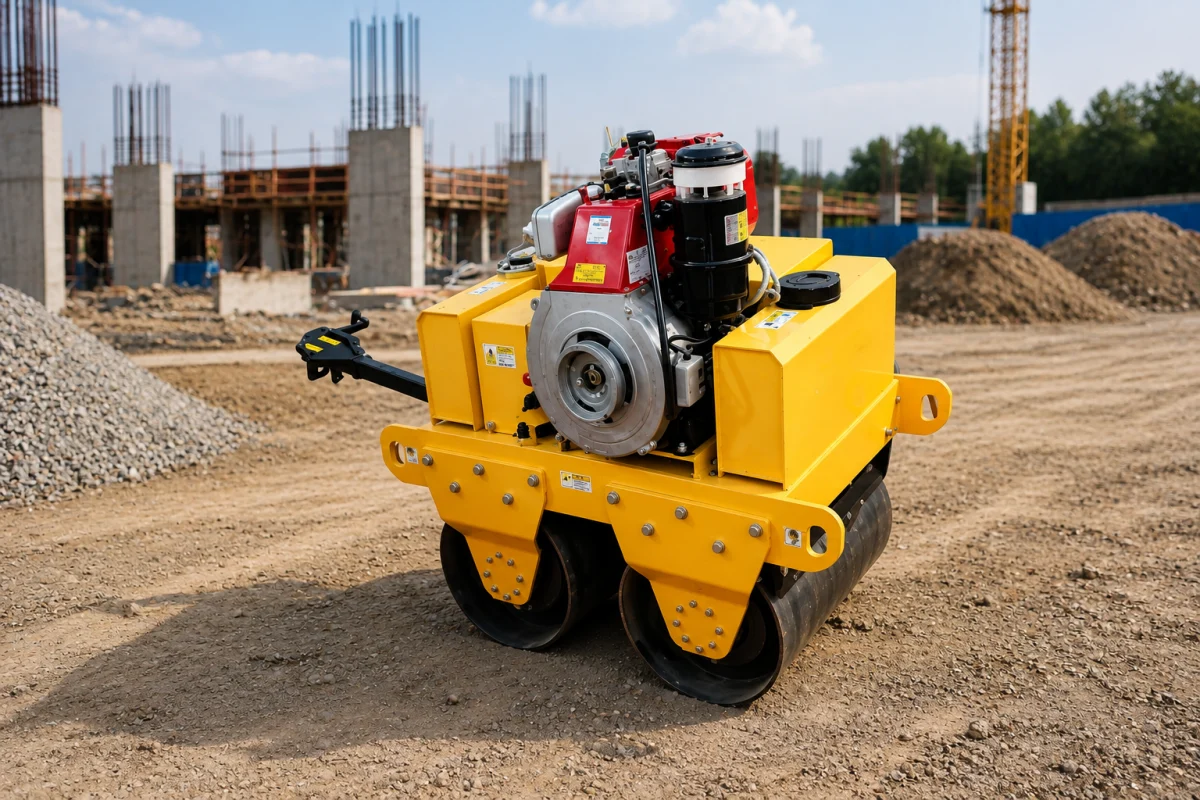
A walk-behind vibratory roller — listed by many sellers as a vibratory roller compactor or road roller compactor, all the same machine — combines static drum weight with vibration. The weight keeps the drum in contact while vibration rearranges particles, and that combination drives compaction down through the lift.
| Class | Weight | Force | Suits |
|---|---|---|---|
| Light | 550 kg | 30 KN | Trenches, kerbs, approach roads, thin lifts |
| Standard | 800 kg | 30 KN | Municipal roads, general site roads |
| Heavy | 1,200 kg | 50 KN | Thicker lifts, coarse aggregate, marginal density results |
The step from 30 KN to 50 KN is the one that fixes marginal density tests. Extra static weight helps, but centrifugal force is what does the work. The full range is on our vibratory rollers page.
Plate compactor: for confined and shallow
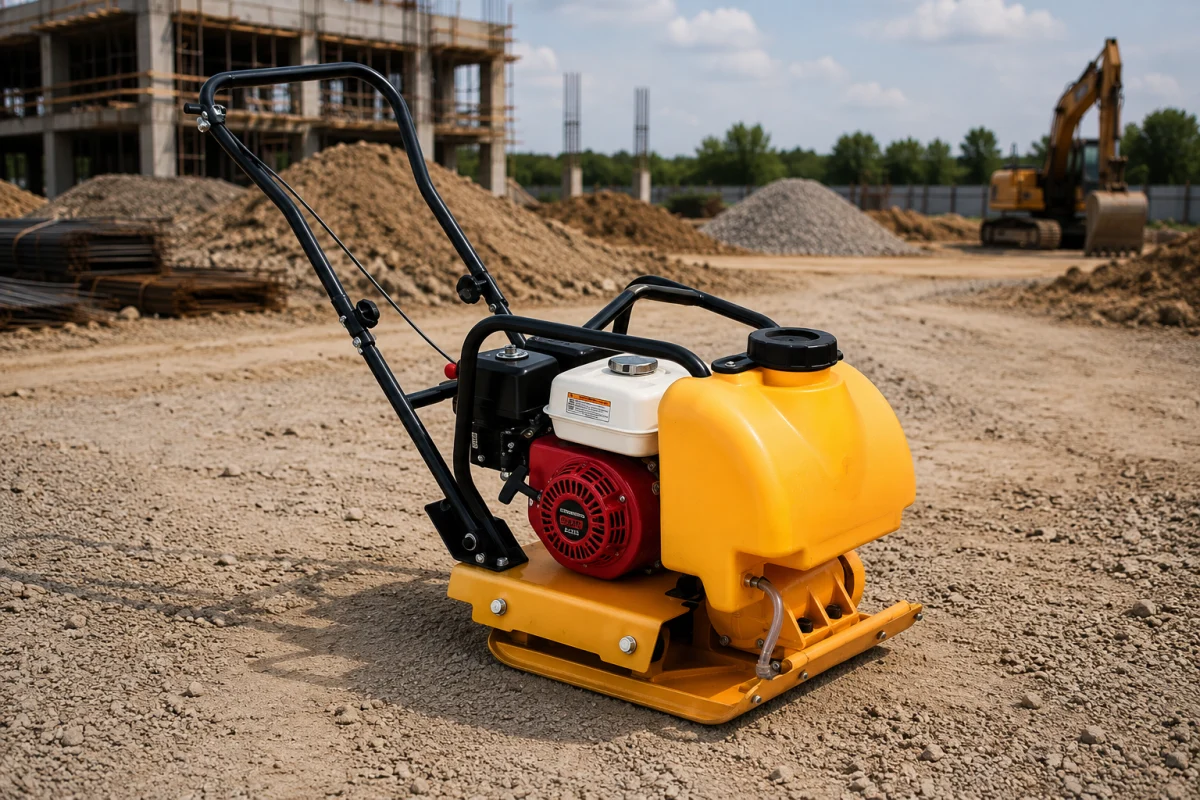
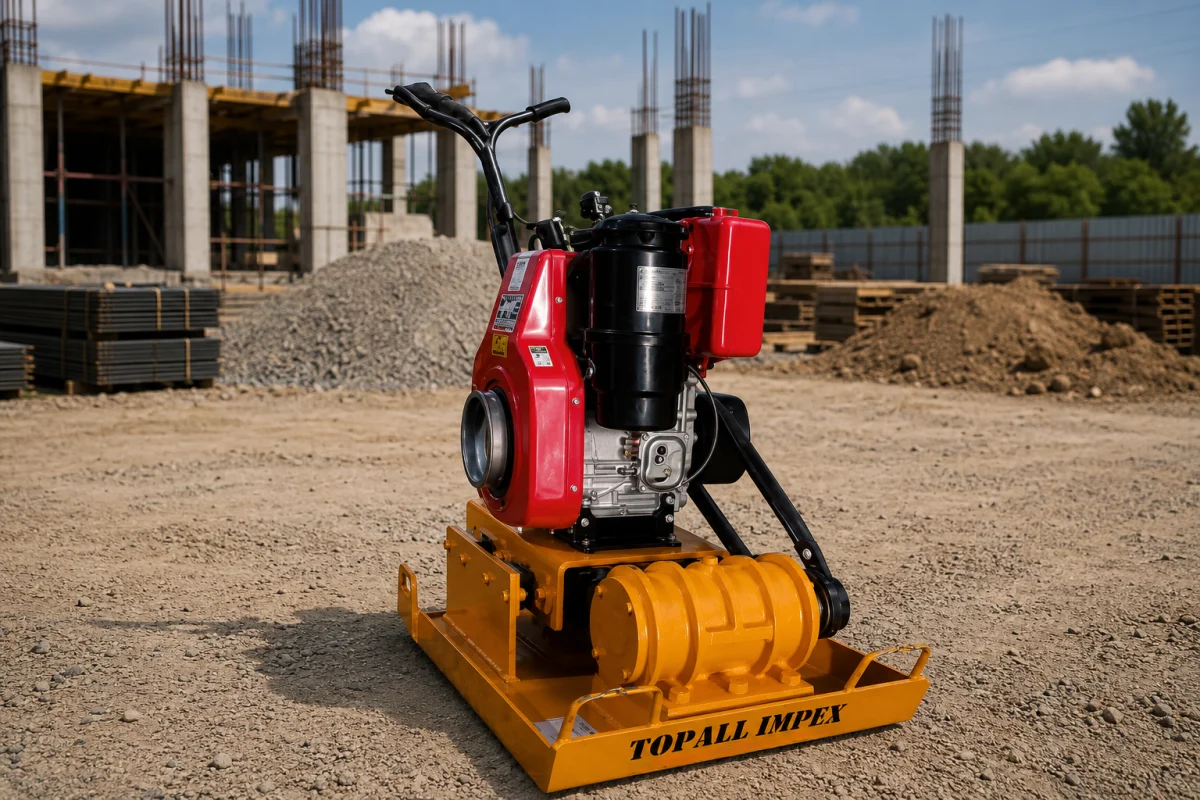
A plate compactor has little static weight and relies on impact frequency against a flat plate. Excellent surface compaction, limited depth. It goes where a roller physically cannot.
Use it for trench backfill in lifts, compaction around foundations and manholes, paver block bedding, and corners along kerb lines. Not sure which side of that line your job sits on? Our vibratory roller vs plate compactor guide settles it by job type.
Soil compactor machine price in India
Real ex-works Delhi figures for the machines above — not a "price on request" wall:
| Machine | Type | Indicative price |
|---|---|---|
| FPC90 plate compactor | Forward plate | Rs 38,000 |
| SG 120D plate compactor | Heavy plate | Rs 1,10,000 – Rs 1,21,000 |
| FVR 600 vibratory roller | 550 kg walk-behind | Rs 1,75,000 – Rs 1,92,500 |
| FVR 850 vibratory roller | 800 kg walk-behind | Rs 2,40,000 – Rs 2,64,000 |
| FVR 1200 vibratory roller | 1,200 kg walk-behind | Rs 4,40,000 – Rs 4,84,000 |
So the working answer to "soil compactor machine price" is Rs 38,000 to Rs 4.84 lakh — and where you land is decided by whether the job needs depth across a width (roller) or surface compaction in a confined space (plate), not by bargaining. Freight and GST are extra; the roller-by-roller breakdown is in our road roller cost guide.
Matching the machine to the soil
Granular fill, sand and gravel
Vibration works very well on granular material because the particles rearrange easily. Both machine types perform here; choose on depth and access.
Cohesive soil and clay
Vibration alone is less effective. Static weight and impact matter more, lifts must be thinner, and moisture content becomes critical. Heavier machines and more passes.
Aggregate base and asphalt
Roller work. A plate compactor cannot deliver the depth or the finish required on a wearing course.
Lift thickness is the number people ignore
Every compaction failure we are called about has the same root cause: lifts that were too thick for the machine.
Match your lift thickness to the machine's published depth effect. If you have a 300 mm fill to place and a machine effective to 150 mm, that is two lifts, not one. Two properly compacted lifts take less total time than digging out one failed one.
Small soil compactor machine: what to expect
Contractors searching for a small soil compactor usually want one of two things: a 550 kg walk-behind roller light enough to move on a small tipper — that is the FVR 600 — or a plate compactor that two people can place in a trench, which is the FPC90 at Rs 38,000.
Both are legitimate answers. The deciding question is whether you need depth of compaction across a width, or surface compaction in a confined space.
Before you buy
- What material, at what lift thickness?
- Is there a density specification, and who tests it?
- What is the narrowest working space?
- How does the machine get to site and into position?
Answer those four and the machine selects itself. Send us your answers and we will quote against them, not against a catalogue page — including saying so when the Rs 38,000 plate does the job you were about to buy a roller for.
Soil compactor machine FAQs
What is the price of a soil compactor machine in India?
Rs 38,000 for a forward plate compactor up to Rs 4.84 lakh for a 1,200 kg walk-behind vibratory roller, ex-works Delhi. Plates cover confined, shallow work; rollers cover depth and area.
Is a vibratory roller compactor the same as a road roller compactor?
Yes — both are market names for the walk-behind vibratory roller. Sellers list the same machine under several names; compare operating weight and centrifugal force, not the label.
Which soil compactor for trench backfill?
A plate compactor, in thin lifts — it fits the trench and compacts each lift's surface. If the trench is wide enough for a drum, a 550 kg roller compacts deeper per pass.
Can one machine handle both soil and paver bedding?
A heavy plate compactor like the SG 120D covers granular backfill and paver bedding well. The moment the job adds road lifts or density-tested area work, you need the roller as well — they are companions, not substitutes.
Frequently Asked Questions
What is a soil compactor machine?
What is the price of a soil compactor machine?
Which soil compactor do I need for clay?
What lift thickness can a soil compactor handle?
What is a small soil compactor machine?
Do you supply compaction equipment with commissioning?
Machines Covered in This Guide
Get a price for your job
Tell us the material, the area and the specification you have to meet. We will come back with the right machine, the price and the delivery date — usually the same working day.