
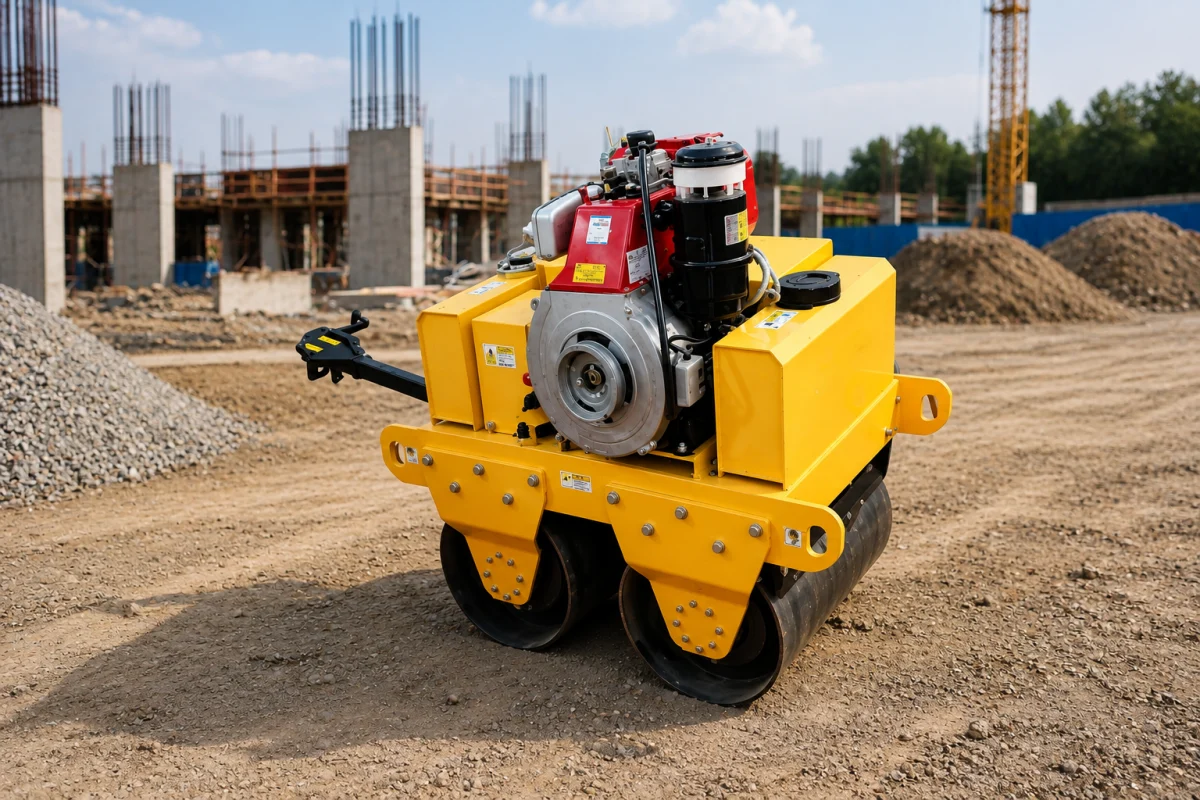
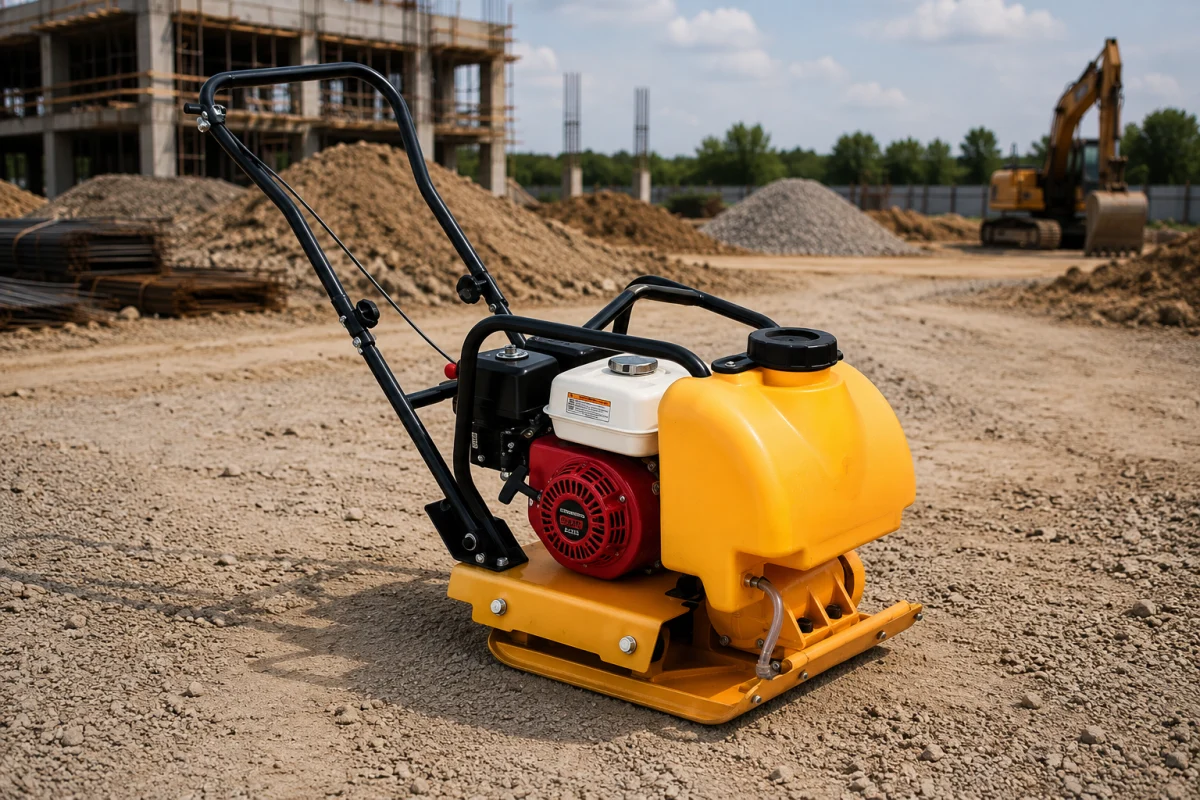
Use a vibratory roller for open areas, road layers, sub-grade and anything where you need depth of compaction across width. Use a plate compactor for confined spaces, trench backfill, around structures, and paver block bedding. The roller compacts deeper; the plate goes where the roller cannot.
The real difference is depth, not size
Both machines compact by vibration. The difference is how the energy reaches the material.
A vibratory roller puts static weight on a drum and vibrates it. The weight keeps the drum in contact while vibration rearranges the particles. That combination is what drives compaction down through the lift.
A plate compactor has very little static weight. It relies almost entirely on impact frequency against a flat plate. That gives excellent surface compaction and poor depth.
Get this wrong and the result is a surface that passes a visual check and fails a density test at depth. It is the most common compaction failure on Indian sites.
Where each machine belongs
Use a vibratory roller for
- Road sub-grade, sub-base and base layers
- Asphalt wearing course on internal roads and approaches
- Large open fill areas where lifts are 150 mm or more
- Any work with a density specification that will be tested at depth
Use a plate compactor for
- Trench backfill and service trenches
- Compaction around foundations, manholes and structures
- Paver block bedding sand and block settling
- Patch repairs and confined corners a roller cannot enter
Side by side
| Walk-behind vibratory roller | Plate compactor | |
|---|---|---|
| Typical weight | 550 – 1,200 kg | 90 – 350 kg |
| Compaction depth | Deep, suits thicker lifts | Shallow, surface and thin lifts |
| Working width | 600 – 700 mm drum | Plate width, typically 400 – 700 mm |
| Best on | Soil, gravel, aggregate, asphalt | Backfill, bedding sand, paver blocks |
| Confined areas | Limited | Excellent |
| Indicative price | Rs 1.75 lakh onwards | Lower, varies by plate size |
Most sites need both
This is not really a versus question on a working site. A road job runs a roller on the layers and a plate compactor around the kerbs, gullies and service trenches the roller cannot reach. A building site runs a plate compactor for backfill and a roller for the internal roads and hardstanding.
If you are buying your first compaction machine, buy for the work that dominates your schedule. If your work is roads and open areas, start with the roller. If it is buildings, trenches and paving, start with the plate.
Reversible or forward-only plate compactor
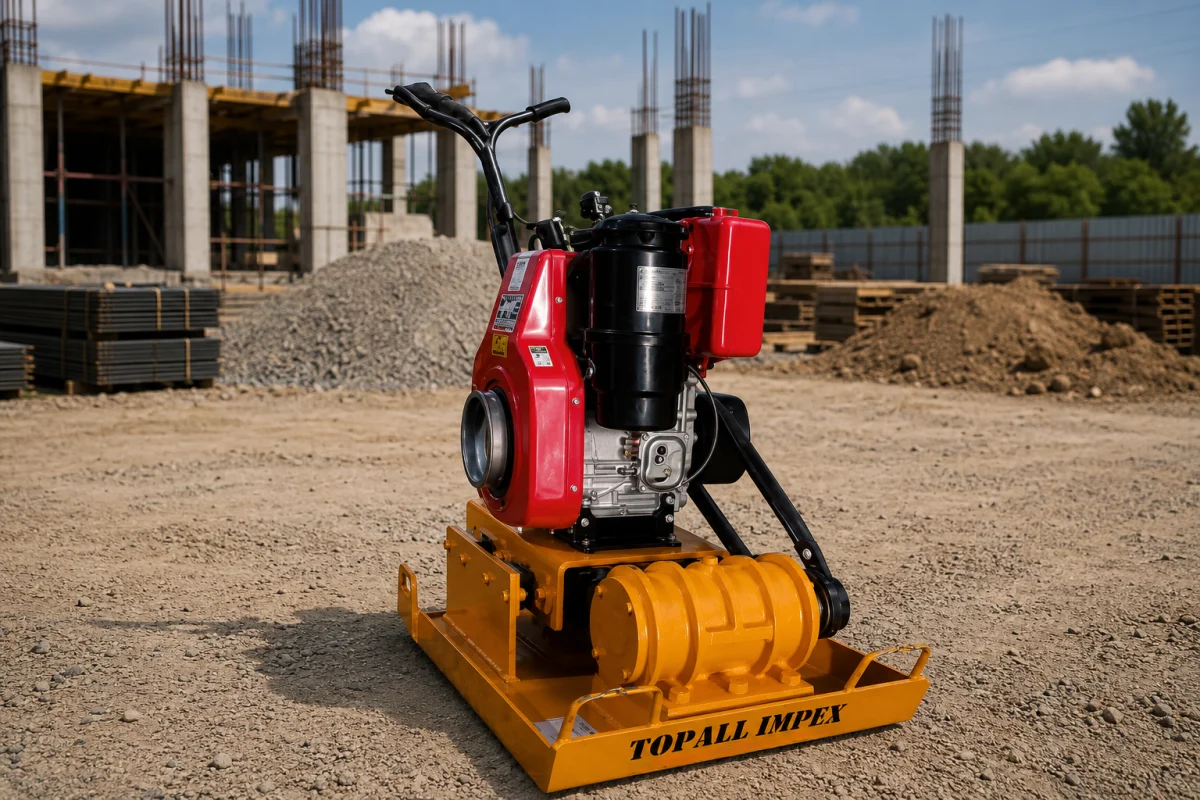
A forward plate compactor is lighter and cheaper and suits bedding sand and light backfill. A reversible plate compactor works forward and backward without turning, which matters in trenches, and delivers more force for structural backfill. If you compact trenches regularly, the reversible machine pays for itself in time alone.
Questions that decide the machine
- What is the lift thickness you are compacting, and is there a density specification?
- What is the narrowest place the machine has to work?
- Is the material granular fill, cohesive soil, aggregate or bedding sand?
Those three answers select the machine every time. Anything else is guessing.
Frequently Asked Questions
What is the difference between a vibratory roller and a plate compactor?
Can a plate compactor replace a road roller?
Which machine do I need for paver block work?
What is a soil compactor machine?
Should I buy a reversible or forward plate compactor?
Do you supply both types with commissioning?
Machines Covered in This Guide
Get a price for your job
Tell us the material, the area and the specification you have to meet. We will come back with the right machine, the price and the delivery date — usually the same working day.