
An automatic stirrup bending machine produces 2,000 to 2,400 finished stirrups per hour with one operator, holding length tolerance to about plus or minus 1 mm. Manual bending needs a gang, produces variable pieces and generates steel wastage. Below roughly a few thousand stirrups a week, manual still makes sense. Above it, the CNC machine wins on cost per piece.
What each machine actually is
Manual and motorised bar benders. A worker feeds one bar at a time against an angle stop. Output depends entirely on the person. Two operators on the same machine will produce different pieces.
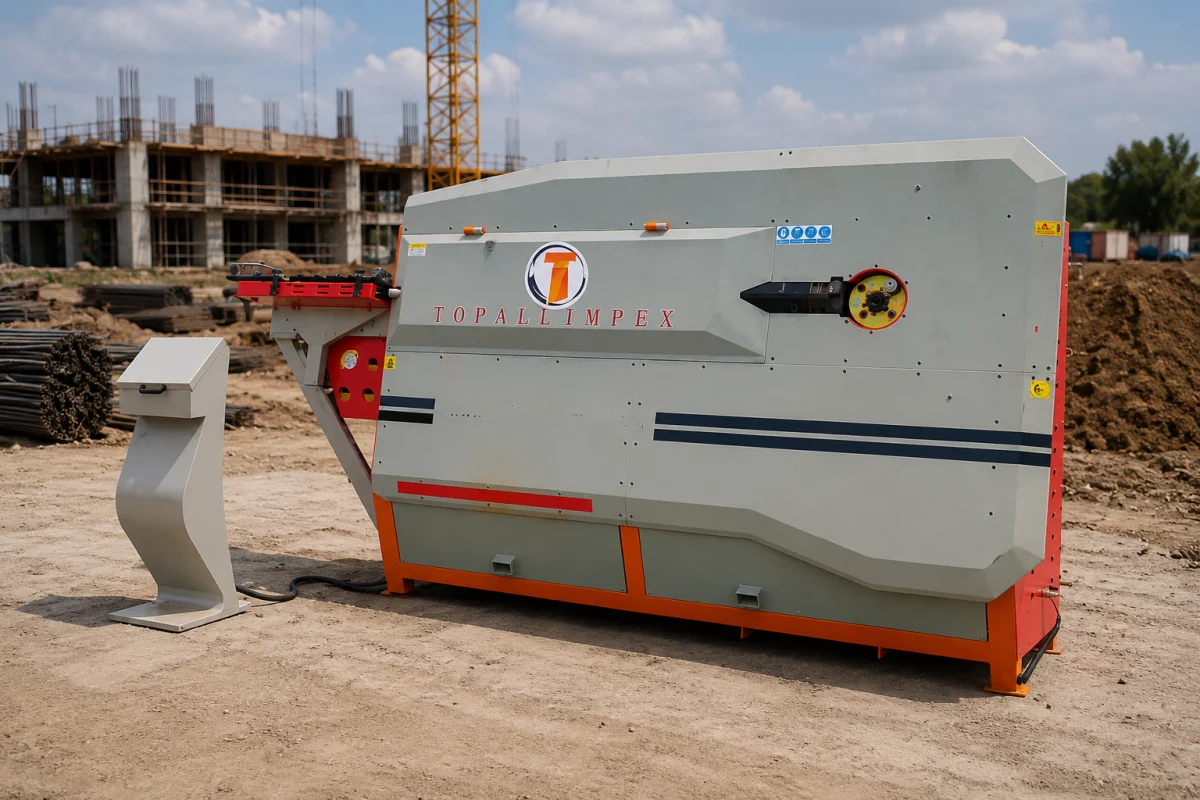
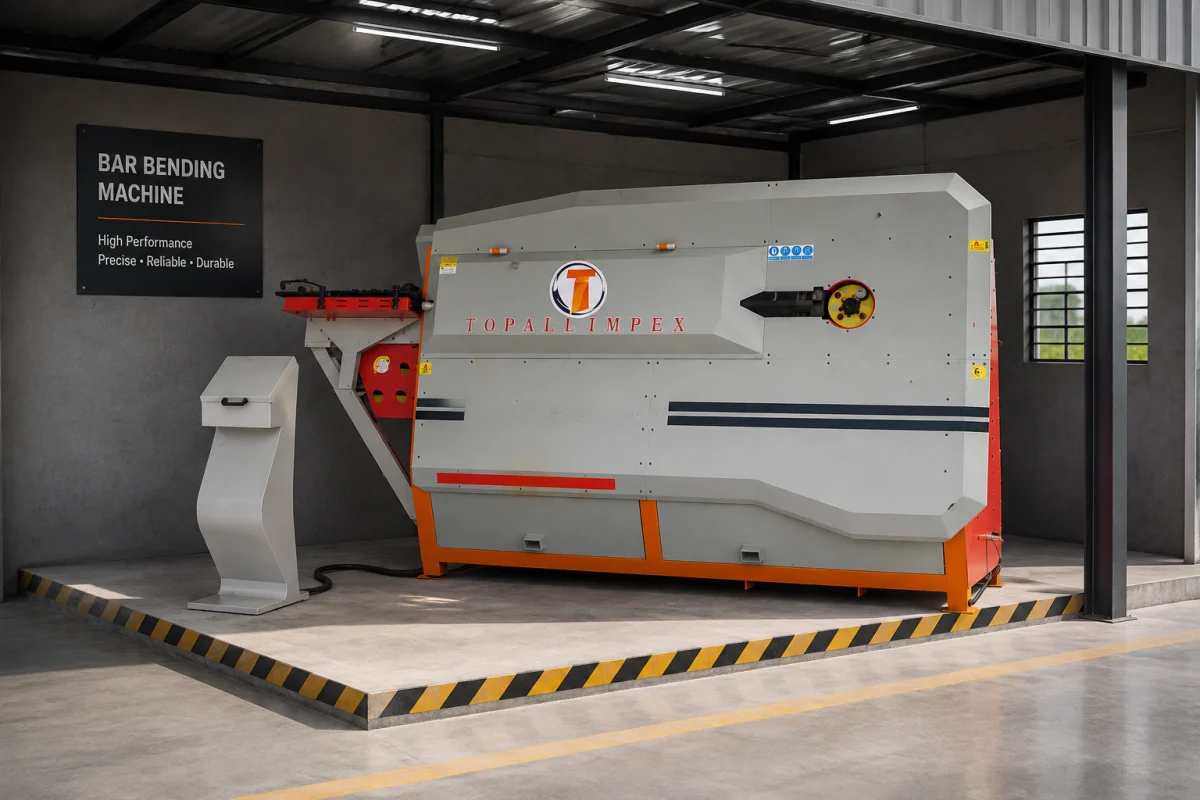
Automatic CNC stirrup bending machines. Wire feeds from a coil or bundle, the machine straightens, measures, bends and cuts to a programmed drawing. The operator loads material and monitors output. This is what contractors mean by a sariya bending machine or stirrup making machine when they are buying at scale.
Comparison that matters on site
| Manual bender | CNC automatic stirrup bender | |
|---|---|---|
| Output | Depends on the gang | 2,000 – 2,400 pcs/hr |
| Labour | Bending gang | One operator |
| Length tolerance | Variable | Around ±1 mm |
| Angle tolerance | Set by eye and stop | Around ±1 degree |
| Steel wastage | Higher, off-cuts and rejects | Cut to schedule |
| Bar range | Whatever the operator manages | 4 – 12 mm TMT depending on model |
| Capital cost | Low | Rs 14 lakh – Rs 37.4 lakh |
Single wire or double wire
This is the decision most buyers get wrong. A single-wire machine like the GTD4-10S handles 4 to 10 mm TMT at around 2,000 pieces per hour. A double-wire machine like the GTD5-12D handles 4 to 12 mm single wire, or two wires at once up to 10 mm, at around 2,400 pieces per hour.
If your bar schedule is dominated by 8 mm and 10 mm stirrups in volume, running two wires effectively doubles throughput from the same machine, the same floor space and the same operator. That is where the price difference between the two machines is recovered.
If you regularly need 12 mm stirrups, only the larger machine will do it at all.
Where manual still wins
Nobody should sell you a CNC machine you cannot keep busy.
- Small sites and repair contractors bending a few hundred pieces a week
- Jobs with constantly changing one-off shapes rather than repeated schedules
- Sites without a stable three-phase supply
- Operations where the machine would sit idle between projects
A CNC machine standing idle is worse than no machine. It is capital that is not working.
The costs nobody quotes
Steel wastage
Hand bending against a stop produces off-cuts and rejects. On a large schedule, the percentage of steel lost is a real line item. A programmed machine cuts to length from the bar bending schedule.
Rejection at inspection
Stirrups outside tolerance get rejected. Every rejected batch is steel, labour and time paid twice, plus a conversation with the client you would rather not have.
Gang availability
A bending gang is a recurring cost and a scheduling risk. A machine plus one operator is predictable.
What to confirm before ordering
- Minimum bar diameter, not just maximum. Small stirrups are common and not every machine handles 4 mm cleanly.
- Published tolerance figures for length and angle. Ask for numbers, not adjectives.
- Power supply. Rated total power on these machines runs 20 to 32 KW. Confirm your yard can deliver it.
- Commissioning and training. A CNC bender set up wrong produces scrap quickly. Installation and operator training should be included.
Frequently Asked Questions
How many stirrups can an automatic stirrup bending machine make per hour?
Is an automatic stirrup bending machine worth it?
What is a sariya bending machine?
What is the difference between single wire and double wire machines?
What tolerance can an automatic stirrup bender hold?
Do you provide installation and operator training?
Machines Covered in This Guide
Get a price for your job
Tell us the material, the area and the specification you have to meet. We will come back with the right machine, the price and the delivery date — usually the same working day.