
A walk-behind vibratory road roller in India costs roughly Rs 1.75 lakh to Rs 4.84 lakh depending on operating weight and drum width. A 550 kg machine with a 600 mm drum starts around Rs 1.75 lakh, an 800 kg unit around Rs 2.40 lakh, and a 1,200 kg roller with a 700 mm drum runs to about Rs 4.40 lakh. Ride-on and tandem rollers sit well above this range.
What decides the price of a road roller
Contractors ask for "road roller price" as if it were one number. It is not. The first split is machine class — the mini walk-behind vibratory rollers that do site and municipal work, and the 8–10 ton tandem rollers that pave highways are entirely different purchases. Within the mini class, four things move the figure, and understanding them stops you overpaying for capacity you will never use.
Operating weight. This is the biggest single driver. Static weight is what presses the material down between vibration cycles. A 550 kg machine and a 1,200 kg machine are different tools, not different sizes of the same tool.
Centrifugal force. Vibration is what actually compacts. Force is measured in kilonewtons. A 30 KN machine handles trenches, kerbs, footpaths and thin lifts. A 50 KN machine holds density on thicker lifts and heavier aggregate.
Drum width. Wider drums cover ground faster but cannot get into tight work. A 600 mm drum suits trench and approach-road work. A 700 mm drum finishes open areas quicker.
Engine and drive. Hydraulic drive costs more than mechanical, and it is worth it on any job with gradients or long shifts. Diesel engines from known makers cost more than unbranded units and hold resale value.
Mini road roller price in India
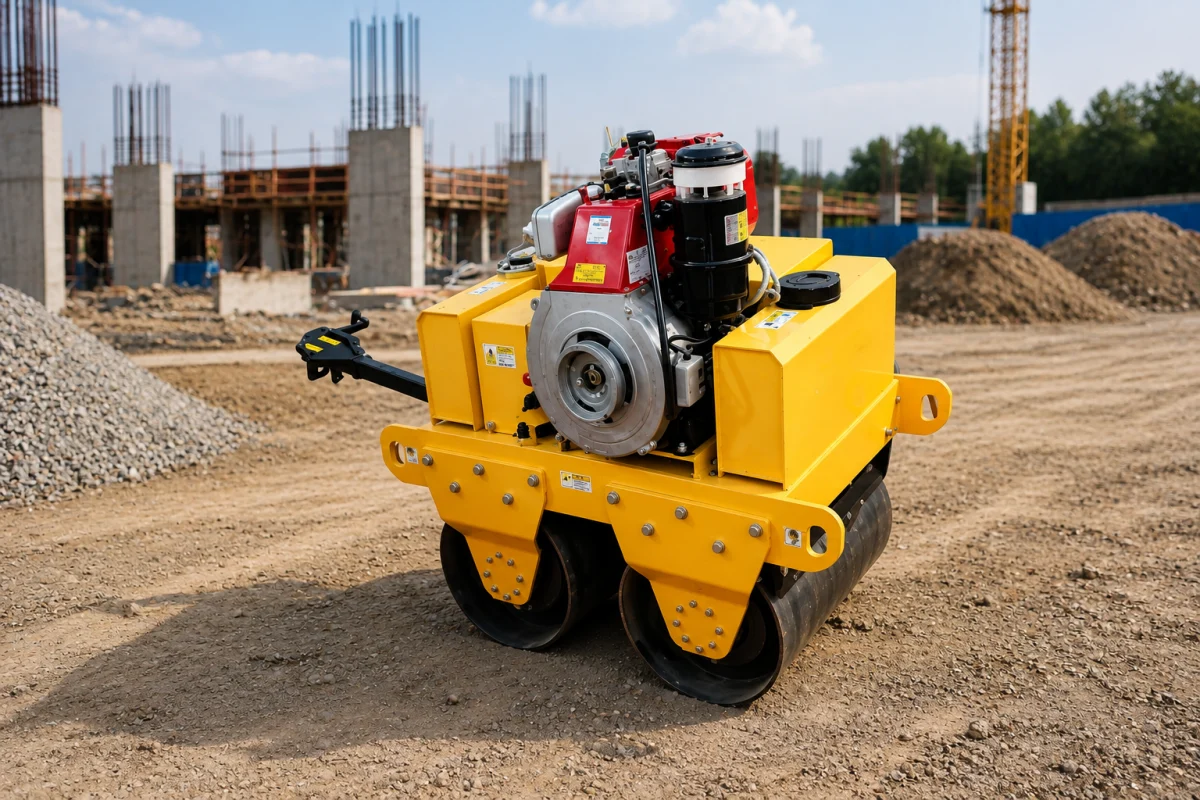
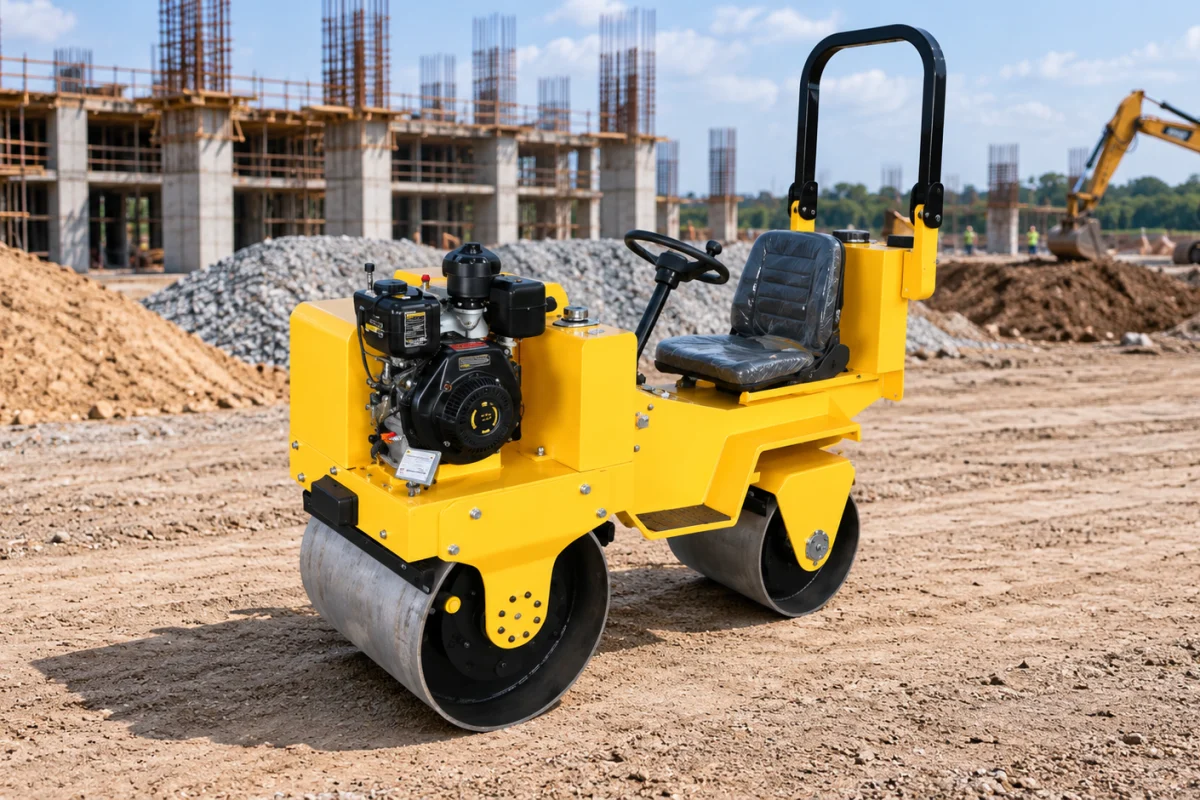
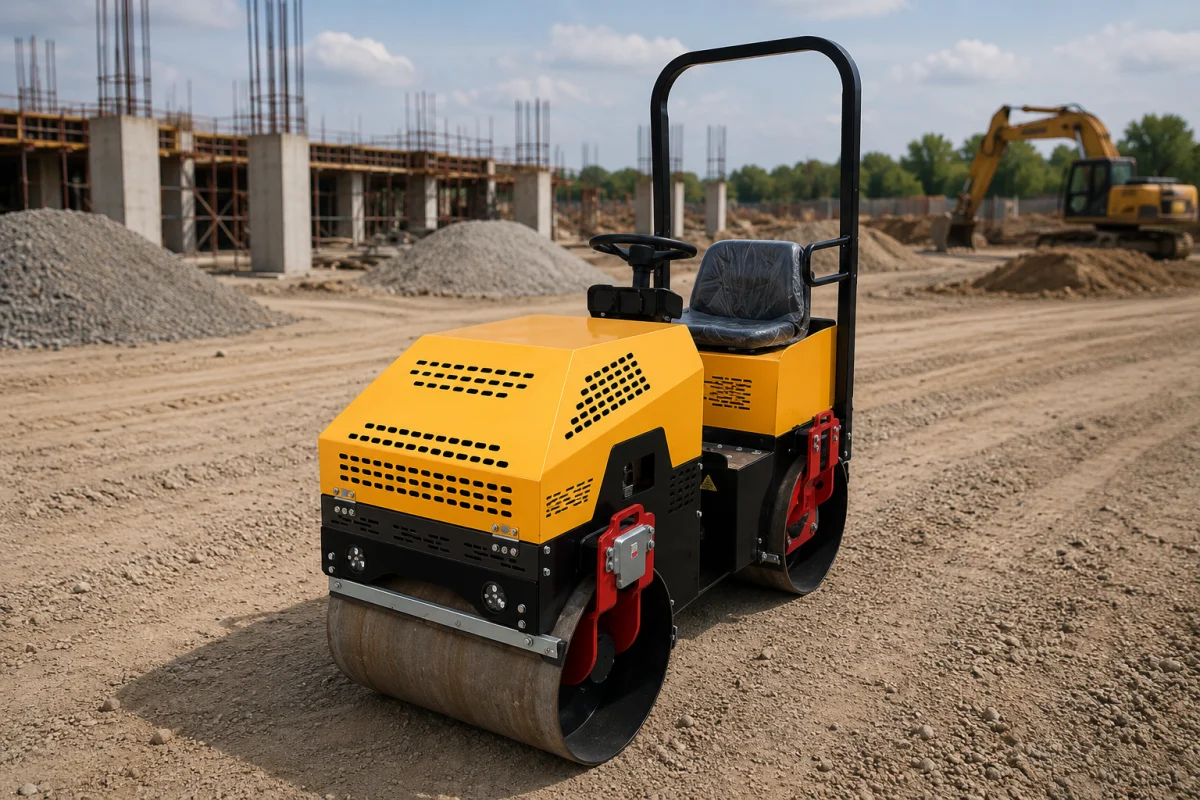
The machines below are what the market calls a mini road roller, baby roller or walk-behind vibratory roller — the same class by three names. These are current ex-works Delhi figures for our vibratory roller range, hydraulic drive:
| Machine | Weight | Centrifugal force | Drum | Indicative price |
|---|---|---|---|---|
| FVR 600 vibrating roller | 550 kg | 30 KN | 430 x 600 mm | Rs 1,75,000 – Rs 1,92,500 |
| FVR 850 vibrating roller | 800 kg | 30 KN | 460 x 650 mm | Rs 2,40,000 – Rs 2,64,000 |
| FVR 1200 vibrating roller | 1,200 kg | 50 KN | 500 x 700 mm | Rs 4,40,000 – Rs 4,84,000 |
These are ex-works Delhi figures for hydraulic-drive machines. Final price depends on engine configuration and whether you need a water sprinkler kit, which most road and asphalt work does. So a working answer to "mini road roller price in India" is Rs 1.75 lakh to Rs 4.84 lakh, and where you land in that band is decided by weight and centrifugal force, not by bargaining.
What about 8–10 ton tandem road rollers?
If your search was about the full-size rollers you see on highway projects, that is a different budget class altogether: ride-on tandem machines from the large OEMs, typically quoted well above Rs 20 lakh, bought against project contracts and usually financed. We supply the mini class, not these — and we will say so on the phone rather than talk you into the wrong machine. Two things are worth knowing before you go that way. First, most contractors searching "cost of road roller" for site roads, trenches, approach roads or municipal repair actually need the mini class — a tandem roller cannot enter a trench or work a kerb line. Second, if your work genuinely is highway-scale lifts, buy the tandem roller from its OEM and keep a walk-behind machine alongside it for the edges and confined areas the big drum cannot reach; that pairing is how the road actually gets finished.
Which size for which job
Trenches, kerbs and approach roads
Take the 550 kg class. It is light enough to move between sites on a small tipper, and it works along kerbs and in trenches where a ride-on roller simply cannot reach. At 30 KN it still delivers a finished density that holds up under traffic.
Municipal roads and general site work
The 800 kg class is the everyday workhorse. Same 30 KN force, wider drum, more static weight. If most of your work is PWD or MCD road repair and internal site roads, this is the size that pays for itself fastest.
Thicker lifts and heavier aggregate
Go to 1,200 kg and 50 KN. The step up in centrifugal force is what matters here, not the extra weight. If you are compacting deeper lifts or coarser material and your density tests are marginal, this is the machine that fixes it.
Compacting confined patches, pavers or granular sub-base in small areas? Compare a roller against a plate machine first — our vibratory roller vs plate compactor guide settles it by job type, and plate compactors start at Rs 38,000.
Cost of ownership, not just purchase price
The purchase price is the smaller number over a machine life. What actually costs money is downtime.
- Spares availability. A roller waiting three weeks for a hydraulic part is not cheaper than one that cost Rs 40,000 more but has parts on a shelf in Delhi.
- Engine serviceability. A common diesel engine can be serviced anywhere in India. An unusual one cannot.
- Drum condition. Drum surface finish decides the finish you leave. Cheap drums pit and mark the surface.
- Resale. Known machines with service records sell. Unbranded ones do not.
What we would ask before quoting you
Three questions decide the machine, and they take a minute:
- What material are you compacting, and to what depth per lift?
- What is the narrowest place the machine has to work in?
- Do you have a density specification to meet, and who tests it?
Answer those and the size picks itself. Buying more machine than the job needs is the most common and most expensive mistake in this category. Send us those three answers and you will have a same-day quotation with the size we would actually put on your site.
Road roller price FAQs
What is the price of a mini road roller in India?
Rs 1.75 lakh to Rs 4.84 lakh ex-works Delhi, depending on operating weight (550–1,200 kg), centrifugal force (30–50 KN) and drum width. Freight and GST are extra.
Is a walk-behind road roller cheaper than a ride-on?
Yes, by a wide margin. Walk-behind vibratory rollers run Rs 1.75–4.84 lakh; ride-on tandem rollers from the large OEMs are typically quoted above Rs 20 lakh. They also do different jobs — a walk-behind works trenches and kerb lines a tandem drum cannot reach.
Should I rent or buy a road roller?
If the machine works more than a few months a year, buying the mini class usually wins — the purchase price is low enough that steady rental outruns it quickly. Rent when the need is a one-off job or a size you will never use again.
Do the prices include GST and transport?
No — the figures on this page are ex-works Delhi. Freight to your site and GST are added on the quotation, so ask for a landed price with your pin code.
Frequently Asked Questions
What is the cost of a road roller in India?
What is the price of a mini road roller?
How much centrifugal force do I need?
What is the difference between a road roller and a soil compactor?
Do you deliver road rollers outside Delhi?
Is a hydraulic drive roller worth the extra cost?
Machines Covered in This Guide
Get a price for your job
Tell us the material, the area and the specification you have to meet. We will come back with the right machine, the price and the delivery date — usually the same working day.