
Choose a TMT bar bending machine on three numbers: the bar diameter range you actually bend, the stirrups per hour your schedule demands, and the power your yard can supply. A 4 to 10 mm machine at 2,000 pcs/hr suits most building work. Step to a 4 to 12 mm double-wire machine at 2,400 pcs/hr for precast, RMC and high-volume yards.
Start with the bar schedule, not the machine
Pull out a recent bar bending schedule and count. What diameters appear most? What is the largest stirrup diameter on the drawing? How many pieces per month across all sites?
Those three numbers select the machine. Everything else is detail.
Bar diameter: check both ends of the range
Every buyer checks the maximum diameter. Far fewer check the minimum, and that is where problems appear.
A machine rated for 6 to 12 mm will struggle with 4 mm wire. Small-diameter ties and slab stirrups are common on Indian drawings. If your schedule includes them, confirm the machine handles the small end cleanly before you order.
| Machine | Single wire | Double wire | Output |
|---|---|---|---|
| GTD4-10S | 4 – 10 mm TMT | — | 2,000 pcs/hr |
| GTD5-12D | 4 – 12 mm TMT | 4 – 10 mm TMT | 2,400 pcs/hr |
Output: match it to your worst month, not your average
Contractors size machines on average demand and then find themselves short during the peak. If one month in four demands double the pieces, size for that month or plan a second shift.
A machine running 2,000 pieces an hour on a single shift produces a very large monthly figure. The constraint is rarely the machine. It is material feeding, operator availability and yard space around the machine.
Power supply is a real constraint
CNC stirrup benders need stable three-phase power. Rated total power runs around 20 KW on a 4 to 10 mm machine and around 32 KW on a 4 to 12 mm machine, with average consumption much lower at 4.5 to 5 KW.
An unstable supply causes two problems: downtime, and scrap produced while the machine is recovering. Confirm your yard supply before the machine ships, not after.
Space, feeding and layout
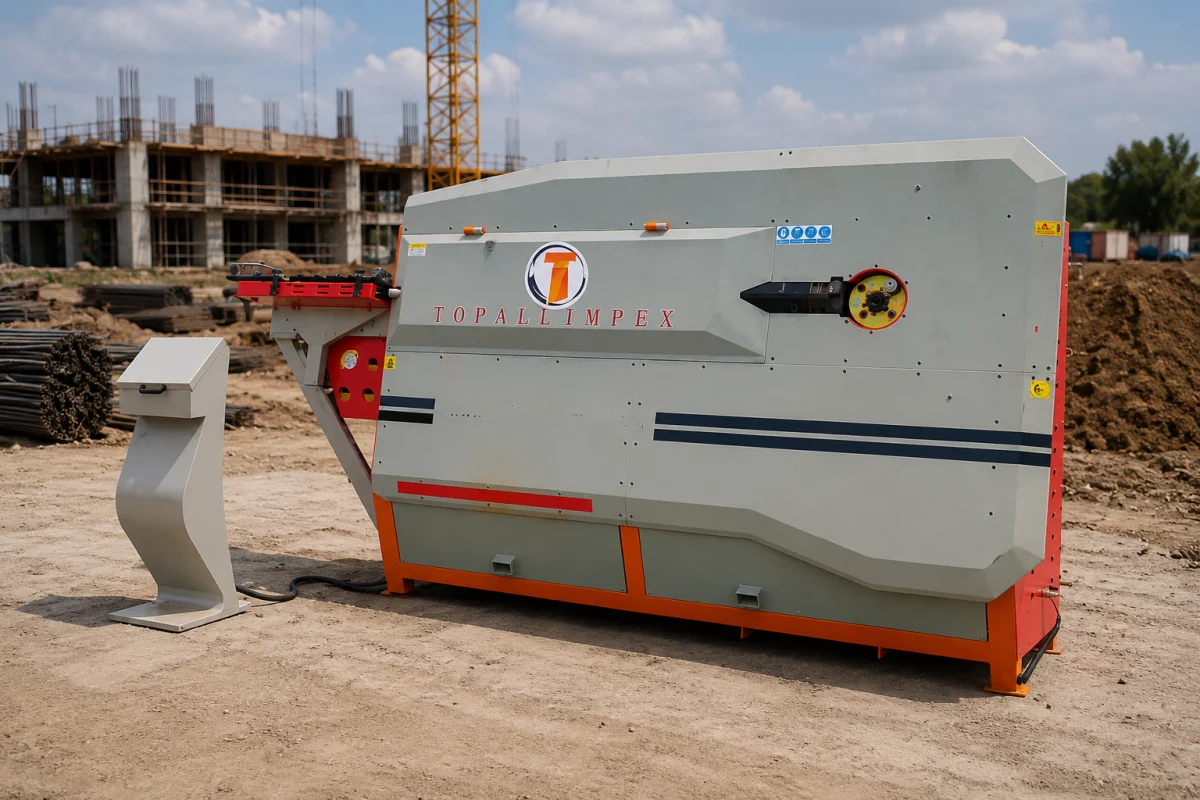
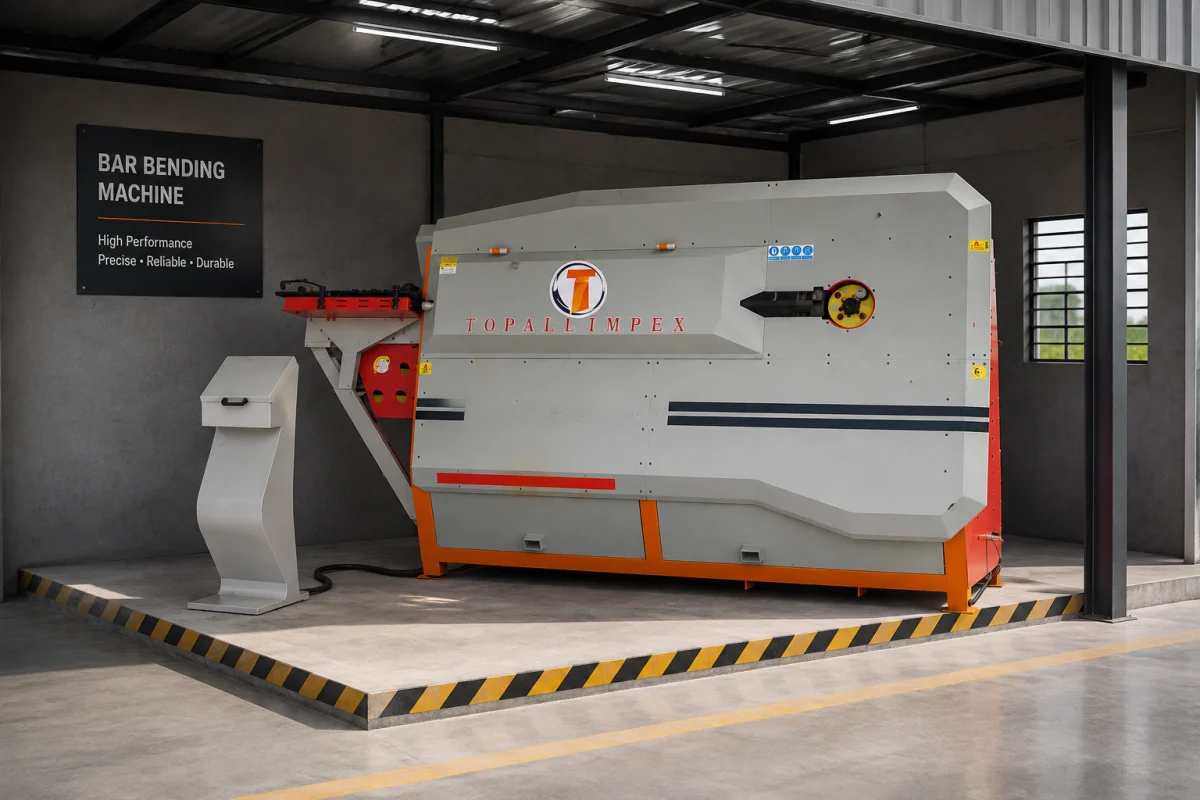
A 4 to 10 mm machine is around 3,600 x 1,100 x 1,900 mm and weighs about 1,300 kg. The 4 to 12 mm machine is around 3,800 x 1,140 x 2,100 mm at about 2,000 kg.
The machine footprint is the smaller problem. Plan for the coil or bundle feeding side and the finished stirrup stacking side. A machine that produces 2,000 pieces an hour fills a stacking area faster than most yards expect.
What separates suppliers
The machines in this category are broadly comparable on paper. What differs is what happens after delivery.
- Are spares held in India? A bender waiting weeks for a part from overseas stops your rebar supply.
- Who commissions it? Setup decides output and scrap rate from day one.
- Are the published specifications the manufacturer’s? Ask whether the numbers in the brochure are the factory figures or the seller’s.
We import direct as exclusive India partner for our manufacturers, hold spares in Delhi and commission every machine on site.
Frequently Asked Questions
What bar diameter can a TMT bar bending machine handle?
What is the difference between a bar bending machine and a rebar bending machine?
How much power does a CNC bar bending machine need?
How much space does a stirrup bending machine need?
Can one machine handle both small ties and 12 mm stirrups?
Do you supply bar bending machines outside Delhi?
Machines Covered in This Guide
Get a price for your job
Tell us the material, the area and the specification you have to meet. We will come back with the right machine, the price and the delivery date — usually the same working day.