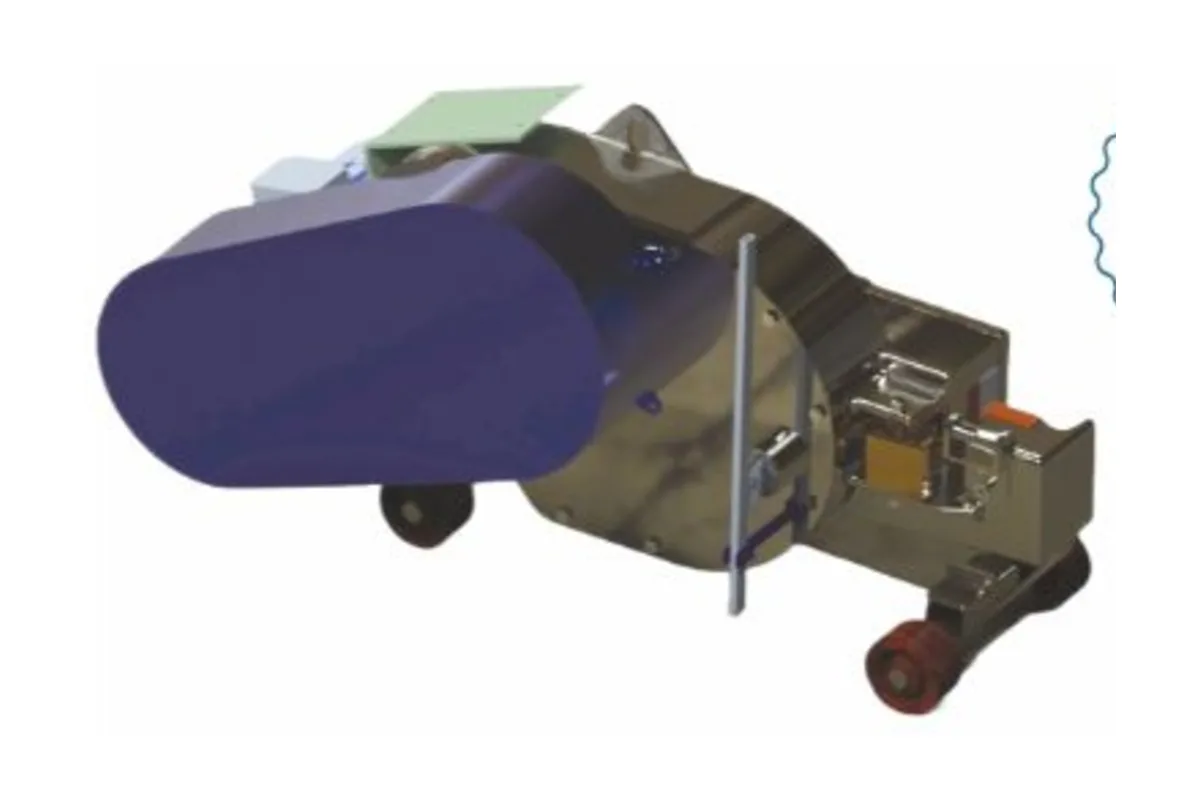
A bar cutting machine shears reinforcement bar to the lengths on the schedule. A motor drives a flywheel and crank, the crank pushes a moving blade past a fixed one, and the bar parts in a clean square cut that needs no grinding before bending. It replaces the abrasive cut-off wheel, the hacksaw and the hand shear in any yard working through more than a few hundred bars a day.
How to choose a bar cutting machine
Bar cutters look alike across brands, so the decision rests on five practical points.
Diameter and grade. All three machines here are rated to 32 mm, which covers ordinary building and most infrastructure reinforcement. Check the largest diameter on the schedule and the grade: Fe 550 and Fe 600 TMT are harder on blades than Fe 415, so a bigger motor earns its keep at the same diameter.
Cuts per hour. Work out the real number. The imported machines cut in about two seconds; the TCM-42 is rated at 35 cuts a minute. A crew measuring, sliding and stacking bar will not hit the rated figure all day, so size the machine at roughly half its catalogue rate.
Portable or bench. A hand-held rebar cutter suits a repair crew trimming starter bars. A bench machine is what you want when cutting is a station in a line with a stop gauge.
Supply and load. Every machine here runs on 415 V three phase, at 3 kW, 4 kW and 5 HP. That is a direct-on-line start with a heavy inrush, so give each machine its own starter with correctly rated overload protection rather than a shared board.
Maintenance. Blades are the only routine wear item. A square blade can normally be turned to a fresh edge before replacement, and cost per cut stays low as long as you never feed bar above the rated diameter.
The models Topall supplies
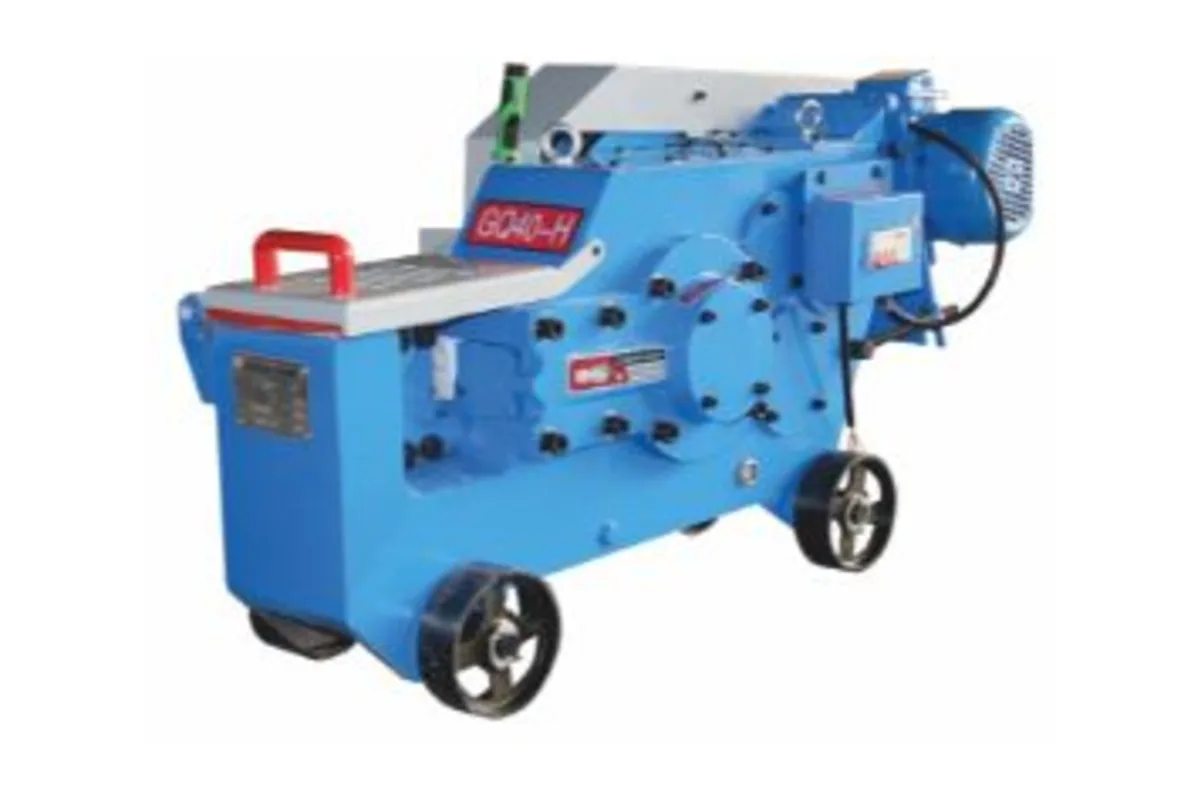
The GQ40H is the imported workhorse: 32 mm cutting range, a 3 kW motor at 2,880 rpm on 415 V, two cuts a second and 365 kg. One site cutting its own schedule is well served by it. The GQ50 is the heavier imported machine — same 32 mm range, a 4 kW motor and 480 kg. The extra kilowatt and 115 kg of iron keep the cut square when 25 and 32 mm bar goes through all shift, which is why central yards ask for it.
The TCM-42 is built in India by Topall Impex: 6–32 mm range, a 5 HP Crompton, Havells or Bharat Bijli motor at 2,880 rpm on 415 V, 35 cuts a minute, a cast body and 400 kg. It suits contractors who want full 32 mm capacity with a motor any local rewinding shop can service, and it pairs with the TBM-42 bar bending machine from the same India-built line.
What affects the price
Bar cutting machines start from ₹57,000, ex-works Delhi, plus GST, for the TCM-42. Motor rating and frame weight set the gap between the two imported models. Four things then move the invoice: spare blades and a stop gauge or roller table if you order them; freight, since these are 365 to 480 kg items needing a chain block to unload; GST, quoted separately; and origin, because an imported machine carries customs duty and inland transport an India-built one avoids. Delivery, commissioning and operator handover are included in every quotation.
Where these machines are used
The commonest posting is the site rebar yard, where one cutter feeds the bending station and produces the cut-length schedule for slabs, columns and footings all day. The second is a central cut-and-bend facility supplying several projects, where the machine runs two shifts and the heavier imported model is bought on duty cycle. The third is precast and fabrication, where sleeper, culvert and segment moulds need identical lengths in large batches. Yards running rebar processing machines normally put the cutter first in the line.
Imported cutter against an India-built cutter
Capacity does not decide this one, because the GQ40H, the GQ50 and the TCM-42 all cut 32 mm. What differs is origin, and what happens when something fails.
The imported machines are finished to a tighter standard, and the GQ50 in particular is built for continuous shearing. They carry customs duty, so the same capacity costs more, and an unusual spare may have to be ordered in. The TCM-42 answers that with a cast body and a standard Indian industrial motor, so a burnt winding or a worn bearing is a local workshop job done the same week.
Duty cycle is the tie-breaker. If the machine cuts in bursts through the day, the India-built option gives the same 32 mm capacity for less money. If it shears heavy bar across two shifts, the heavier imported frame holds alignment longer.

 Bar Cutting
GQ40H Bar Cutting Machine