Surface preparation machines open up a concrete slab so that whatever goes on next actually holds. A floor scarifier mills the top few millimetres away with tungsten carbide cutters; an epoxy flooring grinder abrades the same layer with diamond tooling. Both are after one result: the weak or uneven skin gone, and a clean textured profile for the coating to key into. Buyers are epoxy and PU applicators, industrial flooring firms, plant maintenance engineers and repair-and-rehabilitation teams.
How to choose a surface preparation machine
Measure what actually has to come off. Thickness decides the method. A scarifier is a cutting tool and takes 1 to 4 mm in a pass, so trip lips at joints, old screed, thermoplastic markings and built-up coatings are its work. Where there is only a film to remove — laitance, curing compound, a worn topcoat — a grinder gets there faster and leaves less repair behind.
Match the profile to the coating going down. Scarifying leaves a deliberately ridged surface, ideal under a screed or a bonded overlay and wrong under a 300 micron coating that will telegraph every ridge. A ground surface is flat, open and shallow-textured, which is what thin coatings and sealers need.
Count the square metres, and check the supply. Both machines here are walk-behind, at 250 mm and 300 mm, which suits plant rooms, bays, ramps and strips of a few hundred square metres; once the area runs into thousands, a 638 mm or wider machine from the concrete floor grinding and polishing range costs less per square metre. The GT250 runs on 415 V, 50/60 Hz three-phase with no extraction of its own; the S300 runs on 380 V three-phase with a vacuum inside the machine. Neither is a single-phase tool.
The machines Topall supplies
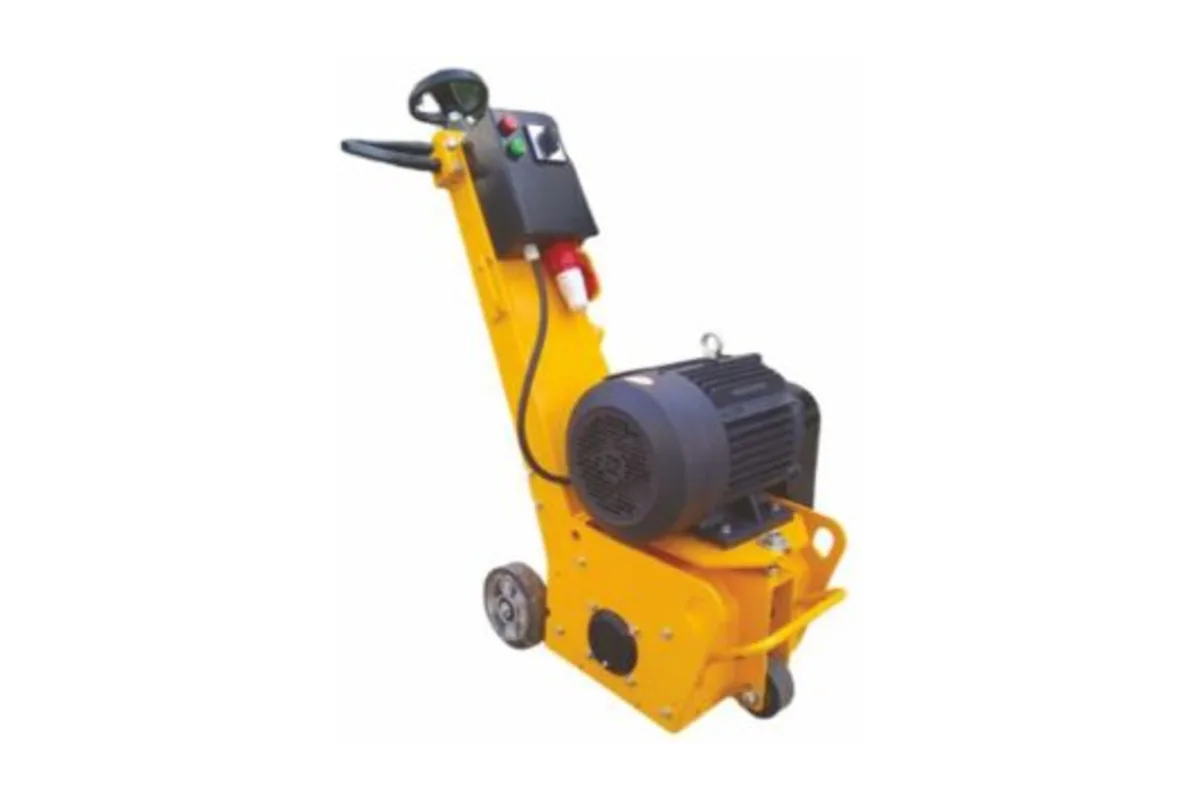
The GT250 scarifier is the removal machine: a 250 mm width at 1 to 4 mm milling depth with 108 cutters on the drum, 140 kg in a 1050 × 500 × 100 mm frame on a 415 V three-phase supply. Depth is set by how far the drum is dropped, so the same machine shaves a high spot at 1 mm or chases out a failed coating at 4 mm. Cutters are a wearing part, so the drum configuration and a spare set matter more to running cost than anything else on the specification.
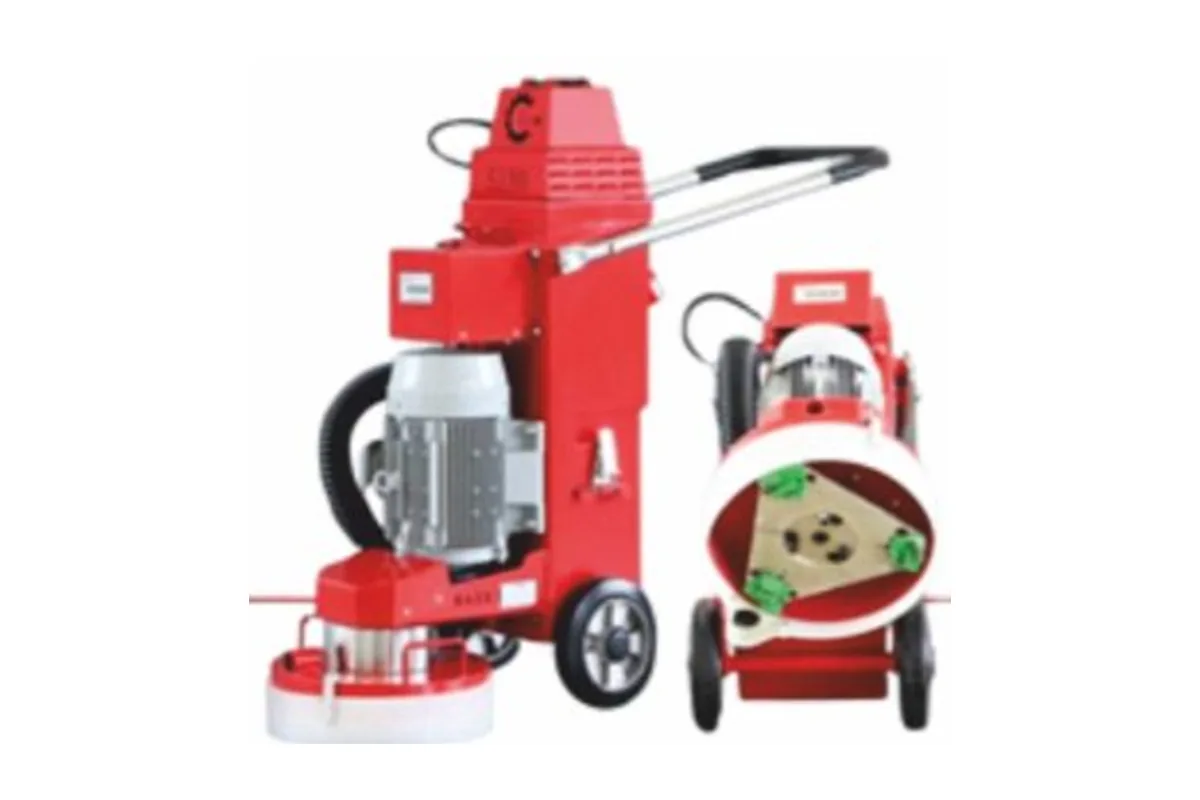
The S300 epoxy flooring grinder is the profiling machine. Sino build it around a 5 Hp motor turning at 1450 rpm over a 300 mm width on 380 V three-phase, at 102 kg. What makes it a site machine is the integrated vacuum: 180 m³/h at 207 mBar into a 16 litre container, off a 220 V, 4.5 A feed, so a two-man crew prepares an occupied factory bay without towing an extractor.
Most flooring contractors run both in sequence — scarify where there is thickness or a step to remove, then grind the area to an even profile before the primer goes on.
What affects the price
Surface preparation machines start from ₹80,000 for the GT250 scarifier, ex-works Delhi, plus GST; the S300 epoxy flooring grinder is ₹2,00,000 on the same terms. Four things then move the number: the wearing parts specified with the machine (a cutter set for the GT250, diamond tooling for the S300), whether an industrial vacuum cleaner is added at ₹1,00,000 for the IVC-F65L or ₹1,60,000 for the IVC-33L, freight from Delhi to site, and GST. Ask for tooling cost per square metre alongside the machine price; over a year it is the larger figure.
Where surface preparation machines are used
Before epoxy and PU floors in factories and warehouses. The bulk of the work: the slab is scarified where old coating or contamination has to go, then ground to an even profile so the primer bonds across the whole bay, not in patches.
On ramps, car park decks and terraces. A scarifier removes failed waterproofing or worn anti-skid and leaves a textured surface that gives grip — useful on the ramp itself, where a smooth finish would not be wanted.
In repair and rehabilitation work. Delaminated concrete, high joints, spilled adhesive and floor markings come off mechanically before a bonded repair mortar is placed. Chipping damages the sound concrete underneath; milling does not.
Grinding, scarifying and shot blasting compared
Three methods dominate this work. Grinding abrades with diamonds: slow on thickness, unmatched on flatness, and the only route to a coatable or polishable finish. Scarifying cuts with carbide: fastest on volume and the sensible choice where millimetres must disappear, but it leaves furrows and bruises the concrete below, so a grinding pass almost always follows. Shot blasting fires steel shot and recovers it in a closed loop: quick over very large open areas and the cleanest for dust, but it only textures — it will not flatten a floor, it struggles on soft coatings that absorb the shot, and the machines are large. Topall supplies grinding and scarifying equipment and does not stock shot blasters.

 Surface Prep
GT250 Scarifier Machine