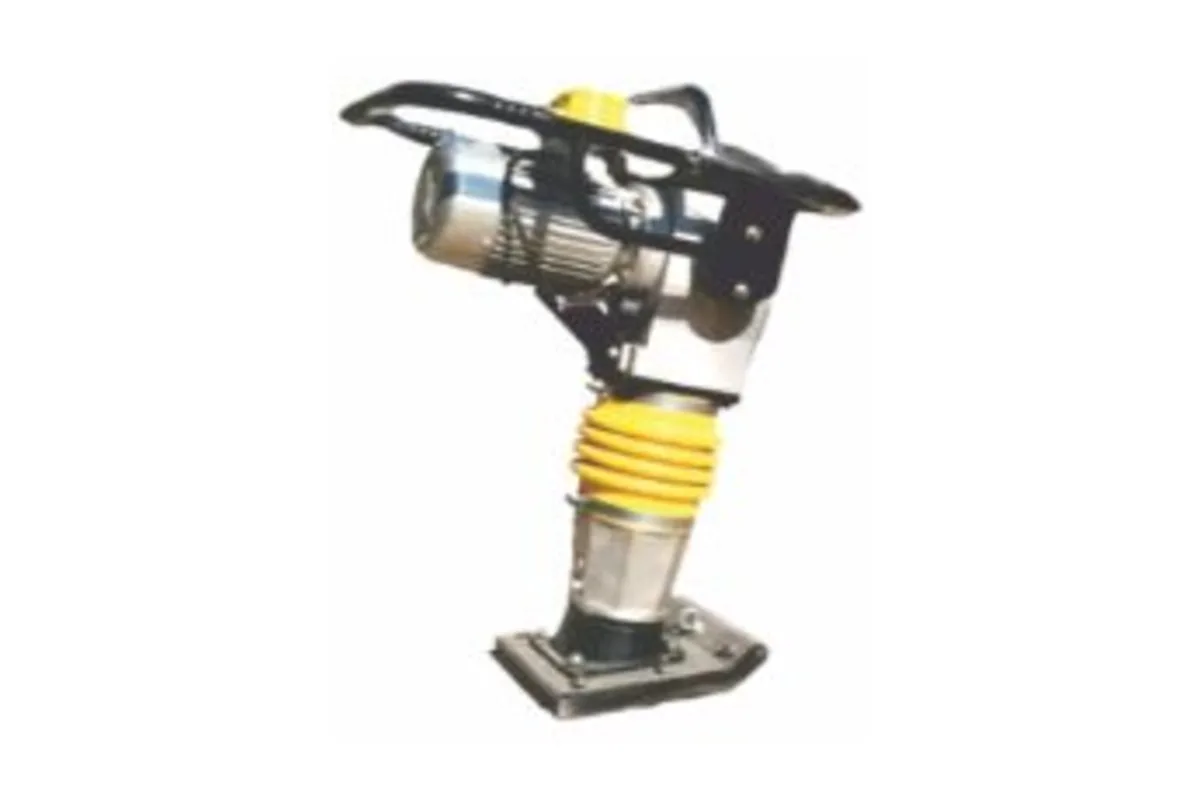
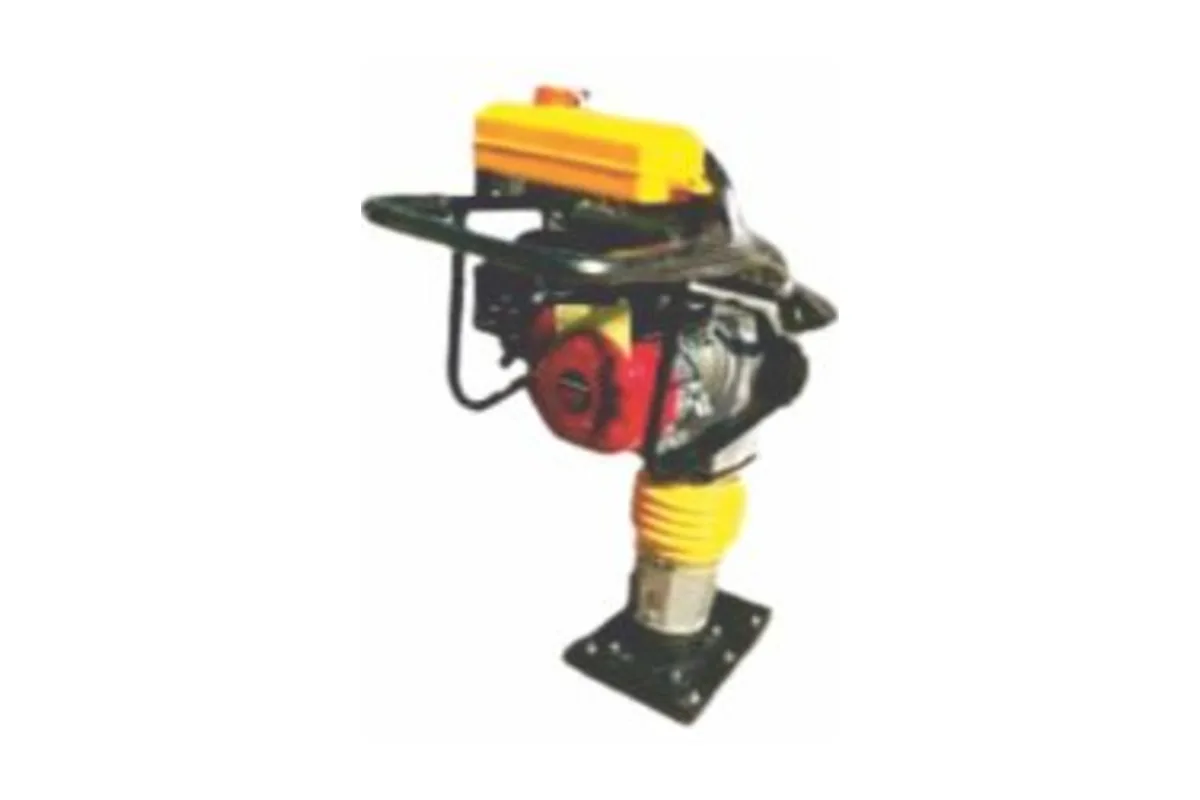
A tamping rammer stands on a narrow steel shoe, lifts itself several hundred times a minute and strikes the ground instead of vibrating it. Indian sites also call it an earth rammer or a jumping jack compactor, and the second name describes the action exactly. Impact is what cohesive ground needs: clay, silty fill and mixed excavated spoil do not settle under vibration the way sand does. Utility contractors, pipeline gangs, foundation crews and municipal road departments are the usual buyers.
How to choose a tamping rammer
Impact force and blow rate show how fast a loose lift becomes a compacted one. Twenty kilonewtons at 460 to 650 blows a minute is the working band for trench and foundation work, and the 40 to 65 mm stroke lifts the shoe clear so each blow lands on material free to move.
Shoe size decides where the machine fits. A 315 × 280 mm shoe goes down a narrow reinstatement, sits against a foundation wall and works around a manhole collar — places a 520 or 710 mm plate cannot reach whatever its force rating.
Soil type should settle the argument before price does. Cohesive soil is compacted by impact and kneading; granular soil is compacted by vibration. A rammer handles granular backfill in a confined space perfectly well, but across an open granular area its small footprint makes it slow.
Lift thickness is fixed by the 300 mm depth effect. Backfill in 300 mm layers and compact each before the next goes in. In a deep trench that is tedious, and it is still the only method that gives a reinstatement which does not settle.
Weight class and drive are the last calls. Seventy to ninety kilograms is the normal range: heavier units sit steadier on stony trench bottoms, lighter ones are easier over a long shift and easier to lower into a pit. Petrol for sites with no supply, electric where power is already there.
The rammers Topall supplies
Three models, all rated at 20 kN through a 315 × 280 mm shoe of 30 mm thickness, all jumping 460 to 650 times a minute at 40 to 65 mm, all rated to a 300 mm depth effect. Drive and weight are what separate them.
The HCR100 is the 5 HP petrol model at 90 kg — the general-purpose choice for trench reinstatement, pipe surround and footing backfill where there is no power. The extra weight keeps it planted on stony trench bottoms where a lighter machine wanders.
The HCR100S replaces the engine with a 3 kW electric motor and drops to 70 kg — the model for basements, plant rooms, lift pits and warehouse floors, where exhaust in a closed space is unacceptable. Impact force, shoe and depth effect match the petrol machines, so the motor costs nothing in compaction.
The RM80 is the second 5 HP petrol unit at 80 kg, ten kilograms lighter than the HCR100 — noticeable when one man handles the machine all day, or when a gang adds a second rammer. Full figures are in the table on this page.
What affects the price
The HCR100S starts from ₹28,000, the RM80 from ₹35,000 and the HCR100 from ₹40,000, all ex-works Delhi, plus GST. The rammer machine price moves mainly on drive configuration, since a 3 kW motor and a 5 HP petrol engine are not costed alike, then on engine brand, because a branded engine is priced above a generic one and returns that in spares and resale. Beyond that: accessories and spare shoes, freight, and GST.
Where it is used
Pipe surround and trench reinstatement. Backfill around a water main, sewer line or cable duct, compacted in 300 mm lifts to road formation level, so the trench line does not show as a depression a year later.
Foundation and plinth backfill. Tight against footing walls, column bases and retaining structures, where a wide plate cannot reach the face and loose fill against the wall is exactly where settlement starts.
Confined indoor compaction. Lift pits, basement floors and plant room bases, where the electric HCR100S works without putting exhaust into a closed volume.
Rammer against plate and roller
Think of it as contact area against contact pressure. A rammer concentrates 20 kN into a 315 × 280 mm shoe, driving energy down through cohesive material to the full 300 mm. A plate compactor spreads its force across a plate several times that area and travels forward continuously, covering more ground per hour but working the top of the layer harder than the bottom — ideal on granular fill, wrong on clay. A vibratory roller gives up confined access altogether for productivity measured in square metres per shift. A utility job uses all three: the rammer in the trench, the plate on the reinstated surface, the roller on the carriageway once the trench is closed.

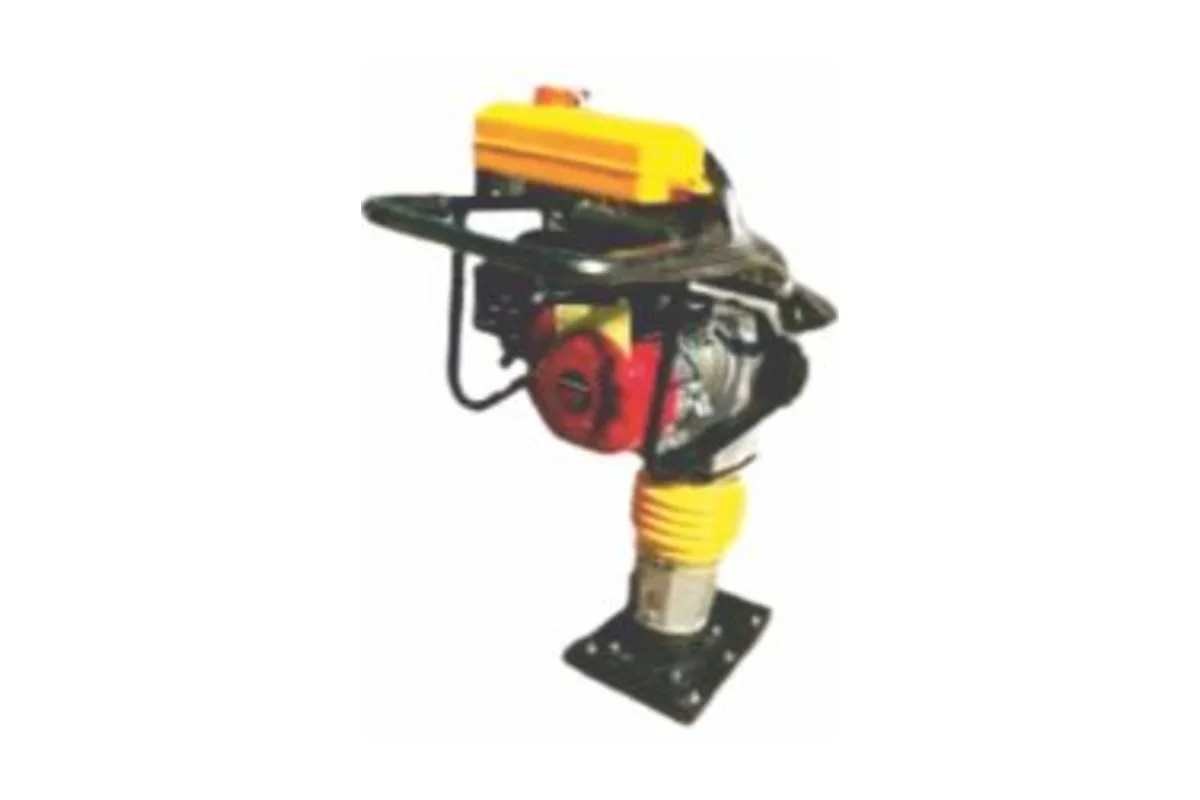 Tamping Rammer
HCR100 Tamping Rammer