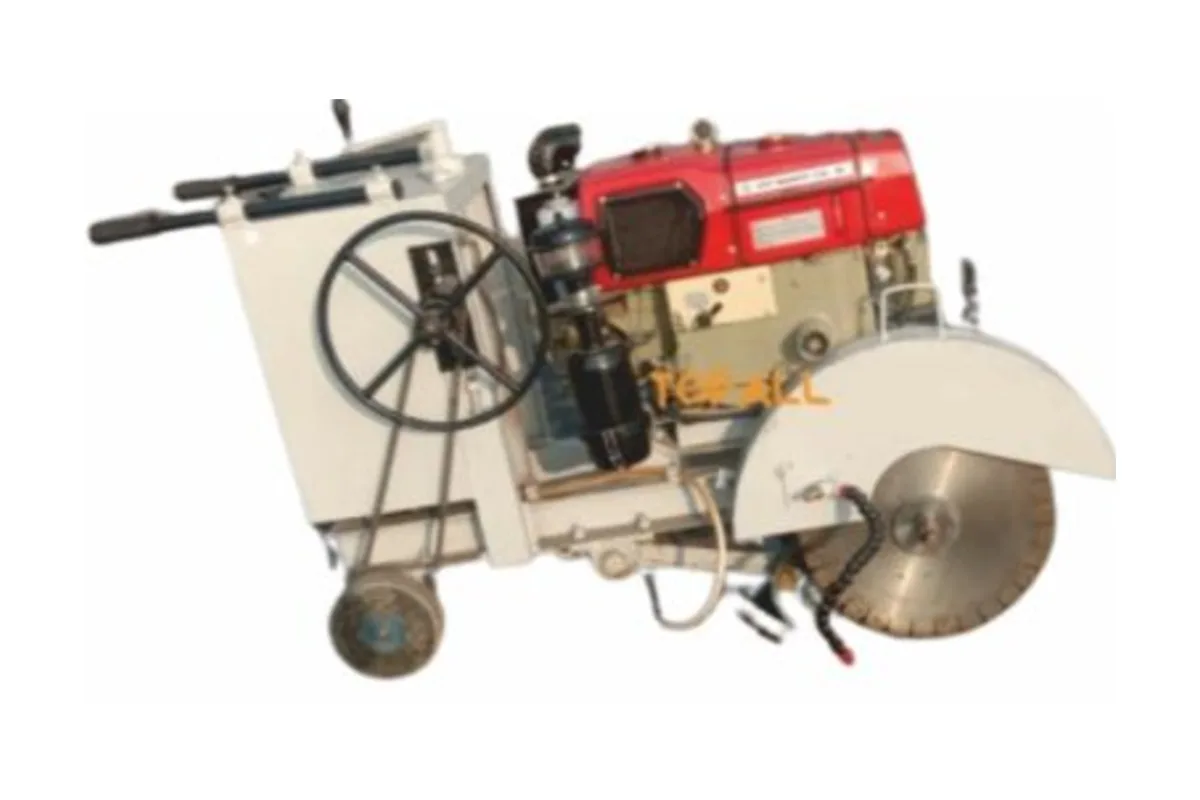
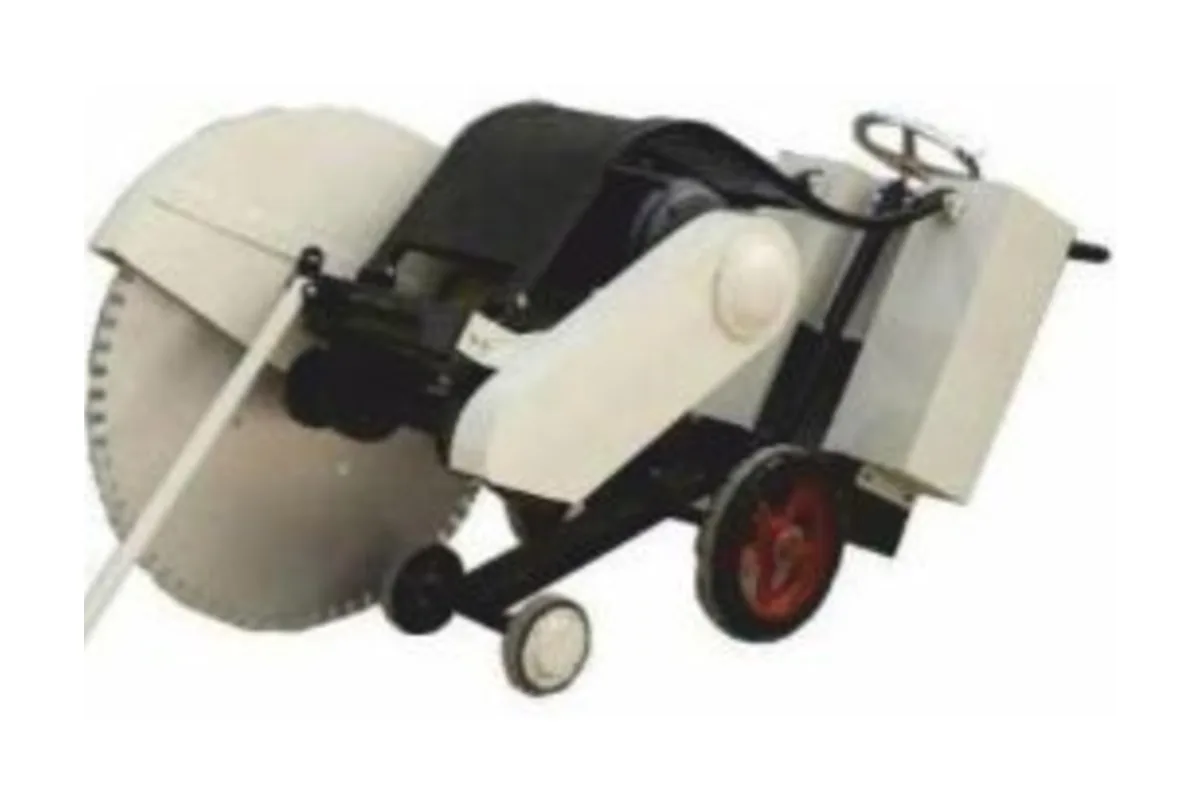
A concrete cutter, or groove cutter, is the machine that puts a clean, straight joint into a cured concrete or asphalt surface. Contraction joints in a new slab, trench lines across a road for a utility crossing, the edge of a patch repair and the removal strip along a kerb are all cut with the same class of machine: a petrol engine or electric motor spinning a diamond blade on a wheeled frame, with a depth screw and a guide pointer.
Topall Impex supplies the CQF series in three blade sizes, from a 14 in blade for shallow joint sawing up to a 40 in blade for full-depth road cutting. Across the range the cutting depth runs from 140 mm to 400 mm, and each model is available engine driven or motor driven. Machines are stocked in Delhi and supported from our branches in Mumbai, Ahmedabad, Hyderabad and Chennai.
CQF20, CQF28 or CQF40
- CQF20 — takes 14 to 20 in blades. The joint-sawing machine for floor slabs, pavements and thin overlays, and the smallest of the three to move around a site.
- CQF28 — takes 16 to 28 in blades. The general-purpose road cutter, deep enough for most trench crossings and patch repairs on municipal roads, which is why it is the model most contractors buy first.
- CQF40 — takes 20 to 40 in blades. The full-depth machine for thick pavement and highway slabs, where a smaller blade would need two passes and still not get through.
Which one to buy
Decide by the thickest section you cut regularly, not the thickest you might ever meet. A 20 in blade cuts every contraction joint in a floor slab; a 28 in blade covers almost every road crossing a municipal contractor is asked to open; the 40 in blade is a specialist machine that earns its keep only on thick pavement. Buying one size larger than you need costs more in blades every month, because blade price rises steeply with diameter.
What a concrete cutter costs
Price on request, usually quoted the same working day. What moves the price is blade capacity, engine or motor drive, and whether a starter blade is included. The blade is the running cost: a diamond blade wears against every metre cut, so ask us about blade life on the material you cut most.
Concrete cutter or scarifier
A cutter makes a narrow, deep, straight slot. A scarifier removes a thin layer across a wide strip. If the job is a joint, a trench edge or a removal line, use the cutter. If the job is roughening, taking down a high spot or stripping a coating, use a scarifier such as our GT250. Planing a surface with a cutter leaves a row of kerfs, not a finish.
Engine or motor
All three sizes come with either drive. Petrol engine machines suit road work where there is no supply and the cut moves along the carriageway all day. Electric motor machines suit basements, plants and factory floors where exhaust in an enclosed space is not acceptable. Water is fed to the blade on both to keep dust down and the blade cool; run it dry and blade life drops sharply.

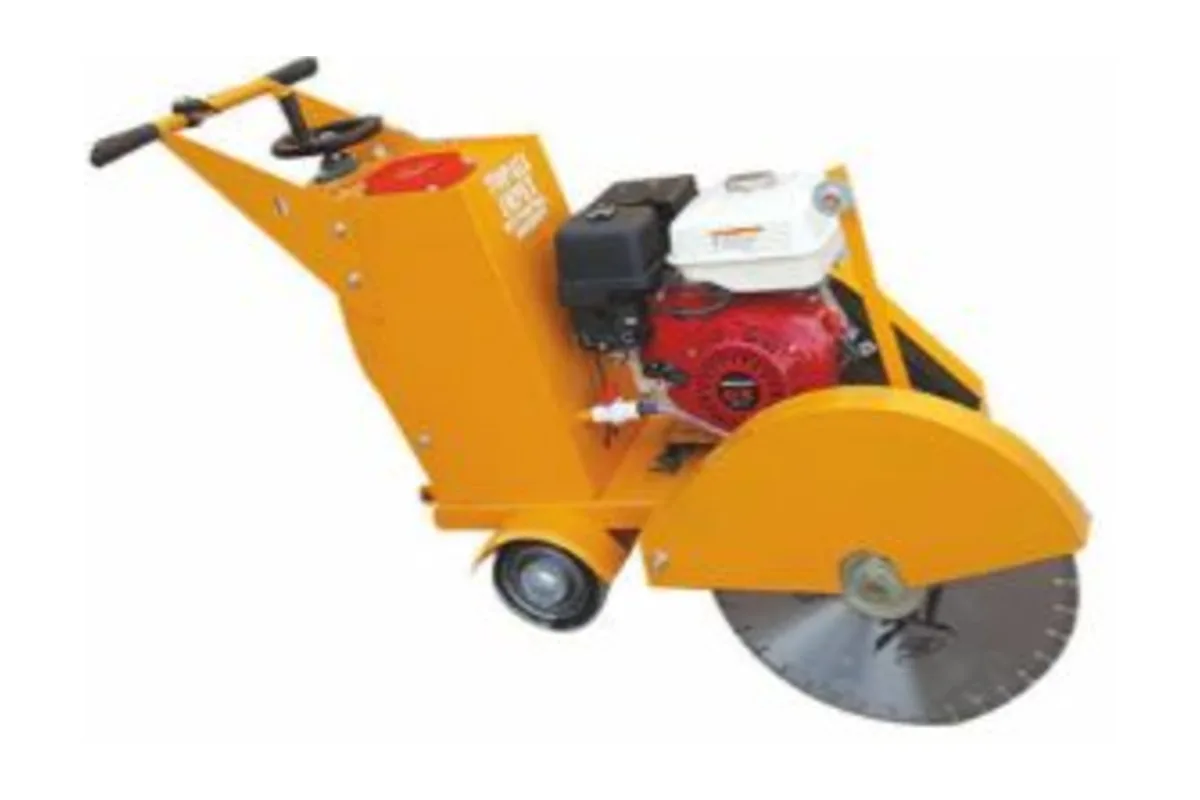 Concrete Cutter
CQF20 Concrete Cutter