A stirrup bending machine forms the closed rings and links that tie column and beam reinforcement together. It takes straight bar or coil steel, bends it to the angles on the bar bending schedule and cuts it to length, so nobody is shaping rings by hand. Contractors, precast yards, cut-and-bend suppliers and infrastructure sites buy them wherever the ring count runs into thousands and the drawing has to be followed piece for piece.
How to choose a stirrup bending machine
Four questions settle the specification before you read any quotation.
Bar diameter and grade. Write down the largest link diameter on the schedule, not the average one. The GW20S and GW20 are rated 4–16 mm. The automatic machines work from coil: 4–8 mm on single wire for the GTD4-10S, 4–12 mm for the GTD5-12D. Higher-grade TMT springs back harder, so leave margin above your usual diameter.
Output per hour. Turn the schedule into rings per day. An operator-fed bender gives a few hundred pieces in a shift, because every bar is measured, loaded and turned by hand. The GTD machines are rated at 2,000 and 2,400 pieces an hour, which only repays the money if you keep steel going into them.
Manual or automatic. Manual means labour cost per ring and variation between operators. Automatic means capital cost, a coil supply line and a trained operator, in return for shapes that repeat and far less offcut.
Power on the plot. The GW20S runs on 220 V single phase, so it works off a domestic or temporary connection. The GW20 wants 415 V three phase at 2.2 kW. The GTD line needs a firm three-phase supply sized to 20 kW and above, so check the sanctioned load and incoming cable before you order.
The models Topall supplies
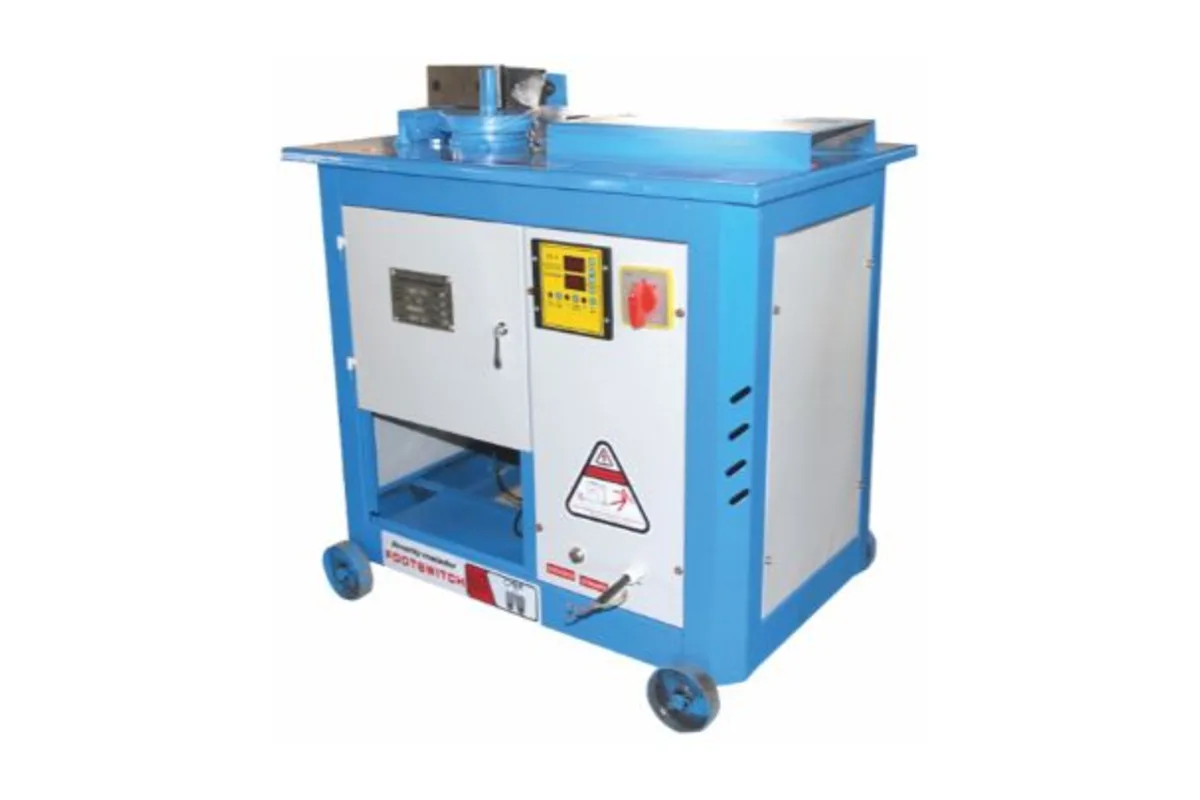
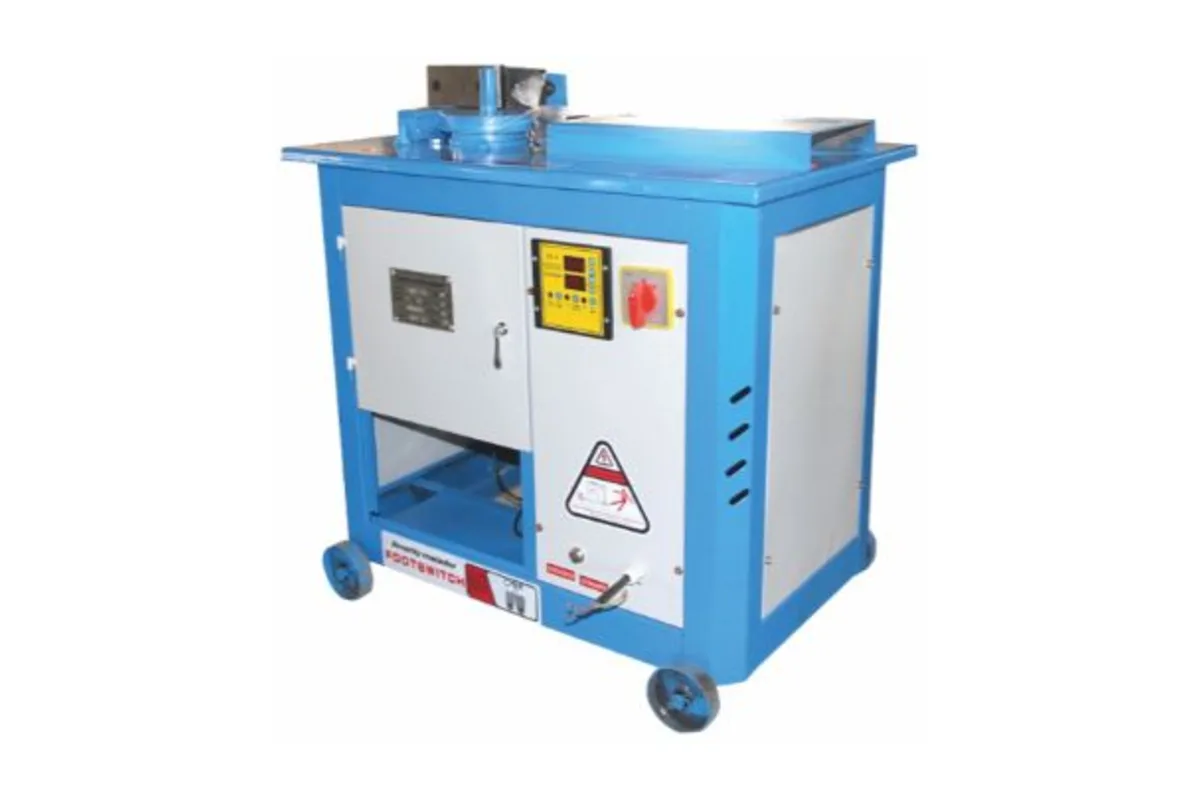
The GW20S is the entry point: 4–16 mm capacity, preset 90° and 135° stops, automatic angle feed, 2.2 kW and 90 kg on a 220 V supply. Site workshops take it because it runs off the power they already have and two men can lift it onto a pickup. The GW20 is the same 4–16 mm machine wired for 415 V three phase at 95 kg, which suits a yard that already has three-phase power.
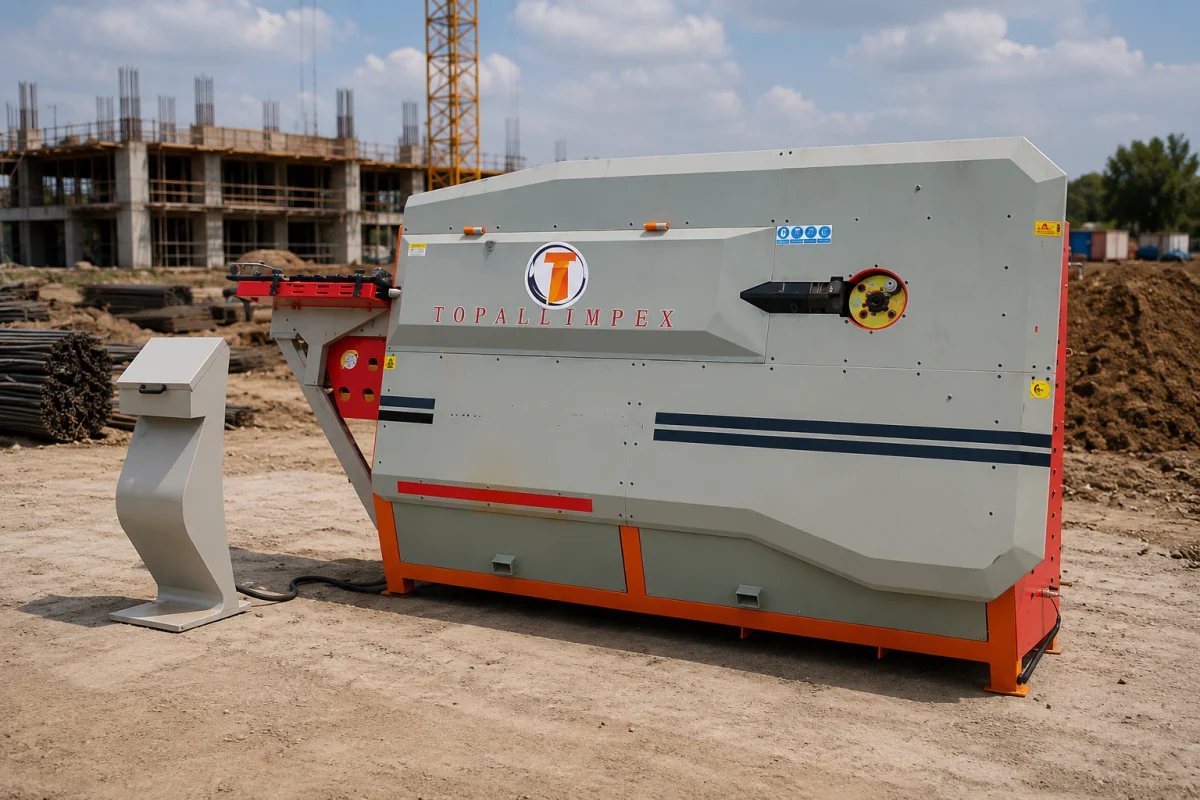
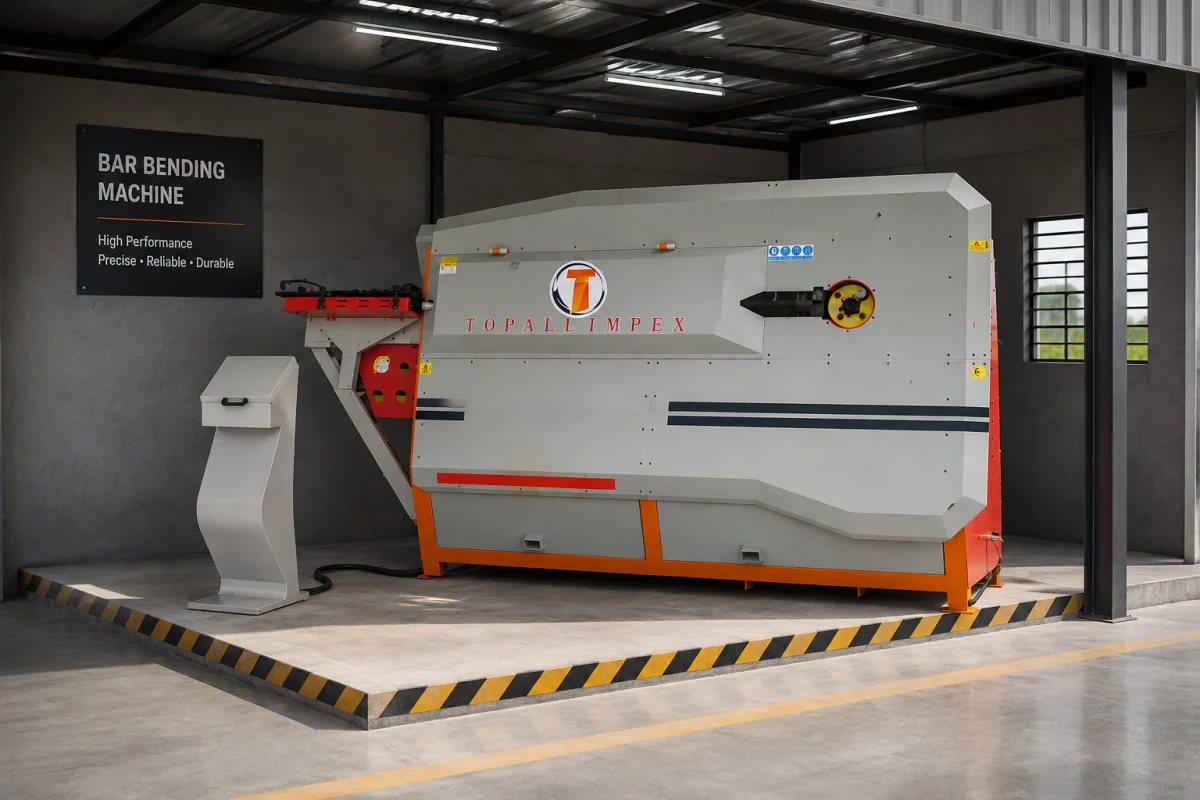
Above them sit the CNC machines. The GTD4-10S straightens, bends and cuts from coil at 4–8 mm on single wire and 4–6 mm on double wire, holding ±1 mm on length and ±1° on angle at roughly 2,000 pieces an hour on 20 kW, at 1,300 kg. It is the usual first automatic machine for a contractor moving into cut-and-bend. The GTD5-12D takes single wire to 12 mm and double wire to 10 mm, runs at about 2,400 pieces an hour on 32 kW and weighs 2,000 kg — a machine for a dedicated rebar processing yard, not a site shed. Both feed from a decoiler, so plan coil storage alongside the machine.
What affects the price
Stirrup bending machines start from ₹30,000, ex-works Delhi, plus GST, for the GW20S and the GW20. The CNC machines are priced in lakhs because the quotation covers a decoiler, a straightening head, a servo bending unit, a cutter and a control cabinet rather than a single motor. Three other items move the number: accessories such as spare dies, blades and a coil stand; freight and unloading, which matter once a machine weighs two tonnes; and GST, quoted separately. Imported CNC units also carry customs duty and inland transport that an India-built bender does not.
Where these machines are used
High-rise and commercial RCC work is the largest use: every column and beam needs links, and the count on a single tower runs into lakhs of pieces. Precast yards are the second, because box culverts, sleepers and tunnel segments are repeat shapes and that is what a programmed machine is good at. The third is the cut-and-bend supplier selling finished rebar by weight, where machine hours and steel wastage decide whether the order earns anything. Metro and bridge sites run an automatic machine beside bar bending machines and a bar cutting machine.
Manual stirrup bender against CNC automatic
On purchase price the two are not comparable, so compare cost per ring instead. An operator-fed bender needs a skilled man and a helper, produces in the low hundreds per shift, and leaves an offcut at the end of every 12 m bar. A CNC machine draws from coil, so the waste is one tail per coil rather than a stub on every bar, and one operator loading coil replaces the pair at the table.
Break-even is a volume question. Below a few hundred rings a day the small bender wins easily. Above that, labour, rework from angles that wander and steel wastage climb faster than the instalment on an automatic machine.

 Stirrup Bending
GW20S Stirrup Bending Machine