
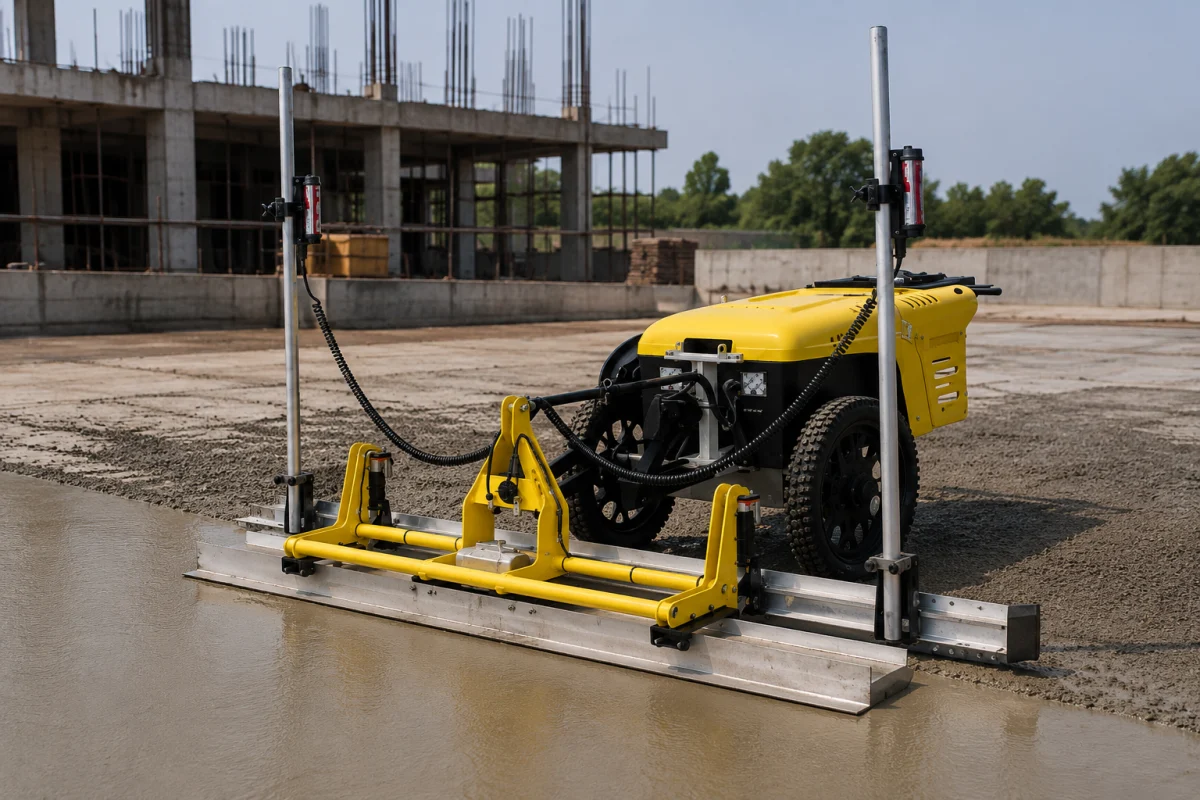
A concrete leveling machine strikes fresh concrete to a level held by a laser reference rather than by eye or by rails. Walk-behind machines suit bays and moderate areas; stand-on machines with a wider paving width cover large industrial floors faster. Flatness is decided here, not at trowelling.
Why the levelling machine decides your flatness result
On a floor with a flatness specification, contractors often assume the trowel produces the result. It does not. The trowel finishes the surface it is given.
Level is set when the concrete is struck off. A laser guided levelling machine holds a plane referenced to a rotating laser, so the strike-off height is constant regardless of how the sub-base varies or how the crew is standing.
Get this stage right and the finishing machines have an easy job. Get it wrong and no amount of trowelling recovers it. That is the whole argument for the machine.
Walk-behind or stand-on
Walk-behind machines like the LS-325 suit bays, moderate areas and jobs where access is restricted. They are lighter, easier to move between pours, and cover a smaller paving width per pass.
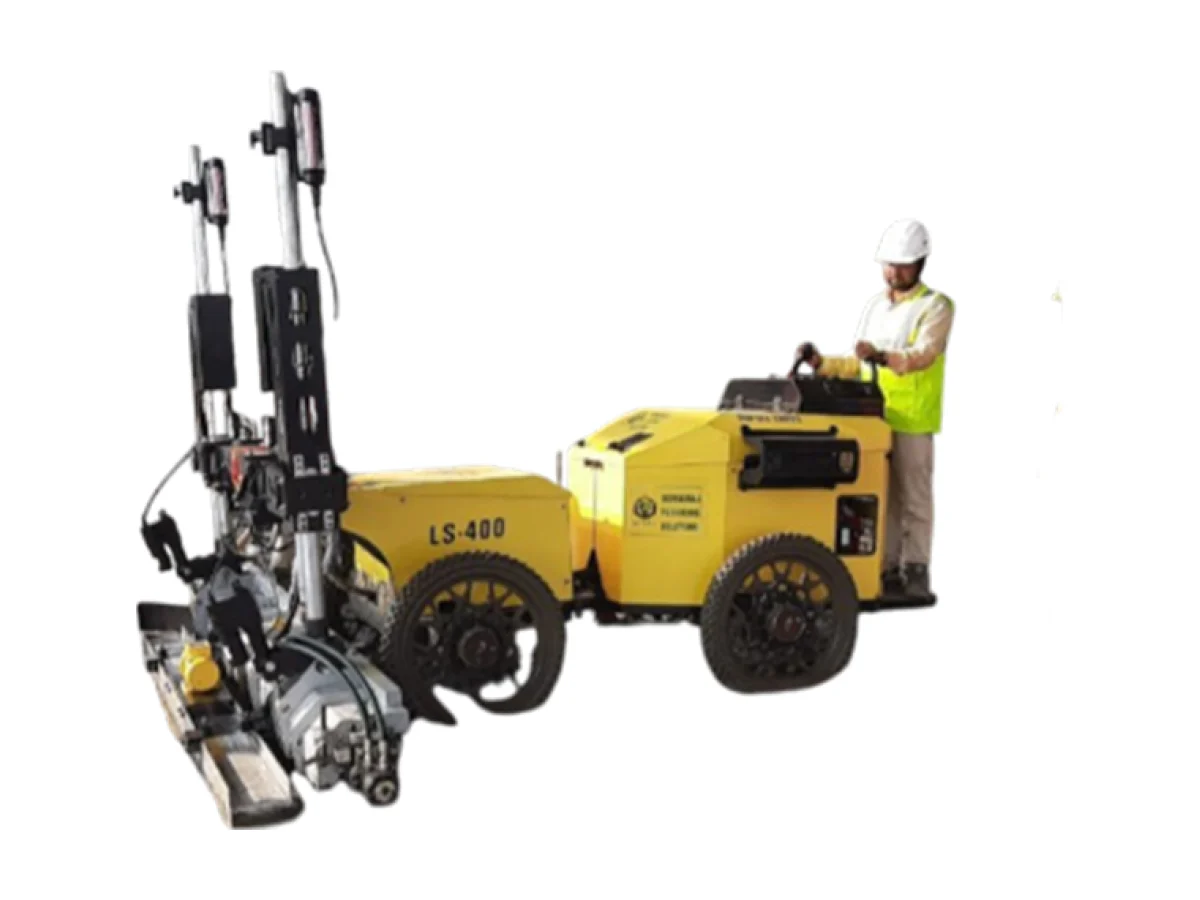
Stand-on machines like the LS-400 carry a wider paving width, typically around 2,500 mm, and are built for large continuous industrial floors. The operator rides the machine, which means consistent speed and consistent strike-off over long runs.
The decision is the same one as with trowels: area against the concrete window. A large warehouse floor placed in a single pour needs the coverage.
What these machines actually do
- A rotating laser sets the reference plane over the pour
- Receivers on the machine read that plane continuously
- The screed head adjusts to hold the set level as the machine moves
- Concrete is struck, vibrated and levelled in one pass
The vibration is part of it. Striking concrete without consolidating it produces a level but weak surface.
Where these machines earn their cost
- Warehouse and distribution floors with a defined flatness specification
- Cold storage floors, where flatness affects racking and MHE
- Factory and industrial shed floors under heavy traffic
- Basement and podium parking decks placed in large pours
- Any floor where a ground-back correction would cost more than the machine hire
The commercial case is straightforward. Grinding back an out-of-tolerance floor is expensive, slow and visible. Preventing it is cheaper.
Setup decides the result
This is not a machine you unload and run. The laser has to be set correctly, the receivers calibrated, the head height verified against a known point, and the crew has to understand the sequence before the concrete arrives.
A levelling machine set up wrong will not hold flatness, and the failure only becomes visible after the slab has hardened. Every machine we supply is commissioned on site with the operator trained before we leave, because this is the category where that matters most.
What to confirm before buying
- Paving width against your typical bay or pour width
- Machine weight and access, including how it gets onto the slab
- Laser and receiver package, and whether it is included
- Flatness specification you are contracted to meet, and who measures it
- Commissioning and training, which is not optional on this machine
Frequently Asked Questions
What is a concrete leveling machine?
What is the difference between a walk-behind and a stand-on levelling machine?
Can a power trowel fix a floor that was not levelled properly?
What is the price of a concrete levelling machine in India?
What is a floor screeding machine?
Do you provide setup and training with the machine?
Machines Covered in This Guide
Get a price for your job
Tell us the material, the area and the specification you have to meet. We will come back with the right machine, the price and the delivery date — usually the same working day.