
A flat warehouse floor comes from a sequence, not a single machine. Concrete is struck to level by a laser guided levelling machine, floated with pans as it stiffens, then trowelled to the specified finish. Miss the levelling stage and no amount of trowelling recovers the flatness.
Why flatness is a commercial problem, not a cosmetic one
On a distribution or cold storage floor, flatness decides whether racking sits true, whether forklifts and reach trucks operate at height safely, and whether the client accepts the slab.
Out-of-tolerance floors get ground back. That is slow, expensive, visible, and it happens after everyone has moved on to the next stage. The economics strongly favour getting it right during the pour.
The sequence
1. Place and spread
Concrete is placed and roughly spread. Nothing about flatness is decided yet, but consistency of supply matters — a stop-start pour is harder to level well.
2. Strike to level with a laser guided levelling machine
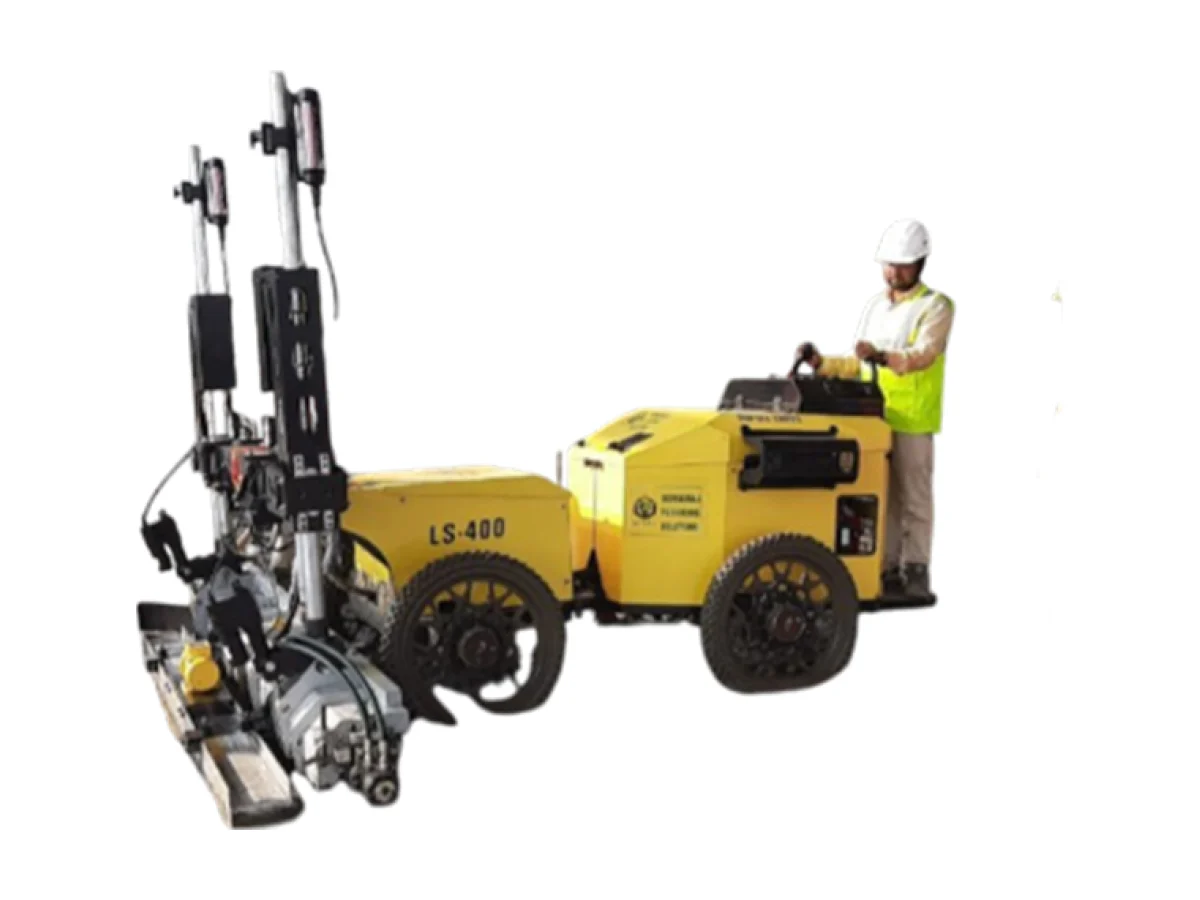
This is the stage that decides your result. The machine holds a plane referenced to a rotating laser, striking, vibrating and levelling in one pass. Sub-base variation and crew position stop mattering because the reference is the laser, not the ground.
3. Wait for the right condition
The most skilled part of the job and the one no machine does for you. Too early and the float pans dig in; too late and floating achieves nothing.
4. Power float with pans
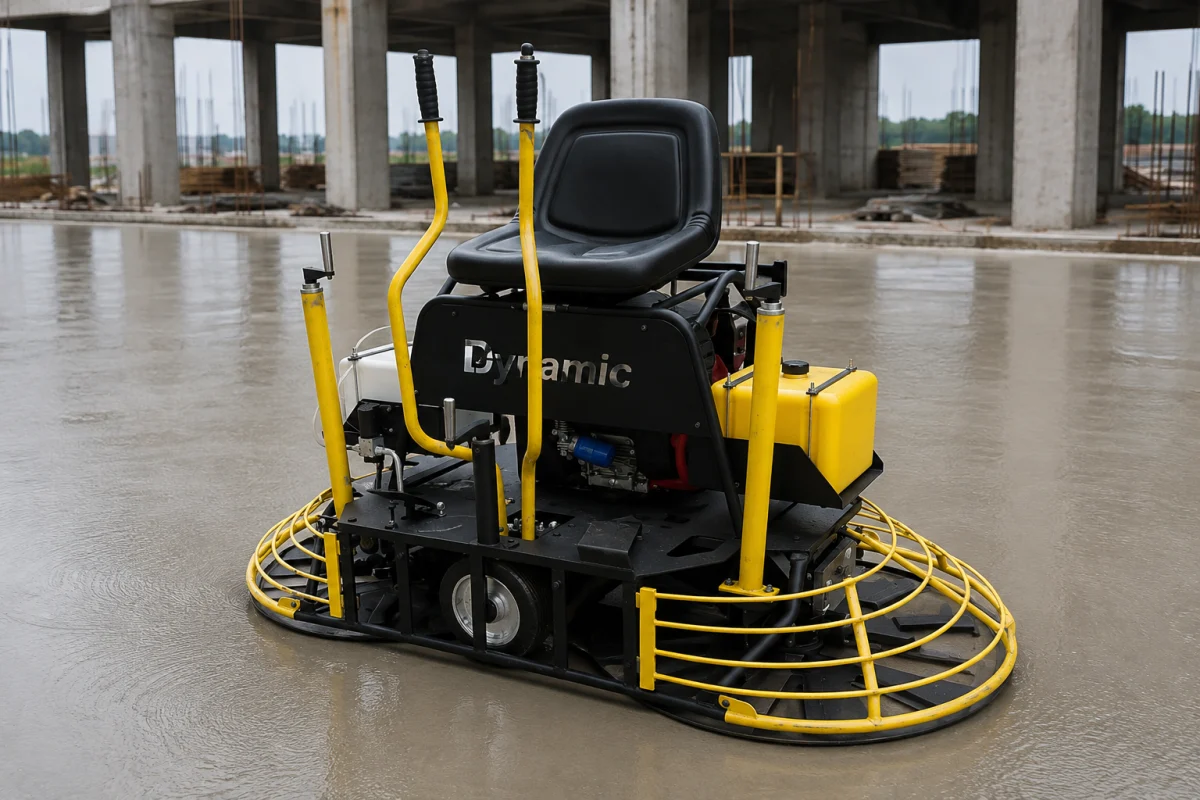
Float pans spread the load across the surface, close it up and bring it flat while the slab is still soft.
5. Power trowel to finish
Blades replace pans and the angle steepens progressively as the slab hardens, burnishing the surface to the specified finish.
The equipment, and what each one is for
| Stage | Machine | Decides |
|---|---|---|
| Level | Laser guided levelling machine | Flatness |
| Float | Power trowel with float pans | Surface closure |
| Finish | Power trowel with blades | Surface hardness and appearance |
| Perimeter | Walk-behind trowel | Edges and corners |
The three most common failures
Skipping the levelling machine
Striking by eye or with rails on a floor that has a flatness specification. The trowel then gets blamed for a problem it cannot fix.
Machine too small for the pour
Concrete gives a fixed window. If the levelling or trowelling machine cannot cover the pour area within it, the far end of the slab is finished in the wrong condition. Match paving width and trowel diameter to the pour size, not to the budget.
Setup not verified before concrete arrives
Laser not set correctly, receivers not calibrated, head height not checked against a known point. All of it is quick to verify beforehand and impossible to correct afterwards.
Cold storage floors
Cold storage adds two constraints. Flatness tolerances are usually tighter because of high racking and narrow aisle MHE, and the pour environment is harder to control. The equipment sequence is the same, but the margin for error is smaller — which is exactly when the levelling machine stops being optional.
Planning the equipment for a floor job
- What is the flatness specification, and who measures it?
- What is the pour area and the realistic finishing window?
- What is the bay width, and does the levelling machine paving width suit it?
- How does each machine get onto and off the slab?
- Who commissions the levelling machine and trains the crew?
Tell us the answers and we will tell you the machines. If a smaller machine will do the job, we will say so.
Frequently Asked Questions
What equipment is needed for a flat warehouse floor?
Which machine decides floor flatness?
Can we level a warehouse floor without a laser guided machine?
What is different about cold storage floors?
How large a floor justifies a ride-on power trowel?
Do you supply the full equipment set for industrial flooring?
Machines Covered in This Guide
Get a price for your job
Tell us the material, the area and the specification you have to meet. We will come back with the right machine, the price and the delivery date — usually the same working day.