
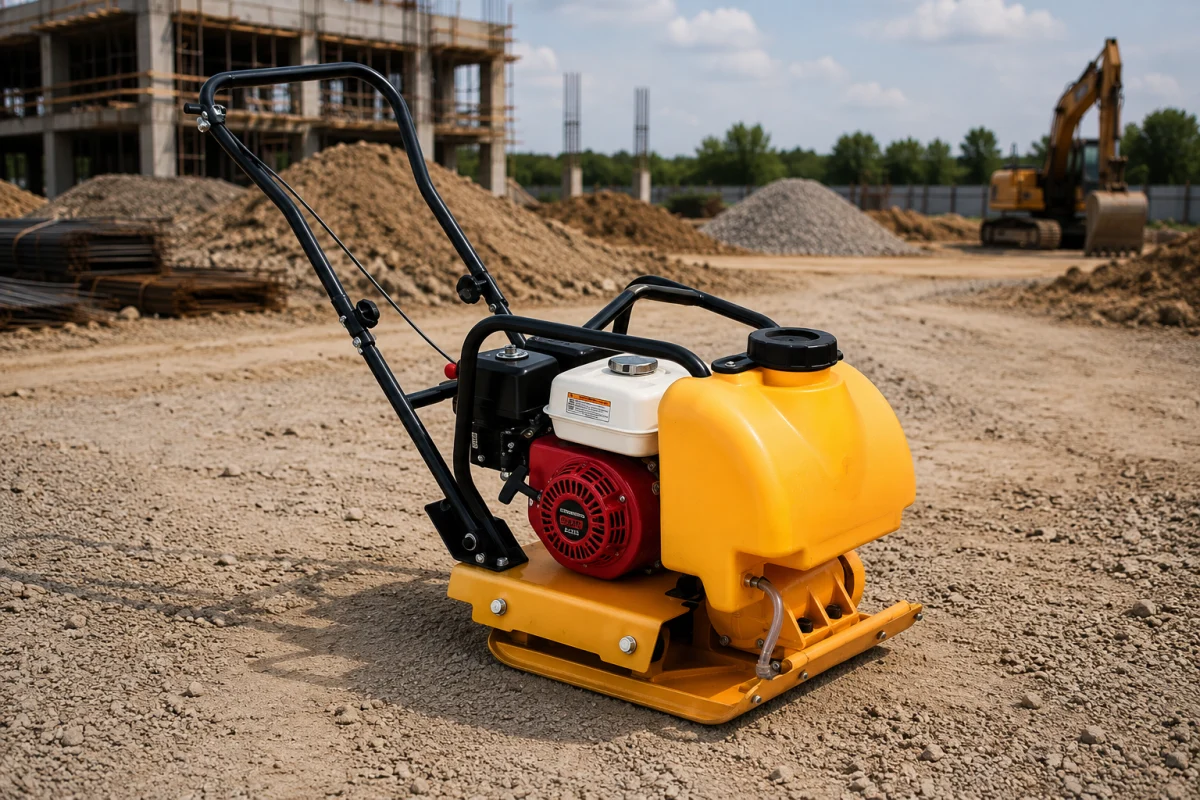
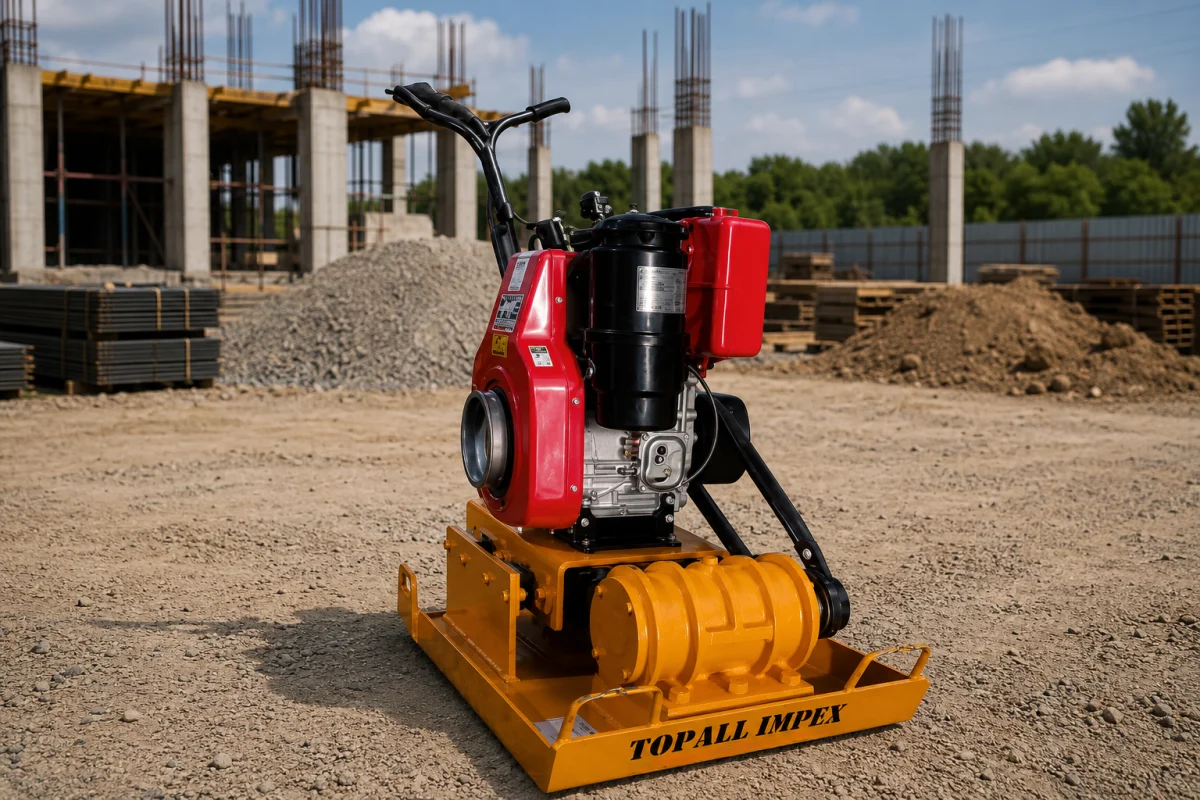
Choose a plate compactor on centrifugal force, plate size and whether you need reverse travel. Forward-only machines suit bedding sand, paver blocks and light backfill. Reversible plate compactors work forward and backward without turning, deliver more force, and are the right machine for trench and structural backfill.
Forward or reversible: the first decision
A forward plate compactor travels in one direction. The operator turns it at the end of each pass. It is lighter, cheaper and perfectly suited to bedding sand under paver blocks, block settling and light surface work.
A reversible plate compactor travels forward and backward from the controls. In a trench that alone saves significant time, because there is often no room to turn. Reversible machines also carry more weight and more force, which is what structural backfill needs.
If you compact trenches or backfill around foundations and manholes regularly, buy reversible. If your work is paving and bedding, forward-only is the sensible purchase.
The numbers that matter
Centrifugal force. Measured in kilonewtons. This is the compaction energy. More force means deeper effect and faster passes on granular fill.
Plate size. Working width decides coverage per pass, and the plate length decides how the machine tracks. A wide plate is faster in open work and worse in confined corners.
Depth effect. The published figure for how deep the machine compacts effectively. This is the number to check against your lift thickness, and the one most often ignored.
Weight. More static weight keeps the plate in contact with the material. It also decides whether two people can lift it into a trench.
Where a plate compactor is the right machine
- Trench backfill and service trenches, in lifts
- Compaction around foundations, manholes, gullies and structures
- Paver block bedding sand and block settling after laying
- Confined corners, kerb lines and patch repairs a roller cannot enter
- Sub-base compaction on small footprint areas
Where it is the wrong machine
A plate compactor will not replace a roller on layered road work with a density specification. It compacts the surface well and does not reach depth. The result is a surface that passes a visual check and fails a density test at depth.
If you are compacting road sub-grade, sub-base, base layers or thick fill lifts, that is roller work. Use the plate for what the roller cannot reach.
Working in lifts
The single biggest cause of failed backfill is lifts that are too thick. Compacting 400 mm of fill in one pass with a plate compactor does not work regardless of the machine.
Work in lifts matched to the machine’s published depth effect. Two thin lifts properly compacted beat one thick lift every time, and they take less total time than digging out a failure.
What to ask before buying
- What is the narrowest place the machine has to work, and can it be turned there?
- What is the lift thickness, and does the machine’s depth effect cover it?
- Is the material granular fill, cohesive soil or bedding sand?
- Who lifts the machine in and out of the trench?
Those four answers select the machine and the plate size. Buying on price alone in this category usually means buying twice.
Frequently Asked Questions
What is the price of a plate compactor machine in India?
What is the difference between a forward and reversible plate compactor?
Can a plate compactor be used for road work?
What lift thickness should I compact with a plate compactor?
Is a plate compactor suitable for paver blocks?
What is a soil compactor plate?
Machines Covered in This Guide
Get a price for your job
Tell us the material, the area and the specification you have to meet. We will come back with the right machine, the price and the delivery date — usually the same working day.